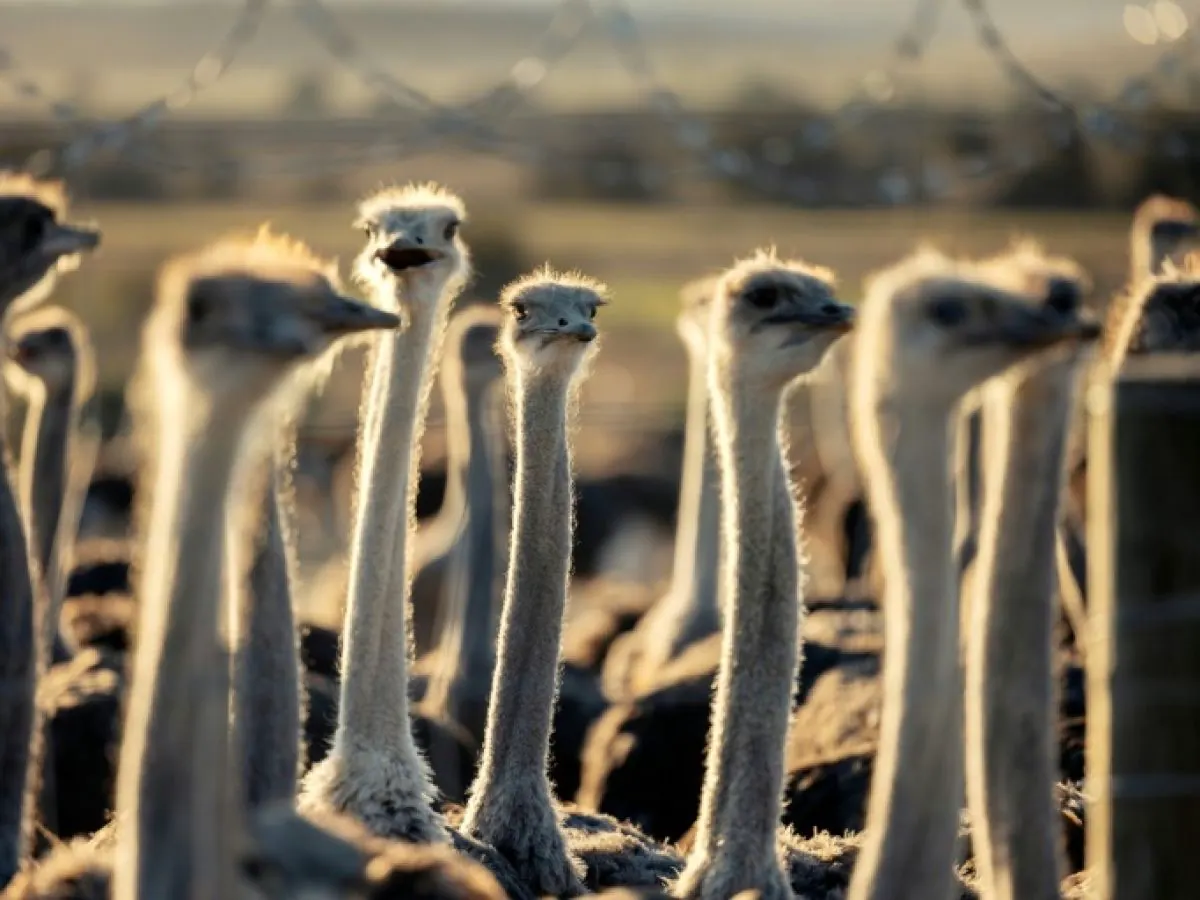
A recent investigation by the World Animal Protection organization has exposed the inhumane treatment of ostriches in the feather industry in South Africa. The investigation found that ostriches are subjected to painful procedures to obtain their feathers, which are then used by luxury fashion brands such as YSL, Louis Vuitton, Dior, and Chanel. The industry produces not only feathers but also meat and leather, with South Africa controlling 75% of the global ostrich market.
The investigation, conducted in collaboration with Collective Fashion Justice, documented cases of workers restraining ostriches with bags over their heads and then cutting and plucking their feathers without providing any pain relief. The report, titled "Blood Feathers," also revealed another method used in some farms, where feathers are cut while still growing and attached to blood vessels, and then pulled out with pliers. This process can be repeated every six months.
The investigation found that ostriches are often left with injuries, including those that are unable to stand and others with eye and feather injuries from plucking. The report's findings have been condemned by animal welfare organizations, with Olivia Charlton, campaign manager at World Animal Protection, stating that the use of plucking to obtain feathers is not a natural process.
According to data obtained from the South African government, over 150 tons of ostrich feathers were exported during the 2024-2025 season, while approximately 150,000 ostriches are slaughtered annually for the trade in feathers, meat, and leather. The history of this trade dates back to the early 20th century, when ostrich feathers were the fourth largest export product of South Africa, after gold, diamonds, and wool.
The investigation's findings have raised concerns about the ethics of the fashion industry's use of animal products. The report highlights the need for greater transparency and accountability in the industry, particularly with regards to the treatment of animals. The use of ostrich feathers in luxury fashion has been criticized by animal welfare organizations, who argue that it is not necessary or justifiable.
The South African government has been urged to take action to address the inhumane treatment of ostriches in the feather industry. The investigation's findings have sparked calls for greater regulation and oversight of the industry, as well as for consumers to be more aware of the origins and treatment of the products they buy.
The ostrich feather industry is a significant contributor to the South African economy, but the investigation's findings have raised questions about the cost of this industry to animal welfare. The report's authors argue that the industry must adopt more humane and sustainable practices to ensure that it can continue to operate in a way that is acceptable to consumers and animal welfare organizations.
Key points
- Ostrich feathers are obtained through inhumane procedures, including plucking and cutting while still growing.
- The ostrich feather industry is a significant contributor to the South African economy, but its practices have been criticized by animal welfare organizations.
- Luxury fashion brands, including YSL, Louis Vuitton, Dior, and Chanel, use ostrich feathers obtained through these inhumane procedures.