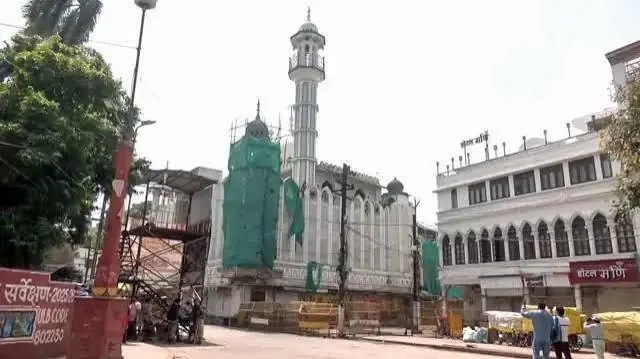
A controversy has erupted in the Indian city of Ujjain, Madhya Pradesh, over the proposed demolition of a 636-year-old mosque, known as the Shahi Masjid or Royal Mosque, as part of road expansion plans ahead of the Simhasta Kumbh festival in 2028. The mosque, built in 1390, is a historic site that has been a place of worship for Muslims in the region for centuries. The demolition plans have sparked widespread protests and tensions between the Muslim community and local authorities.
The mosque is located in the heart of Ujjain, a city considered sacred in Hinduism, and its demolition has been met with resistance from local Muslims. The community has come together to protest the plans, with many gathering at the mosque and refusing to leave. The police have been deployed to the area to maintain law and order, and efforts are being made to negotiate a resolution. The mosque's imam, Muhammad Ibrahim, has stated that the mosque should be exempt from the road expansion plans, citing its historical and cultural significance.
The Simhasta Kumbh festival, one of the largest Hindu gatherings in the world, is set to take place in Ujjain in 2028. The festival, which occurs every 12 years, attracts millions of devotees and is a significant event for the Hindu community. However, the Muslim community has expressed concerns that the demolition of the mosque would be a loss of their cultural heritage and a threat to their place of worship.
The road expansion plans, which include widening the road to 15 meters, have been met with opposition from the Muslim community, who argue that the mosque should not be demolished. The community has questioned why the road cannot be widened by demolishing a building opposite the mosque, rather than the mosque itself. The historical significance of the mosque has been highlighted, with experts noting that its architecture and design are characteristic of the Malwa Sultanate period, which predates the Mughal era.
The controversy has sparked concerns about communal tensions in the region, with many calling for a peaceful resolution. The local administration has stated that it is trying to find a solution through dialogue, but the situation remains tense. The mosque's history and cultural significance have been well-documented, with records showing that it was built with the cooperation and donations of the Muslim community.
The protests have been marked by clashes between the police and protesters, with stones being thrown at the police. The authorities have deployed a large contingent of police to the area to maintain law and order. The situation remains volatile, with many calling for calm and a peaceful resolution. The Indian government has been urged to intervene and find a solution that respects the cultural and historical heritage of the mosque.
The Shahi Masjid is an important part of Ujjain's cultural and historical heritage, and its preservation has been advocated by many. The mosque's demolition has been opposed by many, including historians and conservationists, who argue that it would be a loss of India's cultural heritage. The controversy highlights the need for a balanced approach to development and preservation, one that respects the cultural and historical significance of historic sites like the Shahi Masjid.
Key points
- The Shahi Masjid, a 636-year-old mosque in Ujjain, India, is facing demolition as part of road expansion plans ahead of the Simhasta Kumbh festival in 2028.