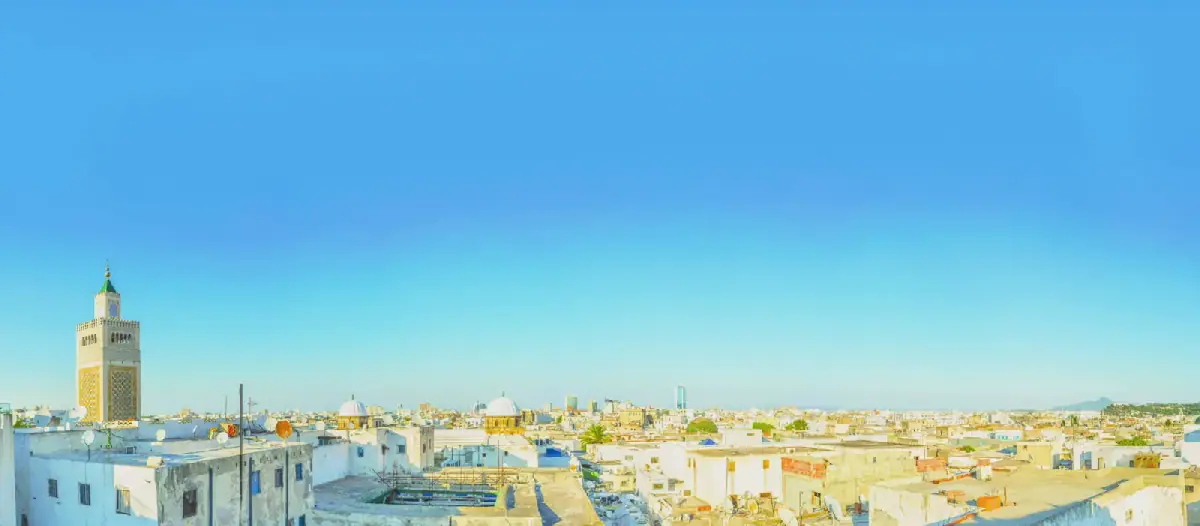
Tunisia is home to an exceptional palatial heritage, with many historic residences and villas facing significant challenges. Despite these obstacles, some palaces have managed to survive and thrive. According to Jamila Binous, an historian and urbanist, the key to their survival lies in finding a new purpose. "Le patrimoine qui ne sert à rien est un patrimoine condamné," she notes. This approach has allowed certain palaces to escape the fate of others, which have succumbed to decay and neglect.
One example of a palace that has found new life is the Palais du gouvernement de la Kasbah. Built during the Ottoman era and renovated under the Husseinite beys, this palace has served as the seat of power for various governments. Its continuous occupation has ensured its survival, as it has never fallen into disuse. In contrast, many private residences have been abandoned and left to deteriorate. The Kasbah's status as a center of power has protected its walls and ensured its preservation.
Another palace that has undergone significant transformation is the Ksar el Warda, also known as the Palais de la Rose. Built in the late 18th century as a pleasure residence for Hammouda Pacha, it has had various uses over the years. Under Sadok Bey, it was converted into a barracks, and during the French protectorate, it was occupied by the colonial army. In 1989, it became the Musée militaire national. This series of transformations has allowed the palace to adapt and survive.
The Palais Ahmed Bey à La Marsa is another example of a palace that has found new life. Originally built for Giuseppe Raffo, it was later acquired by Ahmed Bey. After restoration, it was integrated into the cultural circuit, hosting exhibitions and events. According to Jamila Binous, its survival can be attributed to its strong symbolic value and strategic location. These factors have contributed to its preservation and continued use.
In the heart of Tunis' medina, Dar Hussein is home to the Institut National du Patrimoine. This palace has had various occupants over the years, including the French army during the protectorate. Its current use as a center for heritage preservation has created a virtuous circle, where the institution's presence helps protect the palace itself. As Binous notes, "Le patrimoine, ici, s'auto-défend."
Dar Lasram, one of the oldest palaces in the medina, has been preserved through the efforts of the Association de sauvegarde de la médina. With limited funding, the association has relied on community engagement and cultural programming to protect the palace. The UNESCO-funded project Tunis-Carthage has also contributed to its preservation. This model demonstrates the importance of community involvement in heritage conservation.
Finally, Dar El Jeld, a former palace turned restaurant, illustrates the potential for private enterprise to drive heritage preservation. By creating a viable economic model, the owners have ensured the palace's continued maintenance and upkeep. This approach has shown that cultural heritage can coexist with economic activity, without sacrificing historical value.
Key points
- The survival of Tunisia's historic palaces depends on finding new uses and purposes.
- Adaptive reuse has allowed certain palaces to escape decay and neglect.
- Community engagement and economic viability are key factors in preserving cultural heritage.