In the Mancagne community in Senegal, a traditional funeral rite called "Kadjine" or interrogation of the deceased is still practiced. This rite allows the community to know the circumstances of a person's death without needing a medical autopsy. The ritual involves questioning the spirit of the deceased after burial to determine the cause of death and to identify who should take care of their family. This practice is an essential part of Mancagne tradition and culture.
The "Kadjine" rite has evolved over time. In the past, the body was used for interrogation, but now the ritual takes place after burial. According to Dominique Campal, president of the Association for the Valorization of Mancagne Culture, the essential elements for this funeral rite are the clothes in which the person died and the Guiera senegalensis plant, also known as Nguer in Wolof. These elements are used to create a small statue representing the deceased.
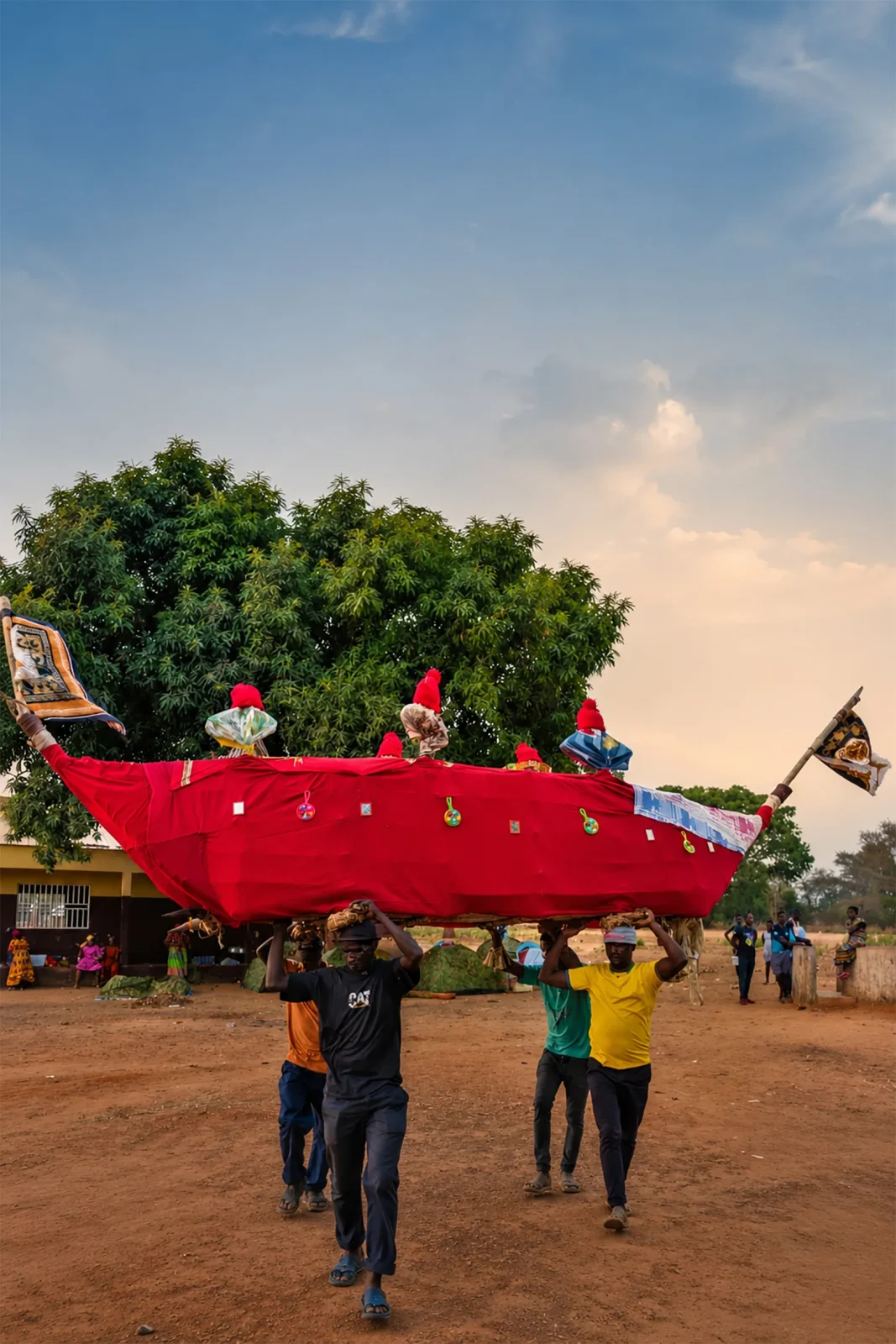
The statue is formed using the leaves of the Guiera senegalensis plant and is wrapped in the deceased person's clothes. The statue is then covered with a mat and a woven pagne on a stretcher made of bamboo tiges. The stretcher is made of 16 tiges, eight of which are two meters long and the other eight one meter wide. Four people carry the stretcher, and they must work together to move it.
Once the stretcher is prepared, a family member pours water used to wash the body and a liter of "cana" (a type of rum made from sugar cane) to invoke the spirit of the deceased. The interrogation then begins, with the spirit represented on the stretcher and carried by four people. However, the carriers have no control over the direction of the stretcher, which is guided by the spirit of the deceased.
The "Kadjine" rite has two main objectives. The first is to determine the cause of death, whether it was natural, due to disease, or the result of occult forces. The second objective is to identify who the deceased wants to take care of their family. The spirit of the deceased responds to questions by moving the stretcher forward or backward to indicate affirmation or negation.
According to Dominique Campal, the spirit of the deceased designates a person to take care of their family by choosing someone from the crowd. Often, the chosen person is from the same family lineage. This practice is an essential part of Mancagne tradition and culture, and it continues to be observed despite the community's strong adherence to Christianity.
The "Kadjine" rite is a unique and important part of Senegal's cultural heritage. It provides a way for the Mancagne community to connect with their ancestors and to understand the circumstances of death. This practice is a testament to the community's strong cultural traditions and their commitment to preserving their heritage.
Key points
- The Mancagne community in Senegal practices a traditional funeral rite called "Kadjine" or interrogation of the deceased.
- The rite involves questioning the spirit of the deceased after burial to determine the cause of death and to identify who should take care of their family.
- The practice is an essential part of Mancagne tradition and culture, and it continues to be observed despite the community's strong adherence to Christianity.