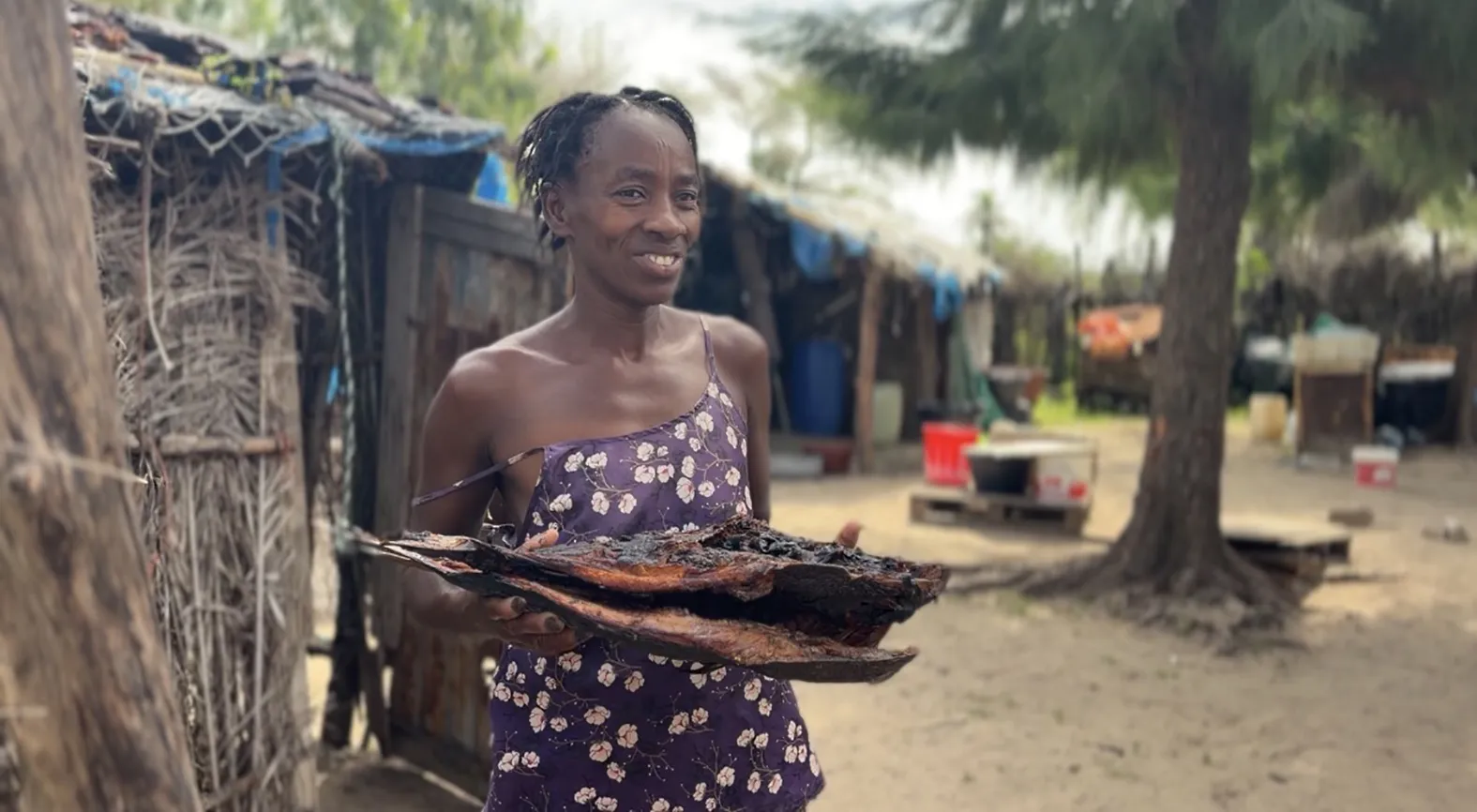
In the Casamance region of Senegal, a quiet revolution is underway. Women are taking to the seas, defying traditional gender roles to become fishermen. Sougounda Sagna, a mother of five, is one such woman. She has been fishing for 9 years, using the senne tournante technique, which involves using a rectangular net to encircle a school of fish in open water. Her daily routine is dictated by the tides, and she often sets out at 11 am to place her net, returning to haul in her catch.
Sougounda's decision to become a fisherman was not taken lightly. She and her husband, along with two other families, left the city to settle on the coast, where they could fish and live off their labor. The work is grueling, especially for a woman, but Sougounda believes it's better than staying in the city, relying on handouts, or engaging in illicit activities. Her children, all of whom are in school, spend their holidays helping her with her work. Her eldest son, Robert Mendy, is particularly supportive, accompanying her on fishing trips during the holidays.
Sougounda's home, situated on the banks of the Casamance River, is under threat from the advancing sea. The coastline is eroding, and several trees have already been uprooted by the waves. Her family has had to move twice to escape the encroaching waters, but Sougounda is worried that their current home will soon be inundated. Despite these challenges, she remains committed to her work, which provides her with a sense of purpose and a way to support her family.
Fatou Sonko, a 63-year-old woman from Elinkine, is another female fisherman who has defied tradition. She learned to fish from her father, who was also a fisherman. As a child, Fatou would accompany her father on fishing trips, developing a passion for the work. She and her friends would often "borrow" a pirogue to fish in the bolongs, a experience that she recalls with a smile.
Fatou's love of fishing has endured, despite the challenges that come with the job. She continues to fish, using a pirogue to venture out to sea. Her work is physically demanding, but it allows her to provide for her family and contribute to the local economy. Fatou's determination and resilience are an inspiration to others, demonstrating that with hard work and dedication, women can succeed in male-dominated industries.
The contributions of female fishermen like Sougounda and Fatou are significant, not only for their families but also for the local community. They provide fresh seafood to markets in Ziguinchor and other nearby towns, supporting the local economy and food chain. Their work also challenges traditional gender roles, paving the way for other women to pursue careers in fishing and other male-dominated industries.
Despite the challenges they face, Sougounda and Fatou are proud of their accomplishments and the impact they have on their families and communities. Their determination and resilience serve as a testament to the power of hard work and dedication. As they continue to fish and provide for their loved ones, they inspire others to pursue their passions, regardless of traditional expectations or obstacles.
Key points
- Women in Senegal's Casamance region are challenging traditional gender roles by becoming fishermen.
- Female fishermen like Sougounda Sagna and Fatou Sonko provide fresh seafood to local markets and support their families through their work.
- The work of female fishermen in Casamance has a positive impact on the local economy and food chain.