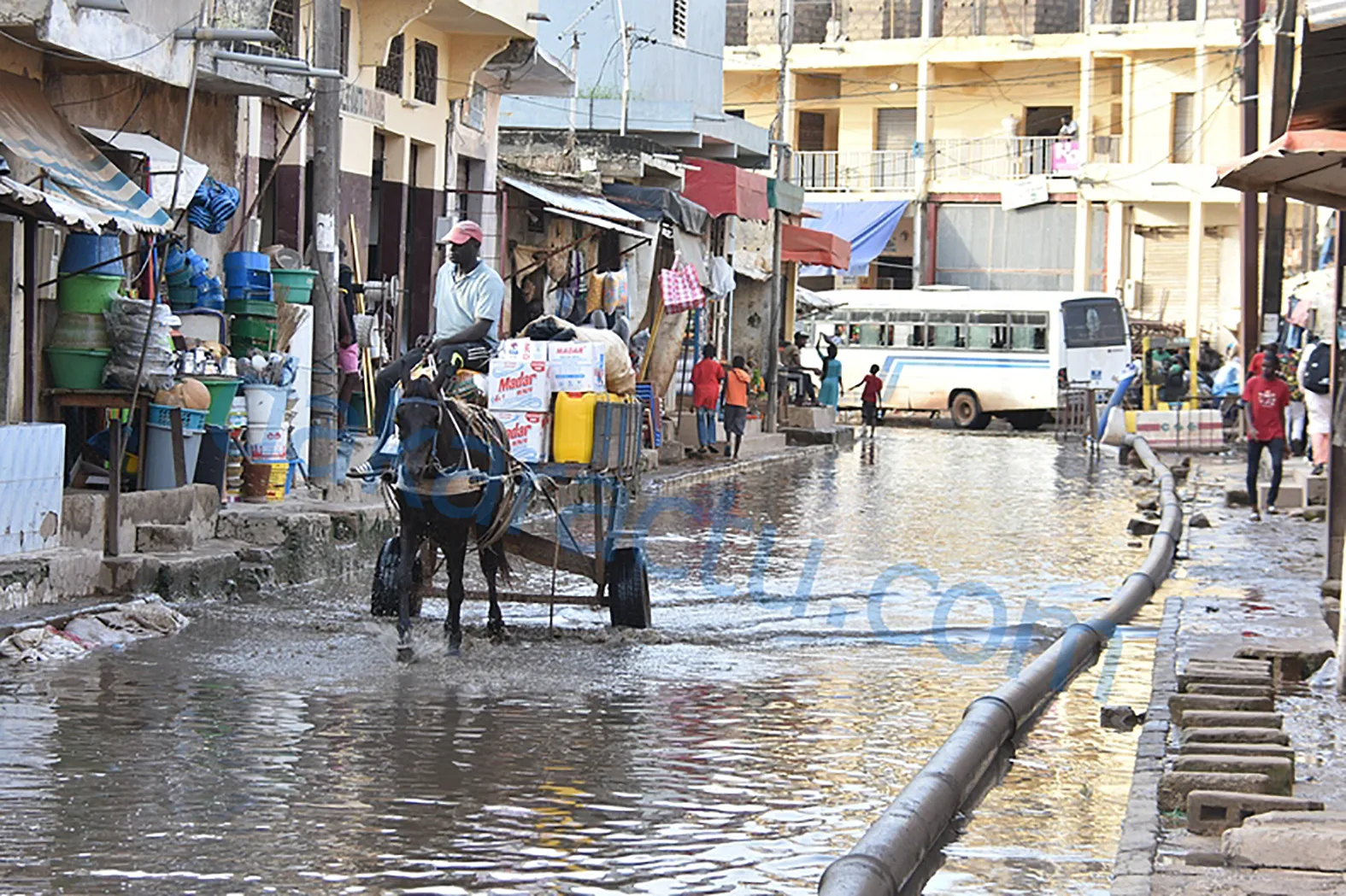
Heavy rainfall in Dakar, Senegal has caused widespread flooding, leaving many residents without access to transportation. In the aftermath of the floods, horse-drawn carriages have emerged as a vital alternative for those stranded. The Zone de captage and Grand Yoff areas have been particularly affected, with several vehicles immobilized and homes surrounded by floodwaters. As a result, horse-drawn carriages have become a lifeline for residents, providing a means of crossing the flooded areas.
The use of horse-drawn carriages has brought both relief and frustration to residents. While some have expressed gratitude for the alternative transportation, others have complained about the high costs associated with the service. The standard fare for crossing the flooded areas is 200 FCfa, but some carriage operators have been charging as much as 500 FCfa. This has led to disputes among the operators and regulators, with some calling for stricter controls on pricing.
Despite the challenges, many residents have welcomed the horse-drawn carriages as a necessary evil. Aïcha Ndiaye, a resident who had to navigate the flooded areas, noted that it was difficult to traverse the area on foot, citing safety concerns and the dirty conditions. She ultimately opted for a horse-drawn carriage, but expressed frustration about the high costs. Her experience was echoed by others, who noted that the costs of using the carriages were adding up quickly.
The increased demand for horse-drawn carriages has provided a boost to the operators, who are capitalizing on the situation. Massamba Guèye, a carriage operator, noted that his business had adapted to the floods, with his team changing routes to accommodate the needs of residents. He added that they remained on the scene until the waters receded, providing a vital service to those in need.
In Grand Yoff, the situation was similar, with horse-drawn carriages shuttling between the Patte d'Oie station and the Grand Yoff church, both of which were submerged by floodwaters. Aliou Mar, a carriage operator, reported that business had been brisk, with many residents seeking to cross the flooded areas. He noted that the prices were negotiable, but some residents were willing to pay a premium for the service.
The Senegalese government has been working to address the flooding, with several ministers mobilized to assist those affected. The Minister of Sanitation has announced a national strategy to manage flood risks, which is expected to include measures to mitigate the impact of future floods. In the meantime, residents are relying on the horse-drawn carriages to get them through the crisis.
As the floodwaters recede, residents are beginning to assess the damage and rebuild. The experience has highlighted the need for improved infrastructure and flood management strategies in Dakar. For now, the horse-drawn carriages remain a vital part of the transportation network, providing a lifeline to those affected by the floods.
Key points
- The floods in Dakar have left many residents without access to transportation, leading to a surge in demand for horse-drawn carriages.
- The use of horse-drawn carriages has brought both relief and frustration to residents, with some complaining about the high costs associated with the service.
- The Senegalese government has been working to address the flooding, with several ministers mobilized to assist those affected.