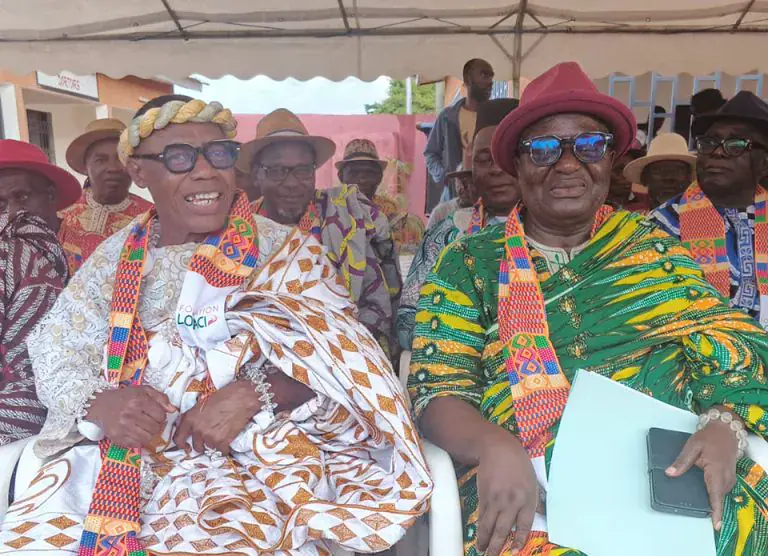
In several villages in the Gagnoa department of Côte d'Ivoire's Bété country, a peculiar tradition has long been practiced. The "Yorokloi", or "village girl", refers to a young woman whose marriage plays a crucial role in financing her brothers' weddings through the gifts and money received as dowry. However, when their father passes away, these women often find themselves excluded from the inheritance of family land and property, due to a tradition that considers them part of their husband's family.
The "liko" ritual, a cornerstone of Bété culture, is a prime example of this tradition. During this ceremony, the bride's family presents gifts to the groom's family, which are then used to purchase items for the groom's future wedding. The dowry is immediately taken over by the patriarch, who uses it to secure a wife for one of the bride's brothers. This system, while seemingly archaic, is still deeply ingrained in the community, with many seeing it as a vital part of their cultural heritage.
However, this tradition has a darker side. When a father dies, his daughters are often denied a share of the inheritance, with the family's land and property being divided solely among the sons. The justification for this exclusion is that the daughter will eventually leave her family to join her husband's, and that giving her land would be equivalent to handing it over to another family. This paradox highlights the precarious position of women in Bété society, who are expected to contribute to their family's well-being while being denied basic rights.
One young woman, who wished to remain anonymous, shared her story of being excluded from her father's inheritance. Despite having contributed to her cousin's wedding through her own dowry, she was told that she was not entitled to any land or property because she was "married elsewhere". This experience is not unique, with many women in the region facing similar challenges. The law, however, is clear: the Ivoirian Civil Code guarantees equal inheritance rights to all children, regardless of sex.
Despite the law, traditional practices continue to prevail in rural areas. The stigma associated with challenging these customs is high, with women who dare to speak out risking social ostracism and even mystical reprisals. However, there are signs of change. In recent years, women's cooperatives have begun to emerge, providing a platform for women to pool their resources and purchase land collectively. This movement is slowly gaining momentum, with women like Maman Domoraud, who has become a proud owner of several hectares of land, serving as role models.
The fight for women's rights in Bété country is not about destroying traditional practices, but about promoting equality and fairness. Bayoro Solange, a former president of the women's association in Ouragahio, has been a vocal advocate for women's land rights. Her message is simple: the women who contribute to their family's well-being through their dowries should also have the right to own land. This message is slowly resonating with the community, with some men beginning to speak out against the injustices faced by women.
As the debate over women's inheritance rights continues, one thing is clear: change will not come easily. However, with the determination of women like Maman Domoraud and Bayoro Solange, it is possible that the tide may finally be turning. The question now is whether the momentum can be sustained, and whether the voices of these women will be heard loud enough to bring about meaningful change.
Key points
- Women in Bété country are excluded from inheritance due to traditional practices that consider them part of their husband's family.
- The "liko" ritual, while a vital part of Bété culture, perpetuates the idea that women's contributions are solely for the benefit of their brothers and husbands.
- Women's cooperatives are emerging as a platform for women to challenge traditional practices and assert their rights to land ownership.