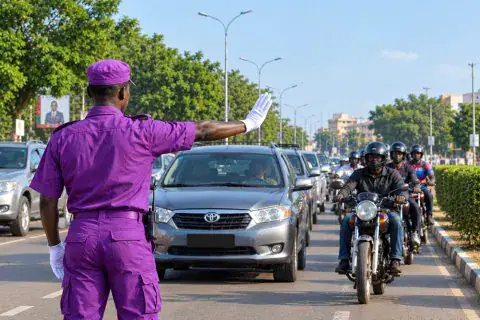
A recent scene observed in Ouagadougou, near the Larlé Naaba palace, illustrates the significance of understanding traffic regulations. On October 26, 2026, at around 7:50 am, a traffic agent, specifically a Voluntary Adjoint Security (VADS) officer, signaled for drivers to stop on Avenue Yatenga, despite the traffic light being green. The agent's gesture was intended to allow pedestrians from the opposite side to cross safely.
However, not all drivers complied with the agent's instructions. Some continued driving, while others, already stopped, were urged by motorcyclists to proceed, as the traffic light was green. This reaction demonstrates that many road users prioritize traffic signals over human instructions, often to their own peril. According to Rasmané Élie Ouédraogo, a driving instructor at Alliance auto-école, traffic agents' instructions should take precedence over automatic signals.
The primary purpose of traffic agents is to ensure road safety, which sometimes requires them to override automatic traffic signals. In cases of accidents, congestion, or other hazards, agents must intervene to prevent potential dangers. Their instructions allow for immediate adjustments to traffic flow, taking into account the specific circumstances.
In Burkina Faso, road safety relies on a combination of technical equipment and users' understanding of traffic regulations. Drivers, motorcyclists, and pedestrians must all be aware of and respect traffic agents' instructions. Motorcyclists, in particular, need to exercise caution and not attempt to maneuver through traffic when agents signal for them to stop.
Effective communication between traffic agents and road users is crucial. Agents use standardized gestures, such as hand signals and whistles, to convey their instructions. However, users must be able to interpret these signals correctly to avoid confusion or accidents.
The incident on Avenue Yatenga highlights a broader issue: many road users in Burkina Faso are not adequately aware of traffic regulations and the role of traffic agents. Educational campaigns and stricter enforcement of traffic laws can help mitigate this problem and promote a culture of road safety.
Ultimately, road safety in Burkina Faso depends on the cooperation and vigilance of all users. By understanding and respecting traffic agents' instructions, drivers, motorcyclists, and pedestrians can contribute to a safer and more efficient traffic environment. As one commenter noted, it is essential that everyone obeys traffic agents, including VADS officers, to ensure a safer and more harmonious road experience.
Key points
- Traffic agents' instructions should take precedence over automatic traffic signals in Burkina Faso.
- Road safety in Burkina Faso relies on users' understanding of and compliance with traffic regulations.
- Effective communication between traffic agents and road users is crucial for safe traffic management.