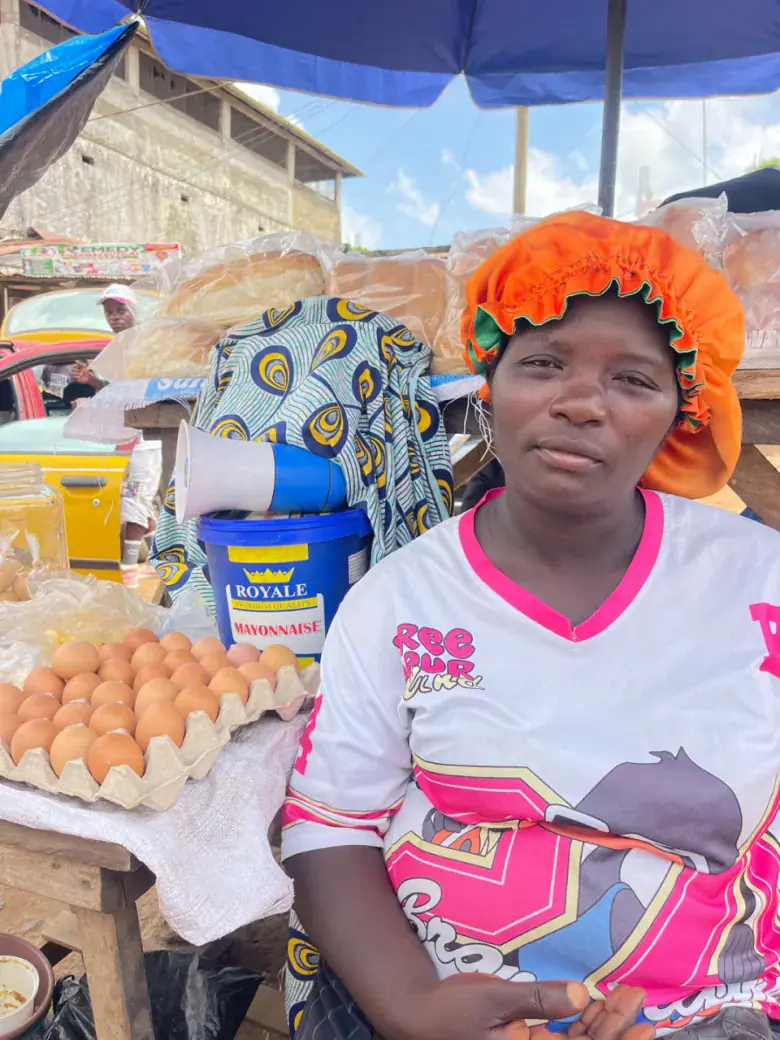
Importers and consumers in Liberia are expressing concerns over reported shortages and rising wholesale prices of eggs on the Liberian market. They argue that restrictions on egg imports, coupled with declining local production, have created supply constraints, pushed up prices, and placed additional financial pressure on petty traders and consumers. The stakeholders are urging the government to facilitate the issuance of Import Permit Declarations and Import Notification Forms to qualified local and foreign companies interested in importing eggs into Liberia.
Former President George Manneh Weah issued Executive Order 119 in June 2023, imposing surcharges on the importation of eggs and other commodities to protect local production. President Joseph Nyuma Boakai extended these protective measures through Executive Orders 135 and 156, issued in 2024 and 2025, respectively. The President's support for local poultry production gained further attention following his visit to the Liberian American Poultry Farm in Bomi County in May 2025.
A report released by the International Finance Corporation in August 2026 identified Liberian American Poultry and Modern Mills of Liberia as businesses majority-owned by West African Premier Investment LLC, an investment fund of the Siblani family. However, concerns are emerging over whether the government's protective measures are creating an uneven competitive environment in the egg market, particularly for United Commodities Incorporated, while limiting opportunities for other importers.
Rising prices and growing hardship are significant concerns for petty traders who depend on egg sales to support their families. A carton of eggs is reportedly being sold at United Commodities Incorporated for approximately $65, while some local stores and shops in Monrovia and surrounding communities are selling cartons to petty traders for between $70 and $75. At the retail level, individual eggs are selling for between L$40 and L$50 in some areas.
Petty traders, such as Sally Kiaweh, a mother of four who has sold eggs for over a decade in Brewerville, are struggling to sustain their businesses due to rising costs. She said she now pays approximately $70 for a carton of eggs, compared with about $50 several years ago. Kiaweh explained that despite higher selling prices, her earnings have not improved because the cost of purchasing eggs has increased considerably.
Traders are also complaining of losses associated with the fragile shells of some locally produced eggs. Kiaweh said some eggs crack or burst during boiling, resulting in significant financial losses for petty traders who purchase them in bulk. She attributed the rising prices partly to scarcity, increased demand, and the limited number of suppliers serving the market.
Importers are alleging that they have been unable to obtain the necessary Import Notification Forms to bring eggs into the country, and some wholesalers fail to provide official receipts after selling eggs to petty traders. Importers are urging the government to promote fairness and competition in the sector, and to allow additional companies to import eggs to improve supply and make the commodity more affordable.
Key points
- The Liberian government is urged to facilitate the issuance of Import Permit Declarations and Import Notification Forms to qualified local and foreign companies interested in importing eggs into Liberia.