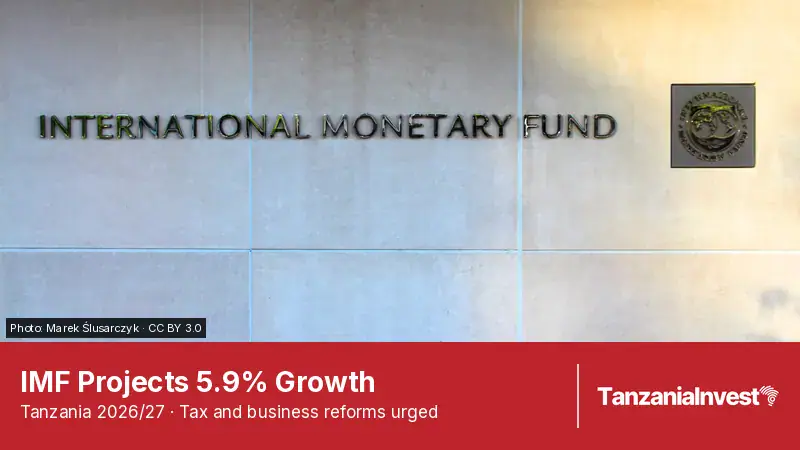
The International Monetary Fund (IMF) has projected Tanzania's economy to grow by 5.9% in the 2026/27 financial year. This forecast follows the IMF's 2026 Article IV mission, led by Nicolas Blancher, which visited Tanzania from 11 to 24 November 2026. The mission recommended reforms to expand private investment and employment, alongside higher spending on education, health, and social protection.
The IMF assessed Tanzania's economy as resilient to recent shocks, supported by improvements in macroeconomic policy frameworks and financial oversight. The economy has been bolstered by gold, manufacturing, agricultural, and tourism exports. The IMF's concluding statement forecasts growth averaging 6% over the medium term, supported by mining, agriculture, and tourism. Inflation is expected to remain within the 3–5% target range.
The current account deficit is projected to widen to 2.9% of gross domestic product (GDP) in 2026/27. This increase is attributed to weaker gold prices and still elevated oil prices. However, the deficit is expected to narrow to about 2.6% by 2030/31. The mission identified downside risks, including a prolonged Middle East war, disruptions to trade and travel, tighter global financing conditions, and declining gold prices.
Domestically, climate shocks could raise food and energy prices. Renewed social unrest or delays to reforms could affect investor confidence and tourism. The 2026/27 budget targets an overall fiscal deficit of 2.8% of GDP and an improvement of 0.2 percentage points of GDP in the domestic primary balance. Public debt remains at moderate risk of debt distress. Priority social spending has stabilised at about 7% of GDP.
However, allocations to education and health remain low relative to peers. This is against a backdrop of widening human capital gaps and rapid population growth. The IMF recommended financing additional social spending primarily through broader tax coverage and stronger tax compliance. Selective reprioritisation of public investment could also release resources while protecting infrastructure with a high impact on growth.
The mission called for more complete fiscal reporting. This includes timely recording of transactions outside the treasury single account and capital transfers to state-owned enterprises. The IMF also recommended implementing the new public investment guidelines to improve project appraisal and procurement. Furthermore, it advised deepening the recently introduced Fiscal Risk Statement's analysis of state-owned enterprises and public-private partnerships.
The IMF welcomed steps to open the domestic government bond market to foreign investors. However, it advised avoiding restrictions on cross-border trade and investment that increase policy uncertainty. At the concluding press conference on 24 November 2026, Blancher elaborated on the obstacles facing businesses. He pointed to overlapping regulatory agencies and the fees they impose, stating that "it's strikingly complicated and costly for business in Tanzania."
Key points
- The IMF projects Tanzania's economy to grow by 5.9% in the 2026/27 financial year.
- The IMF recommends monetary tightening and faster business reforms to support growth.
- The IMF advises Tanzania to prioritize social spending, particularly in education and health.