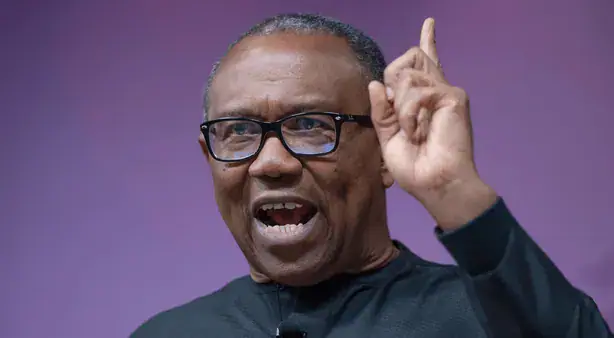
A social media user recently shared an image claiming Peter Obi, the Nigeria Democratic Congress presidential candidate, was hospitalized after suffering an injury from a gym treadmill. The post was shared on X and had gained significant traction, with over 66,800 views and numerous comments. Many users criticized Obi, while a few questioned the authenticity of the image. The post was part of a larger online strategy to discredit opposition candidates during the 2027 election campaign season.
The image was shared by X user @Bayo_Bilisi on November 1, 2026, and showed Obi lying on a hospital bed. The caption claimed Obi had broken his neck while trying to prove his fitness on a gym treadmill. The post sparked a heated debate, with some users expressing concern for Obi's health and others questioning the legitimacy of the image. DUBAWA, a fact-checking organization, decided to investigate the image due to its high engagement and the timing of the claim.
DUBAWA conducted a reverse image search, which led to other social media platforms where the same claim appeared. The organization then checked Obi's official X and Facebook pages but found no post or image of him on a sickbed. Instead, Obi's pages showed posts of him visiting different states for the 2027 election campaign. A keyword search also revealed no credible media reports linking Obi to any health issues.
To verify the authenticity of the image, DUBAWA submitted it to AI detection tools, including Sightengine, Hive Detect, and SynthID. The results showed a high probability that the image was AI-generated, with SynthID specifically identifying it as generated with OpenAI. This finding suggests that the image was created to deceive the public and discredit Obi.
The investigation's findings contradict the claims made by the X user and others who shared the image. DUBAWA's conclusion is that Peter Obi did not share any image of him being hospitalized, and the image used to portray him as admitted to the hospital for a neck injury is AI-generated. This highlights the growing concern of misinformation and disinformation on social media, particularly during election seasons.
The incident demonstrates how easily false information can spread on social media and the importance of fact-checking. It also underscores the need for the public to be cautious when consuming information online, especially during critical periods like election seasons. DUBAWA's investigation and findings serve as a reminder to verify information before sharing or believing it.
The 2027 election campaign season is expected to be intense, with various political parties and candidates vying for support. Incidents like this highlight the need for fact-checking and media literacy to combat the spread of misinformation. Key points from this incident include the use of AI-generated images to deceive the public, the importance of verifying information, and the need for caution when consuming information online.
Key points
- The image of Peter Obi hospitalized was found to be AI-generated.
- DUBAWA's investigation revealed no credible evidence of Obi's hospitalization.
- The incident highlights the growing concern of misinformation on social media during election seasons.