Africa's automotive sector presents a substantial opportunity for growth, but it remains one of the world's most significant untapped markets. The continent's low motorisation, growing population, and accelerating urbanisation create an expanding need for mobility. However, demographic potential does not automatically translate to demand for new vehicles. Affordability, access to finance, and the cost of ownership will determine how much of that opportunity can be realised.
The African Continental Free Trade Agreement (AfCFTA) provides a framework for turning the continent's growing transport needs into economic opportunity. The agreement's success will depend on what governments and industry build together. Africa accounts for only a small share of global automotive production, but it possesses many of the fundamentals for growth, including established manufacturing centres, mineral resources, and a rapidly expanding population.
The opportunity now lies in strengthening regional integration and value chains to unlock this potential at scale. This was central to the discussions at the Africa Automotive Investment Forum in Alamein, Egypt, earlier this month. With automotive rules of origin now agreed under the AfCFTA, the task is to translate that framework into investment, production, and employment. Few industries connect as many parts of an economy as automotive manufacturing.
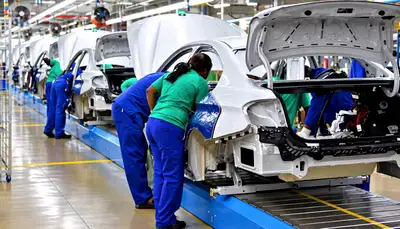
A vehicle plant creates demand for components, metals, plastics, glass, textiles, electronics, logistics, energy, finance, training, and retail infrastructure. This makes the sector a practical test of the AfCFTA's promise: enabling African countries to manufacture, trade, and create value together. For automotive, that means a hub-and-spoke model. Not every country can or should assemble complete vehicles, but participation in the industry need not begin and end with an assembly plant.
One hub might assemble vehicles while suppliers elsewhere produce wiring harnesses, upholstery, tyres, glass, batteries, or plastic components. Other countries can process minerals for future mobility. Logistics corridors, ports, distribution centres, dealer networks, finance providers, and training institutions all form part of the same chain. The proposed automotive pact between the Southern African Customs Union and Egypt illustrates this approach.
Stellantis can contribute through its manufacturing operations in Morocco and Algeria and its commercial and dealer presence across African markets. Kénitra in Morocco demonstrates the value of a sustained partnership between government and industry, combining expanded production capacity with supplier development. In Algeria, investment in Tafraoui is supporting the development of another manufacturing ecosystem.
To unlock lasting economic value, manufacturing investments must go beyond vehicle assembly. Deep localisation is essential, which means designing products adapted to local needs, building competitive supplier ecosystems, and developing local talent capable of supporting a modern automotive industry. Africa should welcome fair competition and productive investment while rewarding localisation, supplier development, skills transfer, and regional exports.
Key points
- Investment in production, supplier networks, and skills is crucial for turning Africa's growing transport needs into economic opportunity.
- The African Continental Free Trade Agreement provides a framework for growth, but its success depends on government and industry collaboration.
- Deep localisation, including designing products for local needs and developing local talent, is essential for unlocking lasting economic value.
Reporting sources
- Africa must shift gears from imports to industry · Mail & Guardian