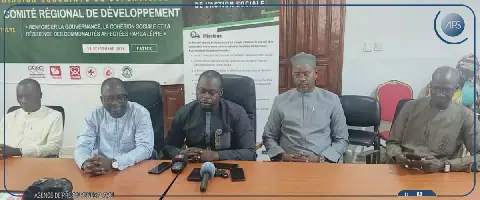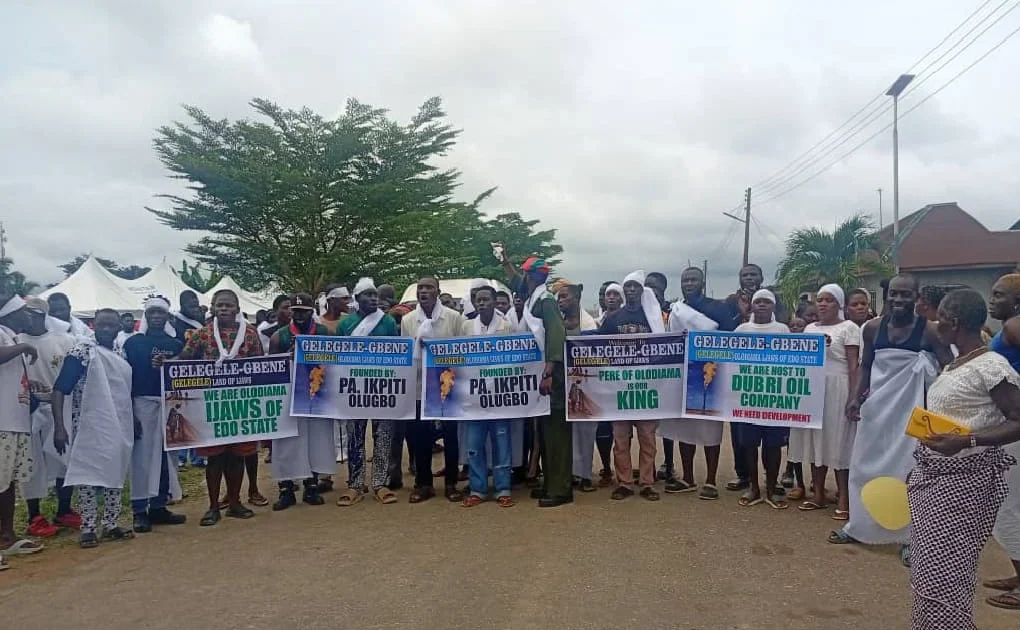
The five Ijaw kingdoms in Edo State, comprising Egbema, Olodiama, Okomu, Gbaran, and Furupagha, have expressed concerns over alleged marginalisation by the state government. In a statement released at a World Press Conference in Gelegele, Ovia North-East Local Government Area, the kingdoms demanded recognition and creation of Local Government Development Centres for Ijaw indigenes. They claimed that Ijaw communities in the state have been treated as "second-class citizens" for decades.
According to the Ijaw leaders, their population, spread across over 500 communities in Ovia South-West, Ovia North-East, and Ikpoba-Okha Local Government Areas, has been deliberately split to deny them a collective political voice. Attempts have also been made to rename and annex their communities, they alleged. The leaders argued that the Ijaw are aboriginal to their territories and predate the Benin Kingdom, citing historical accounts and colonial-era institutions.
The Ijaw leaders cited the 1988 attempt by the then Oba of Benin, Oba Erediauwa, to appoint his brother, Prince Uyiekpen Akenzua, as Enogie over riverine Ijaw communities, which was resisted and later settled by the then Military Administrator of Bendel State, Col. Tunde Ogbeha. They also referenced a Supreme Court judgment in Suit No. SC 131/1982 over a farmland dispute between Gelegelegbene and Ughoton.
The kingdoms linked recent publications and motions in the state and National Assembly to a renewed attempt to undermine their agitation. They called on the Edo State Government to create three Local Government Development Centres for Ijaw indigenes and recognise the traditional rulers of the five kingdoms. Alternatively, they suggested allowing Ijaw communities to join their kith and kin in Delta and Ondo states for better integration and development.
The Ijaw leaders anchored their demands on the 1988-1989 Constituent Assembly Report and provisions of the 1999 Constitution on federal character and self-determination. They warned that failure to address the issues could escalate inter-ethnic tension, citing a recent statement by the Amanyanabo of Elem Kalabari, Alhaji Asari Dokubo.
Responding to the allegations, Edo State Commissioner for Information and Strategy, Kassim Afegbua, said Gelegele and other Ijaw communities are part of the state, and the government is promoting unity and integration. He urged the people to remain calm and engage the government constructively, adding that peaceful coexistence is necessary to build the state.
The Ijaw leaders' demands reflect long-standing concerns over marginalisation and exclusion in Edo State. The issue has sparked tensions and debates, with various stakeholders weighing in on the matter. The outcome of the situation remains uncertain, as the Ijaw kingdoms seek recognition and greater autonomy.
Key points
- Ijaw leaders in Edo State accuse government of marginalisation
- They demand creation of Local Government Development Centres and recognition of traditional rulers
- The issue has sparked tensions and debates, with various stakeholders weighing in on the matter