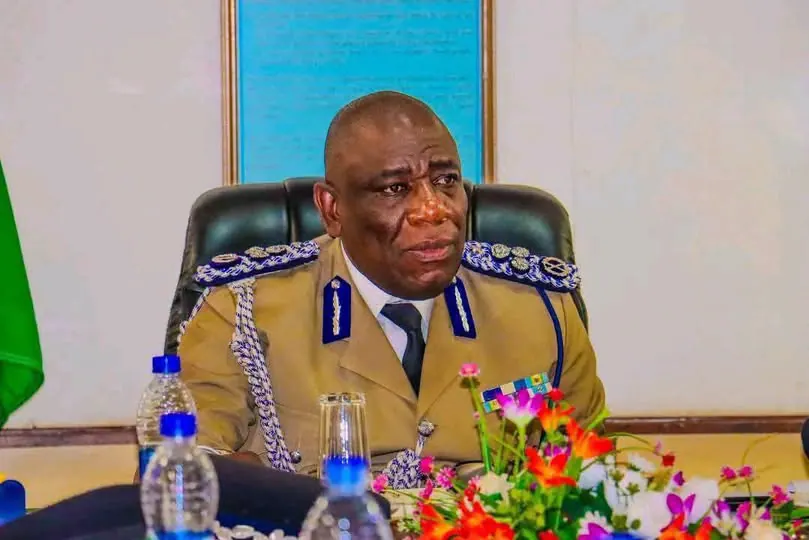
Police Inspector General Richard Luhanga has expressed concerns over the search operation for the military plane that crashed on June 10, 2024, killing Vice-President Saulos Chilima and eight others. Luhanga, who led the search and rescue mission as Commissioner of Police for the Northern Region, described the operation as "disjointed" and "archaic" due to poor set-up and lack of equipment. He attributed the inefficiencies to inadequate resources, including helicopters and drones, which could have facilitated a more effective search.
Luhanga's testimony before Parliament's Ad-hoc Committee investigating the crash highlighted several challenges faced during the search operation. He revealed that the police were "a bit out of their depth" and that continuing the search without proper equipment would have been merely "cosmetic." Luhanga confirmed that he ordered a "tactical pause" on the night of June 10, 2024, citing lack of proper search and rescue equipment, including torches. This decision has been disputed by former President Lazarus Chakwera and former Malawi Defence Force commander General Paul Velentino Phiri.
The search operation was hindered by inadequate equipment, poor preparedness for extreme cold, and delayed public announcement that the Vice-President's aircraft was missing. Luhanga emphasized that an earlier announcement could have helped people with information to assist in the search. He also cited poor coordination among agencies as a major challenge. Luhanga's account highlights the need for better preparedness and equipment in search and rescue operations.
Luhanga's boss at the time, Merlyne Yolamu, disputed testimony by her then director of operations Akis Muwanga that he was effectively her "messenger" during the search. Yolamu rejected the claim, stating that operational responsibility was delegated through established command structures. Her role was to provide overall oversight, receive reports, and give strategic direction, not to personally undertake operations assigned to junior officers.
The Ad-hoc Committee, established in March 2026, is conducting a fresh inquiry into the plane crash. The committee's chairperson, Walter Nyamilandu, stated that the witness-hearing phase is expected to end by October 30, before analysis involving pathologists and digital forensic experts. Both Luhanga and Yolamu urged Parliament to ensure adequate funding for the Malawi Police Service to improve its capabilities.
Prior investigations into the crash, including one conducted by Germany's Federal Bureau of Aircraft Accident Investigation and a 19-member presidential Commission of Inquiry, attributed the crash largely to adverse weather and operational factors. However, these findings faced widespread criticism and scepticism from the public. The parliamentary committee aims to provide a more credible and unbiased investigation into the crash.
The plane crash on June 10, 2024, has raised concerns about the Malawi Police Service's capabilities and preparedness for search and rescue operations. The Inspector General's testimony highlights the need for improved equipment, training, and coordination among agencies. The Ad-hoc Committee's investigation aims to shed more light on the circumstances surrounding the crash and provide recommendations for future improvements.
Key points
- - The search operation for the crashed plane was hindered by inadequate equipment and poor coordination among agencies. - Inspector General Richard Luhanga described the search operation as "archaic" and "disjointed" due to poor set-up and lack of equipment. - The Ad-hoc Committee's investigation aims to provide a more credible and unbiased investigation into the crash.