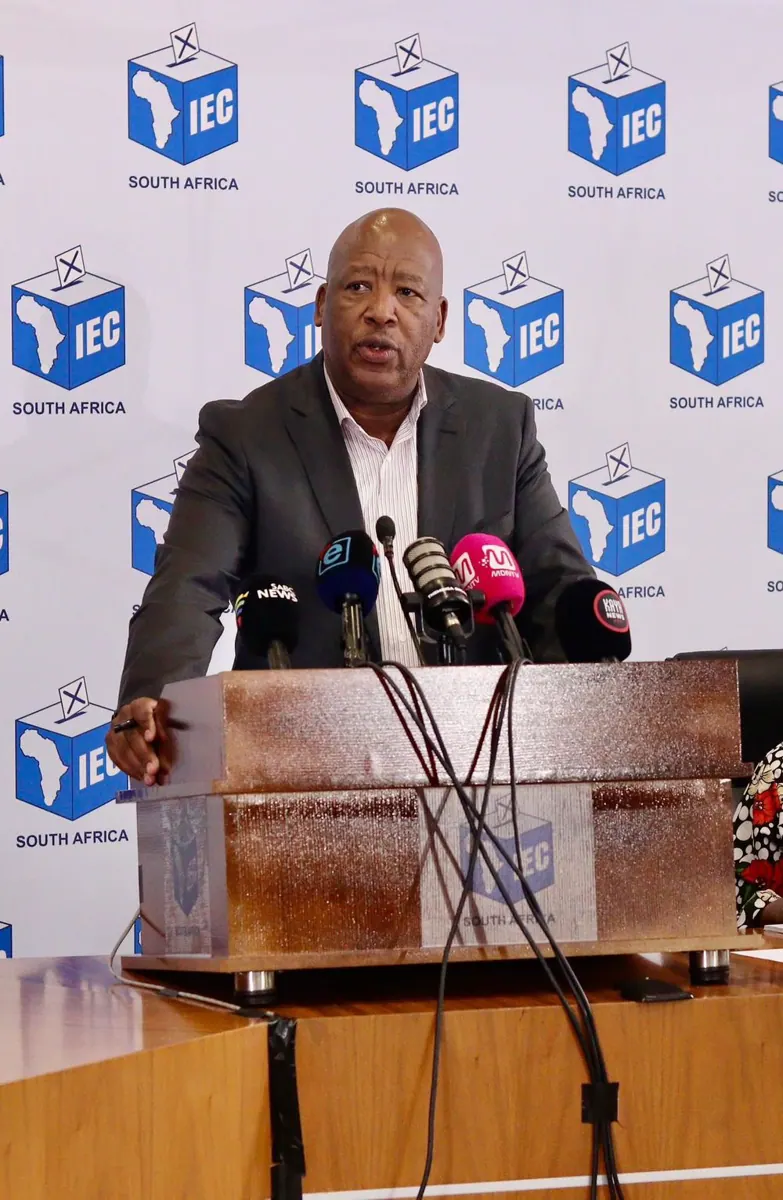
The Independent Electoral Commission (IEC) has requested that Parliament consider the Electoral Laws Amendment Bill, even though it may not be passed before the upcoming local government elections on November 4. Deputy Chief Electoral Officer Masego Sheburi briefed the Home Affairs Portfolio Committee on the implications of the bill not being passed before the elections.
The bill proposes several amendments to the Electoral Commission Act, the Electoral Act, and the Municipal Electoral Act. One of the key changes is that parties not represented in council, legislature, and Parliament will be required to renew their registration every year. This aims to prevent "shelf parties" that do not give notice of their existence from remaining on the register of parties.
The bill also seeks to increase the number of judges in the Electoral Court and enable the court to sit in various sessions to consider cases. The Judge President of the Electoral Court, in consultation with the Justice Minister, will compile a list of additional members made up of non-judges with relevant experience. This change aims to improve the efficiency of the Electoral Court.
Another significant amendment is the removal of registered post and telegram as methods to serve notices. The IEC will retain electronic mail and serving in person to bring it in line with modern forms of service. The bill also amends the provision for voters registering with the IEC to provide sufficient detail of their ordinary residence and what constitutes privacy rights and personal information on the voters' roll.
The bill proposes that objections to the voters' roll may only be made against the provisionally compiled roll. Once the period of objection has lapsed, and the commission has made a decision, the voters' roll is certified and can be used for an election. This aims to ensure the accuracy and integrity of the voters' roll.
Members of Parliament welcomed the IEC's approach but raised concerns about the exclusion of the Judicial Services Commission in recommending non-judges to serve on the Electoral Court. They also asked about accountability by unrepresented parties in terms of their funding. In response, Sheburi stated that all parties were required to account for their sources of money received and for donors to make a disclosure.
The Home Affairs Portfolio Committee chairperson, Mosa Chabane, noted that the timeframe was too tight to consider the bill before the elections. The committee will subject the bill to public participation for comment. IEC chairperson Mosotho Moepya emphasized that the Act should ensure deregistration happens by application of the law.
Key points
- The Electoral Laws Amendment Bill proposes annual registration renewal for unrepresented political parties.
- The bill aims to improve the efficiency of the Electoral Court by increasing the number of judges and enabling the court to sit in various sessions.
- The bill seeks to ensure the accuracy and integrity of the voters' roll by allowing objections only against the provisionally compiled roll.