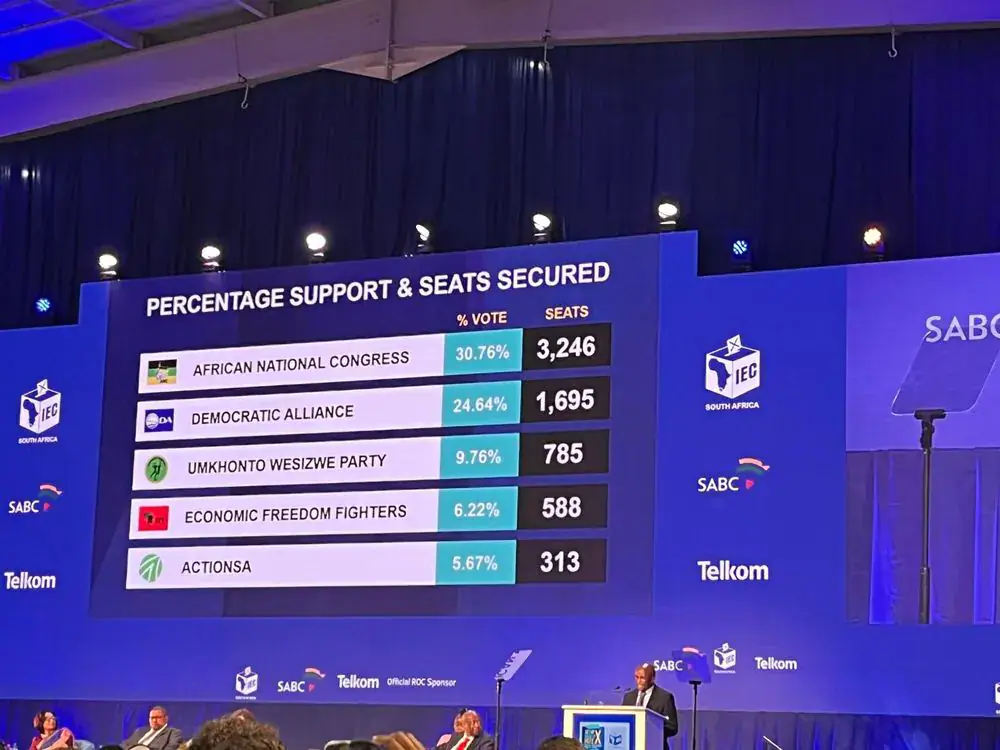
The Independent Electoral Commission (IEC) of South Africa has declared the 2026 Local Government Elections free and fair. Chief Electoral Officer Sy Mamabolo defended the IEC's management of the elections, acknowledging operational shortcomings and disruptions caused by a Constitutional Court order affecting candidate lists. The order, handed down on October 15, necessitated changes to candidate lists and resulted in approximately 28 million ballot papers being superseded.
Mamabolo said the commission had successfully delivered the elections through extensive operational planning, technological improvements, and the deployment of thousands of election officials across the country. A total of 15.2 million South Africans participated in the elections, with approximately 188,000 electoral staff deployed across 23,696 voting stations countrywide. The commission also strengthened its election management systems through the introduction of a Virtual Results Operations Centre.
The Virtual Results Operations Centre allowed political parties and candidates to access selected election applications and results remotely. A total of 1,149 users registered on the platform, including 85 political parties and 328 individual party officials. The platform recorded 54,908 information requests. Additionally, the commission received 14.3 million requests for information through its application programming interface (API).
Despite operational achievements, Mamabolo acknowledged that the commission had not got everything right. He stated that the 2026 local government elections were an unreserved endeavour to affirm the personhood of all voters. The commission had succeeded in many aspects but had come up short in others. The elections presented logistical challenges, including the Constitutional Court order that affected 181 ANC candidates in six municipalities.
The IEC extended the same dispensation to 32 other political parties in similar circumstances. Mamabolo said the changes required additional production, quality assurance, packaging, and distribution arrangements within an already established election timetable. The commission printed just over 100 million ballot papers for the elections and deployed approximately 56,000 voter management devices to support voting station operations.
The IEC's performance will continue to be assessed, with lessons documented and areas requiring improvement identified ahead of future elections. Mamabolo emphasized the commission's responsibility to account for the systems, resources, and administrative processes that made the elections possible. The official conclusion of the elections was addressed at the IEC Results Operations Centre in Gauteng on Sunday evening.
Key aspects of the elections included the successful deployment of election officials, the introduction of technological improvements, and the management of logistical challenges. The commission's efforts to affirm the personhood of all voters were acknowledged, along with areas for improvement. The IEC's declaration of the elections as free and fair underscores its commitment to ensuring the integrity of the electoral process.
Key points
- The IEC declared the 2026 local government elections free and fair despite operational shortcomings and disruptions caused by a Constitutional Court order.
- A total of 15.2 million South Africans participated in the elections, with approximately 188,000 electoral staff deployed across 23,696 voting stations countrywide.
- The commission received 14.3 million requests for information through its application programming interface (API) and 54,908 information requests through the Virtual Results Operations Centre.