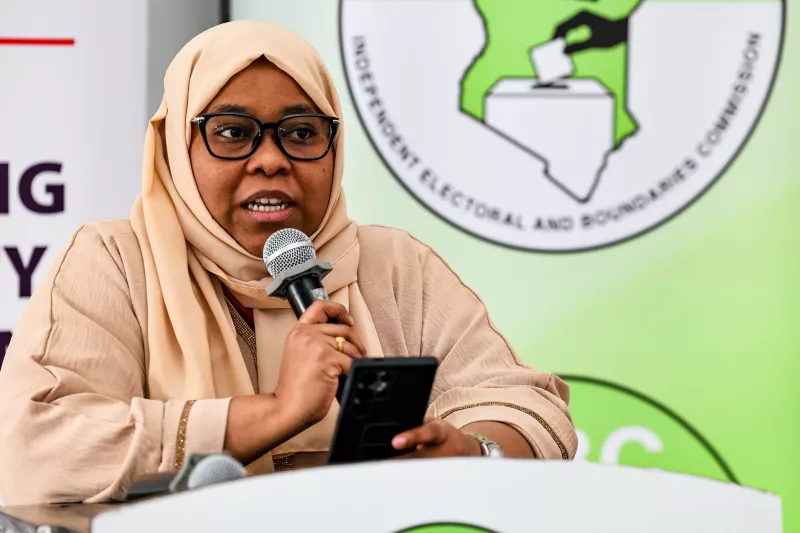
The Independent Electoral and Boundaries Commission (IEBC) of Kenya plans to introduce digital voting for Kenyans living abroad by 2031. IEBC vice chairperson Fahima Abdallah announced this during a meeting with Kenyans in New York, stating that the commission will work with relevant institutions to address the legal and technological requirements needed to make electronic diaspora voting possible. This move aims to allow Kenyans abroad to participate in elections without having to travel to Kenyan embassies or return home.
The IEBC is progressively expanding access to voting for Kenyans in the diaspora while investing in technology to increase electoral participation. However, Abdallah confirmed that electronic voting will not be possible in the 2027 general election, meaning Kenyans abroad will still have to cast their ballots physically at designated polling centers, usually diplomatic missions. The law currently states that elections can only be conducted on Kenyan soil, which means in Kenyan missions abroad.
To address the logistical challenges faced by Kenyans abroad, the IEBC is focusing on increasing the number of diaspora polling centers for the 2027 election. The commission has already expanded the number of countries covered by diaspora voter registration from 12 to 26. The new countries include Saudi Arabia, Botswana, Oman, Australia, Sweden, Switzerland, Netherlands, Ghana, Italy, the DRC, Nigeria, Ireland, Türkiye, Ethiopia, China, and Mozambique.
The Constitution of Kenya provides for the progressive realization of the voting rights of citizens living abroad. Article 82(1)(e) requires Parliament to enact legislation providing for the progressive registration of citizens residing outside Kenya and the progressive realization of their right to vote. This obligation is reinforced by Article 38, which guarantees every adult citizen the right to vote without unreasonable restrictions.
Despite the expansion, diaspora voting remains restricted in scope, with registered Kenyans living abroad able to vote only in presidential elections and national referendums. They cannot participate in elections for governors, senators, MPs, women reps, or MCAs. The IEBC is exploring ways to expand access to voting beyond the current arrangements and make electoral services more inclusive, particularly in countries with significant populations of Kenyan voters.
The push for electronic voting also comes amid efforts to widen participation among Kenyans abroad ahead of the 2027 election. Former Chief Justice David Maraga, who is seeking the presidency in 2027, has separately called for changes to the Elections Act to allow Kenyans abroad to vote electronically. Maraga stated that the voting system they eventually want to have in place is electronic voting for diaspora Kenyans.
The IEBC's initiative underscores its commitment to harnessing technology and innovation to make electoral processes accessible, efficient, and responsive to the needs of Kenyans. The commission is leveraging technology to enhance the voter experience of the diaspora and strengthen the efficiency, accuracy, and accountability of electoral processes. This move is expected to increase electoral participation and make voting more convenient for Kenyans living abroad.
Key points
- The IEBC aims to introduce digital voting for diaspora Kenyans by 2031.
- The commission has expanded diaspora voter registration to 26 countries for the 2027 election.
- Electronic voting will not be possible in the 2027 general election due to legal and technological hurdles.