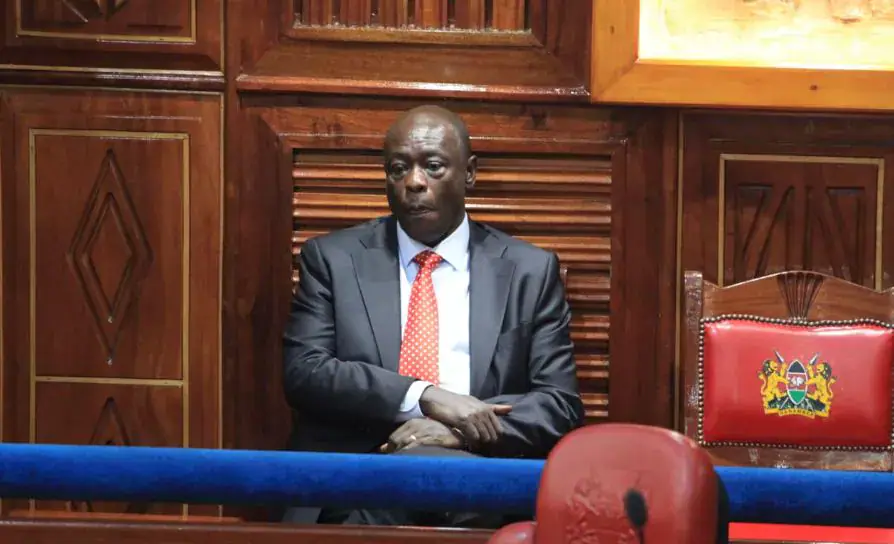
The Independent Electoral and Boundaries Commission (IEBC) of Kenya has denied reports that it has cleared former Deputy President Rigathi Gachagua to run in the 2027 presidential election. The clarification was made on Wednesday, November 25, after viral reports sparked confusion over remarks made by the commission's Director of Legal Services, Chrispine Owiye. IEBC Chairperson Erastus Edung Ethekon stated that Owiye's briefing covered general constitutional rules on candidate eligibility, not Gachagua's personal prospects.
The controversy began after a national television broadcast and social media posts suggested that the IEBC had ruled Gachagua eligible to vie for the presidency despite his impeachment in October 2024. However, the IEBC noted that Owiye's presentation focused on Articles 99 and 193 of the Constitution, which outline qualification and disqualification rules for candidates seeking seats in Parliament and county assemblies. The commission emphasized that Owiye did not address the consequences of impeachment.
According to the IEBC, Owiye explained the constitutional rules requiring candidates to exhaust all available appeals and reviews before facing disqualification. The commission noted that these safeguards work in practice to allow aspirants to challenge eligibility rulings. However, the IEBC made it clear that Gachagua's removal from office in October 2024 has sparked debate over whether an impeached leader can return to the ballot in 2027.
The IEBC pointed out that separate rules govern presidential hopefuls under Article 137 of the Constitution and related laws. Officials will assess candidates' qualifications only when the electoral calendar reaches formal candidate registration. The commission warned against reading legal briefings as binding rulings on individual aspirants and faulted coverage that mischaracterized Owiye's remarks.
With candidate registration still ahead under Kenya's electoral timeline, the IEBC emphasized that any determination of a prospective candidate's eligibility will be made at the appropriate stage of the electoral process. The commission stated that it will act independently and apply the law evenly, urging Kenyans to rely on official channels for electoral updates.
IEBC Chairperson Ethekon called on journalists to verify complex constitutional and electoral details before publishing them. He reaffirmed the IEBC's commitment to transparency and urged the public to be cautious of misinformation. The commission's clarification aims to set the record straight and avoid speculation about Gachagua's eligibility.
The controversy surrounding Gachagua's eligibility highlights the complexities of Kenya's electoral laws and the importance of accurate reporting. As the 2027 election approaches, the IEBC's role in ensuring a smooth and transparent electoral process will be crucial. The commission's clarification serves as a reminder that only official channels can provide accurate information about electoral processes.
Key points
- The IEBC has denied clearing former Deputy President Rigathi Gachagua to run in the 2027 presidential election.
- The commission clarified that its Director of Legal Services' briefing covered general constitutional rules, not Gachagua's personal prospects.
- The IEBC will assess candidates' qualifications only when the electoral calendar reaches formal candidate registration.