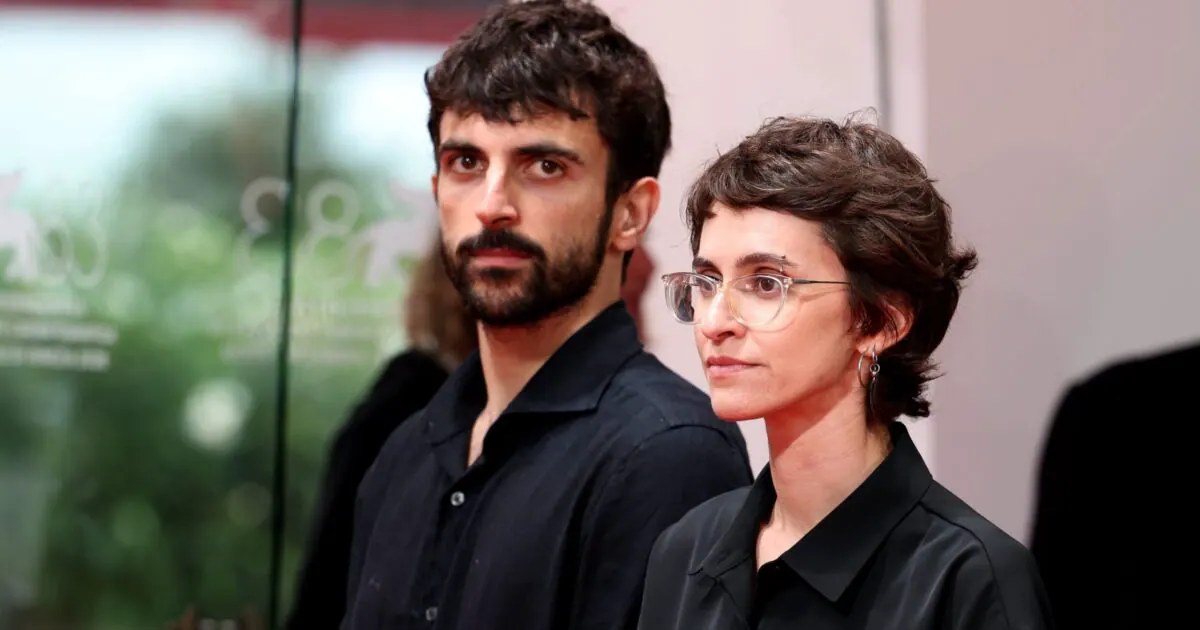
The Israel Defense Forces (IDF) has issued its first detailed response to the documentary 'NAZA', which alleges that Israeli forces knowingly killed large numbers of civilians in the Gaza war. The IDF accused the filmmakers of making "fundamental errors" about how civilian-casualty estimates, strike approvals, and intelligence tools were used. According to the IDF, the film presents a "distorted, misleading, and disingenuous picture" of the IDF's target planning and striking process.
The documentary 'NAZA', directed by Yuval Abraham and Rachel Szor, is based on interviews with 24 Israeli soldiers, mostly intelligence personnel, who describe their roles in surveillance, target selection, and strikes in Gaza. The film argues that the military accepted high civilian-casualty estimates, relied heavily on artificial intelligence tools to generate targets, and weakened safeguards governing strikes. The IDF rejected one of the documentary's most prominent claims, that a strike had been approved despite an estimated civilian death toll of about 500.
The IDF stated that it had "never planned, approved, or carried out" a strike in which 500 civilians, or "anything close to that number", were expected to be killed. The military also rejected the film's claim that junior Hamas operatives could be approved for targeting with as many as 20 expected civilian casualties, and that senior commanders could be targeted with as many as 200. The IDF said the film had confused thresholds requiring approval from more senior commanders, who could then reject the operation, with permission to kill a fixed number of civilians.
The IDF acknowledged that several incidents involving civilian deaths near humanitarian aid distribution sites prompted operational reviews, changes to instructions, and other measures in those areas. However, it disputed testimony that soldiers fired indiscriminately at civilians near the sites, saying troops were permitted to fire only at militants or people posing an immediate threat. The IDF also rejected the film's suggestion that civilians who remained in evacuation zones could then be treated as legitimate targets.
The IDF disputed the film's portrayal of "Lavender" as an AI-powered list of targets approved for attack, saying the production had misunderstood what the programme was: a database used to cross-reference intelligence on members of militant groups, which did not make someone in the database a target. The IDF argued that many of the anonymous soldiers featured in 'NAZA' were describing only "limited, initial stages" of the targeting process.
A Guardian News & Media spokesperson stated that The Guardian "stands fully behind the film", which it said was based on three years of reporting by the outlet and its partners and interviews with more than 100 sources familiar with IDF systems used in Gaza. The Guardian rejected what it described as the IDF's attempt to portray the film's interviewees as "junior-ranking officers involved only in the early stages of the targeting process".
The IDF's response came after an IDF representative attended a screening of 'NAZA' in Bologna, Italy, allowing the military to assess the full film for the first time. The film won the Special Jury Prize at the Venice Film Festival last month.
Key points
- The IDF claims the documentary 'NAZA' contains "fundamental errors" about its actions in the Gaza war.
- The documentary alleges that Israeli forces knowingly killed large numbers of civilians in the Gaza war.
- The IDF and The Guardian have presented differing accounts of the film's portrayal of IDF actions in Gaza.