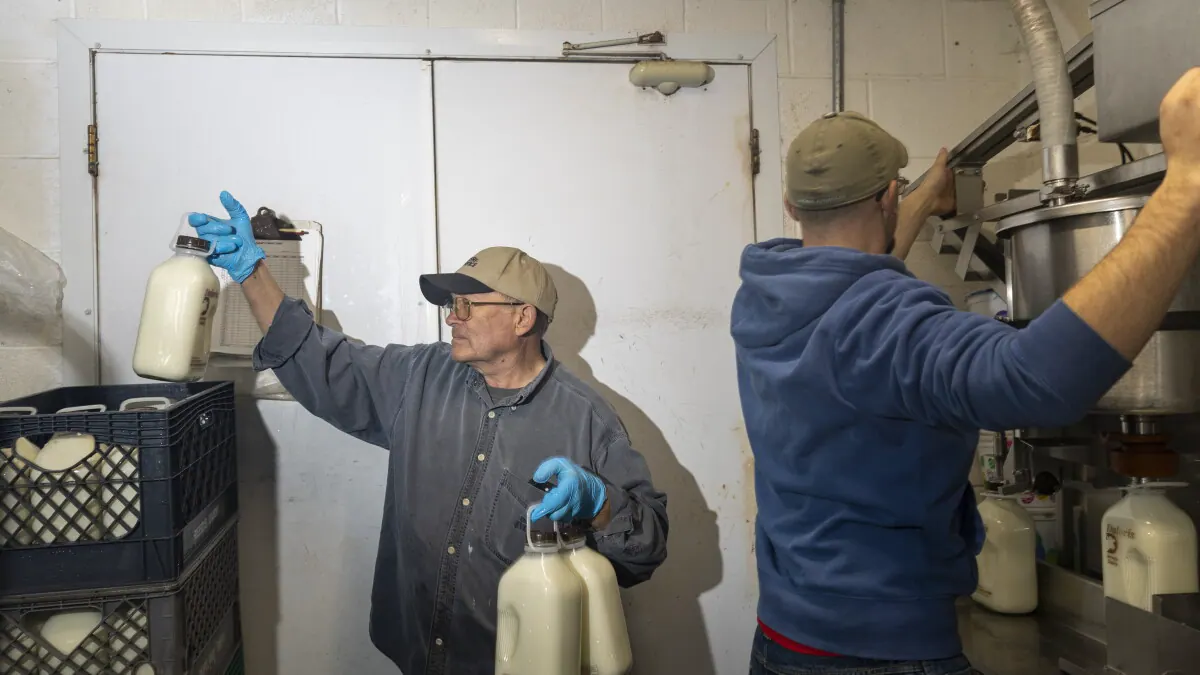
Idaho's dairy industry is a significant contributor to the state's economy, with the state being the fourth-largest milk producer in the US. However, the industry relies heavily on undocumented immigrant labor, with estimates suggesting that up to 90% of workers at the state's 350 dairies may not have legal status. Despite this, the industry has largely escaped President Trump's aggressive immigration crackdown, but farmers are growing increasingly uneasy.
The Idaho Dairymen's Association CEO, Rick Naerebout, estimates that many dairy jobs pay more than most service jobs in small-town America, but still, few local residents apply for these positions. In fact, last year, Idaho advertised 7,500 jobs through the temporary farm worker visa program known as H2A, but only four local residents applied. Naerebout says that the jobs are physical in nature and are often outdoors, which can be a deterrent for American workers.
The labor crisis is even more pronounced in Idaho's dairy industry because the work is year-round, not seasonal, and therefore not eligible for temporary H2A visas. This means that the industry has to rely on migrant labor, which can be unpredictable and vulnerable to changes in immigration policy. Naerebout says that the uneasiness among farmers continues to grow as workers see the increased immigration enforcement activity around them.
Despite the concerns, Idaho has not seen the same level of immigration enforcement as some other states. However, twice a week, an ICE deportation plane lands at the Twin Falls airport, and a small group of immigration-rights activists, including Heather Muth, unfurl a banner facing the tarmac, reading "Human Rights, Not Shuffle Flights." Muth says that the purpose of these flights is to move detainees around so that their attorneys and families can't find them.
The immigration crackdown is having a ripple effect on local communities, with some families choosing to self-deport. Susan Rios, a 65-year-old farmworker activist and grandmother, says that her daughter and son-in-law, fearing ICE, recently moved to Mexico. Rios adds that local farms already can't find enough workers, and it's getting worse due to the immigration crackdown.
Nampa-based immigration attorney Brandy Perez attributes the relatively low level of immigration enforcement in Idaho to the dairy industry's political clout in the state. She says that the industry has the ear of some legislators and the governor, which has helped keep enforcement at a different level than in other states. However, Perez notes that this could change quickly if the administration decides to take a harder stance on immigration.
For now, Naerebout is taking the president at his word that a solution will be found for farmers and their undocumented workers. However, he acknowledges that this favorable position with the administration could change quickly, and the industry is still waiting for a promised fix from the President and Republican-controlled Congress. A GOP-backed bill with bipartisan support that would remove the seasonal requirement for key agricultural visas has gone nowhere.
Key points
- Idaho's dairy industry relies heavily on undocumented immigrant labor.
- Farmers are worried that Trump's immigration crackdown will harm their ability to produce food.
- The industry's political clout in the state has helped keep immigration enforcement relatively low.