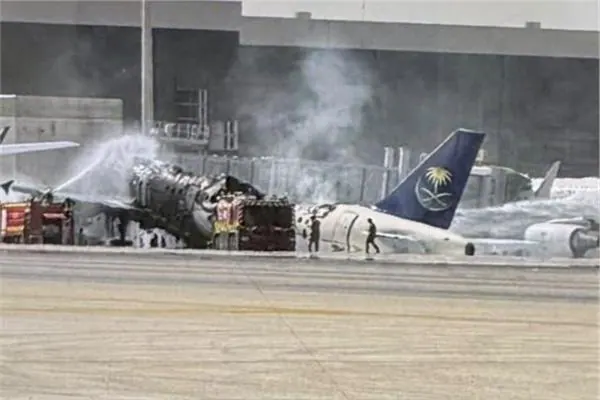
The International Air Transport Association (IATA) has strongly condemned the recent attack on King Khalid International Airport in Riyadh, Saudi Arabia. The organization expressed its deepest condolences to the families of the victims and those affected by the tragic incident. IATA's Regional Vice President for Africa and the Middle East, Kamil Al-Awadhi, stressed that targeting civil aviation, including passengers, airports, aircraft, and aviation workers, is unacceptable. He emphasized that protecting civil aviation is a fundamental commitment under international law.
IATA is calling on governments to enhance the global framework for reducing aviation emissions as the International Civil Aviation Organization (ICAO) marks 10 years since adopting a resolution to establish the Carbon Offset and Reduction Scheme for International Aviation (CORSIA). The scheme, which was agreed upon in 2016, is the first global market-based mechanism to reduce emissions in an industry sector. Over 130 countries have signed up to CORSIA, which is expected to offset or reduce around 200 million tons of carbon dioxide by the end of 2026 and cover nearly 85% of international aviation emissions from 2027.
CORSIA is anticipated to mobilize up to $120 billion in climate finance by the end of its implementation period, supporting emission reduction and carbon removal projects globally. IATA's Senior Vice President for Sustainability and Chief Economist, Marie Owens Thomsen, highlighted the importance of international cooperation in addressing climate challenges through CORSIA, which maintains a level playing field for airlines and directs funding to support emission reduction projects.
IATA warned that the upcoming review of the European Union's Emissions Trading System (EU ETS) could lead to duplicative regional and international carbon pricing systems, rather than promoting a unified global framework for international aviation. The European Commission is considering proposals to extend the EU ETS to cover destinations up to 5,000 kilometers from the EU and create a mechanism to develop similar carbon pricing systems with countries outside the EU.
IATA's Senior Vice President for External Affairs, Thomas Renart, urged that the EU ETS review should reinforce CORSIA, rather than encouraging parallel regional or bilateral systems. He advocated for directing aviation revenues towards sustainable aviation fuel production, modern infrastructure, and technologies. According to IATA estimates, the proposed expansion could increase compliance costs for the EU ETS by 40%, reaching around €280 billion from 2027 to 2040.
IATA is pushing for the full and uniform implementation of CORSIA, rather than expanding the EU ETS beyond its regional boundaries. The organization also calls for increased support for sustainable aviation fuel production, early provision of necessary financing, and allocating emission trading revenues to fund sustainability projects and new technologies. This approach aims to reduce emissions while maintaining the competitiveness of the aviation sector.
The attack on King Khalid International Airport and the push for global aviation emission reductions are critical issues for the aviation industry. IATA's efforts focus on promoting international cooperation, supporting sustainable aviation practices, and advocating for a unified global framework to address climate challenges and ensure the sector's long-term sustainability.
Key points
- IATA condemns the Riyadh airport attack and emphasizes the need for global cooperation to reduce aviation emissions.
- CORSIA is expected to offset or reduce around 200 million tons of carbon dioxide by the end of 2026.
- IATA warns that the EU ETS review could lead to duplicative regional and international carbon pricing systems.