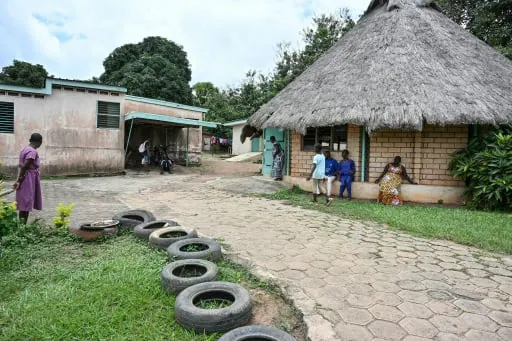
In Ivory Coast's second city, Bouake, the Arche centre is one of the country's few specialised sites helping people with developmental disorders. The centre provides residential care for 31 people with developmental disorders ranging in ages from eight to 60. Nearly 100 others regularly come to take part in activities at the centre, which opened in 1974 and is part of a federation with sites in 38 countries.
Ahou Albertine Kouadio, a 70-year-old mother, says it's tough leaving her son in care but it's the safest place for him in Ivory Coast, where youngsters with developmental disorders face rejection, violence or even death. After having him at home over the holidays, Kouadio dropped Alexandre off at the Arche centre, where he stays for the rest of the year. Kouadio said she wants to ensure her son's safety when she's no longer around.
The United Nations says Africa woefully lacks action to integrate the more than 80 million people living with disabilities on the continent, where children with disabilities are often spurned. The need is nothing short of an "emergency", according to the recently established RAIPH network, which brings together organisations, activists and experts to raise awareness, advocate and help train.
In Ivory Coast, as in other African countries, children with a disability are often described as "genies", "sorcerers" or -- for those with mobility issues -- "snake children". With very few state-run health facilities available to treat developmental disorders, youngsters are often sent to unconventional religious retreats to be "cured". In extreme cases, they are "accompanied" -- meaning killed, often by poisoning or by drowning, Arche's director Celestin N'Goran said.
The Arche centre's director, Celestin N'Goran, says the youngsters can face violent rejection by society but must be integrated and included. "The children aren't sorcerers or genies," N'Goran said. "They are fully fledged human beings who have a right to life. We must respect their dignity and include them in society." Those at the Arche centre, most of whom are on neuroleptic medication, do activities such as learning the alphabet, colouring and market gardening.
Staff from the centre regularly follow up with the families too, to see "whether these children are able at home to keep up with what we teach them here", social worker Marine Tardy Kouame said. Through awareness programmes and support groups, she encourages parents to "accept their children as they are". Developmental disorders are "not very well known, which is why there are a lot of prejudices", N'Goran said.
RAIPH referred to an "undeniable normative progress" in Africa but said many difficulties remained, including a lack of training for healthcare personnel, too little focus on the issue within national health policies and "persistent social attitudes". The organisation's efforts aim to address these challenges and promote inclusion and awareness for people with disabilities in Africa.
Key points
- The Arche centre in Bouake, Ivory Coast, provides lifelong care for people with developmental disorders, offering a safe haven from rejection and violence.
- Children with disabilities in Africa often face rejection, violence, and even death due to lack of understanding and support.
- The RAIPH network aims to raise awareness, advocate, and help train to integrate people with disabilities in Africa.