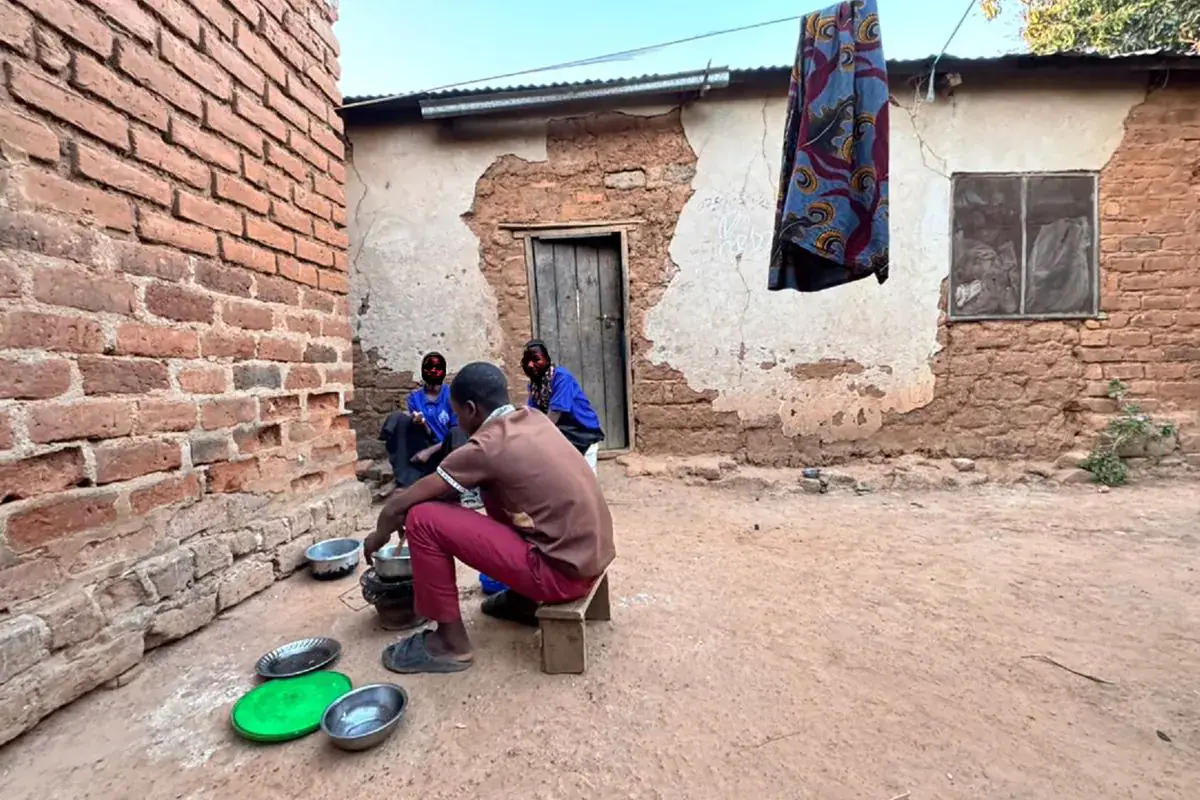
Many secondary school students in Tanzania's Shinyanga Region are struggling with hunger and poor living conditions while renting rooms in informal neighborhoods, known as 'ghettos'. These students receive a weekly allowance from their parents, which can be as little as 2,000 Tanzanian Shillings (approximately $0.86 USD). This amount is expected to cover all their basic needs, including food and school requirements. As a result, some students are forced to survive on just one meal a day.
An investigation in Ushetu District, Shinyanga Region, found that students rent rooms in informal neighborhoods due to the long distances they would have to walk to school, with some journeys covering nearly 20 kilometers a day. The lack of boarding facilities in some schools, most of which are ward secondary schools designed for day scholars, has left students with little choice but to rent rooms in often unsafe environments. In one visited house, four students shared a single small mattress that could barely accommodate them.
The living conditions of these students are far from comfortable. They often have to collect food from home every one or two weeks to cope with financial difficulties. Some students have to share a small mattress and arrange themselves carefully to fit, while others have to spread a sack on the floor to prevent their feet from touching the bare ground. The rooms are often dusty, with clothes and other belongings scattered around, and have small windows that allow in little light.
The situation is complicated for students at Kisuke Secondary School, where boys and girls live in adjacent rooms. At one house in Nyamilangano Village, a reporter witnessed a Form Two girl entering the room of a male student several times. One of the tenants, Sarah Joseph, has taken on an informal guardian role, offering assistance whenever problems arise. However, she admits that she cannot supervise them all the time.
Some students have had to find alternative solutions to attending school. A Form Three student at Kisuke Secondary School initially tried cycling to school from her home in Ngokolo but eventually gave up due to exhaustion. She now rents a room near the school, paying 7,000 Tanzanian Shillings (approximately $3 USD) in monthly rent. She also looks after her two younger sisters, who occupy a neighboring room and attend the same school.
Parents are also facing challenges in sending their children to boarding schools, with fees ranging from 70,000 to 120,000 Tanzanian Shillings (approximately $30-$52 USD). Kabika Makubi, a parent whose child rents a room, says she cannot afford to send all her three children to boarding school. Instead, she pays 7,000 Tanzanian Shillings a month for her child to rent a room, allowing her to provide basic necessities when they visit home.
The situation could expose students to various forms of exploitation and risky behavior. Seif Haji, a motorcycle taxi rider in Nyamilangano Village, says that many students receive very little money from home and have not been paid for meals at school, leaving them hungry from morning until evening. The investigation established that some students survive on just one meal a day when they return to their rented rooms, while others spend the entire day without food.
Key points
- Students in Tanzania's Shinyanga Region face hunger and poor living conditions while renting rooms in informal neighborhoods.
- The lack of boarding facilities in some schools has left students with little choice but to rent rooms in often unsafe environments.
- Parents are also facing challenges in sending their children to boarding schools due to high fees.