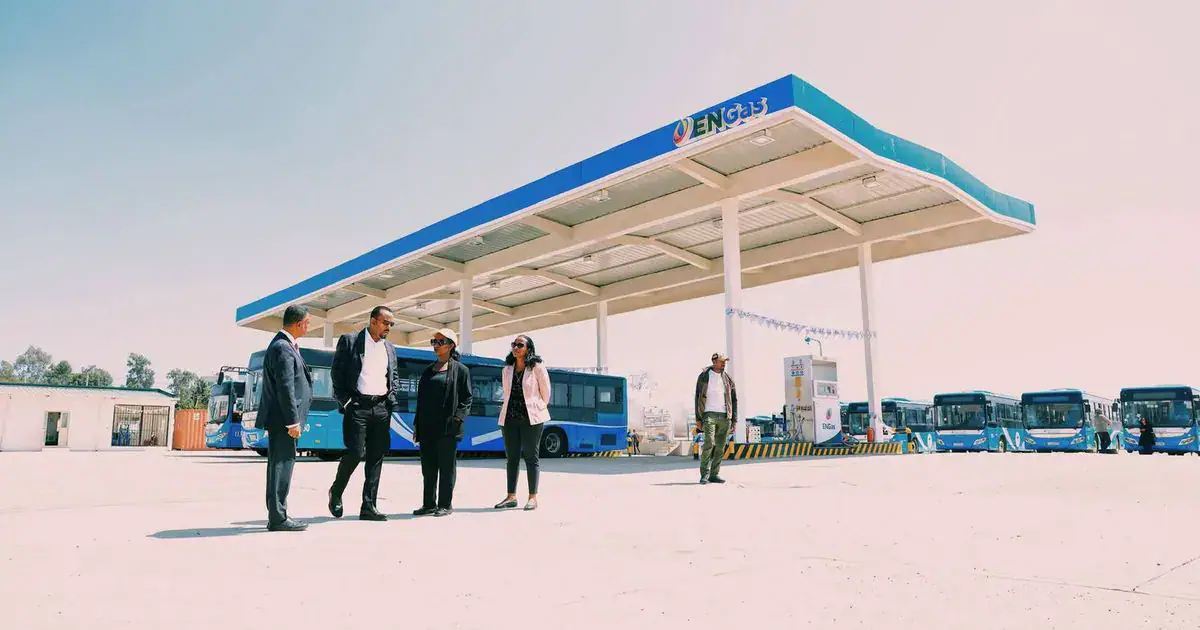
Ethiopia has started transporting natural gas from Gode to Dire Dawa, Adama, and Addis Ababa to reduce its reliance on imported diesel. The government has converted 26 Anbessa city buses from diesel to natural gas, allowing for a 50 percent cut in passenger fares. This move is expected to deliver immediate savings for everyday workers, students, and market traders. The conversion of buses was a complex engineering challenge that required modifying heavy-duty diesel transit buses and building a domestic gas supply chain from scratch.
To speed up the transition, the government is importing 400 brand-new natural gas buses that will arrive soon, with the goal of converting the capital's entire public bus fleet of over 1,200 to 2,000 vehicles in the next few years. Ethiopian engineers imported specialized gas engines and high-pressure fuel systems, then performed the mechanical retrofits locally in Addis Ababa. This local conversion work proves that domestic technicians can handle complex gas-engine technology transfers.
The biggest technical hurdle was moving the fuel itself, as there is no cross-country pipeline connecting the southeast to the central highlands. To bridge this gap, planners engineered a "virtual pipeline" on wheels, importing over 100 specialized natural gas hauling trucks and differentiated tankers. A chain of strategic storage, decompression, and fueling stations was built from Dire Dawa and Adama to Addis Ababa.
The new eastern gas corridor is not only fueling city buses but also rewiring Ethiopia's heavy manufacturing sector to tackle the high cost of housing. Major ceramics factories along the Modjo and Debre Birhan industrial belts have been converted to run on domestic natural gas. By replacing imported fuel with local gas, manufacturers can produce building materials at a fraction of the previous energy cost.
The transition from imported fuels to Ethiopian natural gas targets two macroeconomic headaches: keeping scarce U.S. dollars inside the country and reducing household inflation. The shift is expected to slash Ethiopia's multibillion-dollar annual fuel import bill and target the drivers of household inflation – food, housing, and transport.
Prime Minister Abiy Ahmed announced the start of the natural gas-powered transportation system, marking a significant step towards reducing living costs. The government aims to provide tangible daily relief for millions of citizens by cutting commuter bus fares, eliminating diesel surcharges for heavy trucks, and providing domestic energy to fire tiles at local ceramics plants.
The use of domestic natural gas is expected to have a positive impact on the economy, reducing the country's reliance on imported fuels and creating jobs in the manufacturing sector. The government's efforts to convert buses and power ceramics plants to natural gas demonstrate a commitment to reducing living costs and promoting economic growth.
Key points
- - The Ethiopian government has converted 26 Anbessa city buses from diesel to natural gas, cutting passenger fares by 50 percent. - The government plans to import 400 new natural gas buses and convert the capital's entire public bus fleet to natural gas in the next few years. - The shift to domestic natural gas aims to reduce Ethiopia's fuel import bill and target household inflation drivers, including food, housing, and transport.