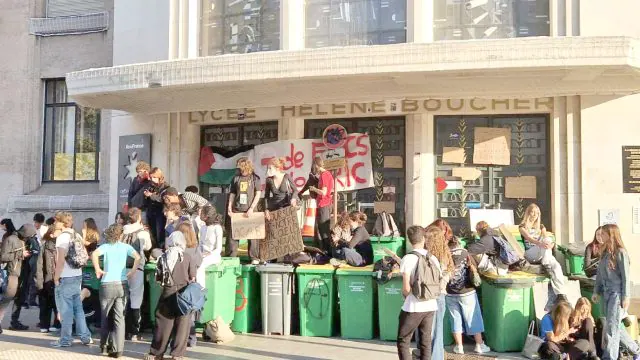
Student protests in France have entered a third day, with hundreds of schools closed or partially closed due to the ongoing demonstrations. The protests, led by high school students, are demanding better facilities, more teachers, and relief from the pressures of the Parcoursup university entrance system. The movement has gained momentum, with many universities and student unions joining in. The protests have sparked concerns about a potential national crisis, with the government struggling to respond to the students' demands.
The protests began after a meeting between student representatives and government officials failed to produce any concrete solutions. The students are frustrated with the lack of progress on their demands, and the situation has escalated, with many schools forced to close. The government has deployed police to maintain order, but the situation remains tense. The protests have also sparked concerns about the potential for violence and clashes between protesters and police.
The French education minister, Édouard Geffray, has reported that over 400 to 500 schools are affected, with many more expected to join the protests. In the Île-de-France region, over 160 public high schools remain closed, despite calls from the prime minister, Sébastien Lecornu, for students to return to class. The government is under pressure to find a solution, but so far, it has maintained a firm stance.
The student protests have also drawn support from trade unions and other organizations. The CGT, FSU, and FCPE unions have joined forces with the student movement, calling for a national day of action. The unions are demanding not only support for the students' demands but also protection for them from police violence and extremist groups.
The government has responded by pledging to take a tough stance on the protests. Maud Bregeon, a government spokesperson, has stated that the priority is to restore order and announced plans to introduce a "casseurs-payeurs" (rioters pay) law, which would hold protesters accountable for damages. The law is set to be debated in the Senate later this month.
The protests have also sparked concerns about the broader social and economic context in France. The healthcare sector has faced repeated budget cuts, and there are fears that the protests could spread to other areas. The government is under pressure to address the underlying issues driving the protests, but so far, it has focused on maintaining order.
The student protests are set to continue, with many schools and universities expected to join in. The government is facing a difficult challenge in balancing the need to maintain order with the need to address the students' legitimate concerns. The situation remains uncertain, with many watching to see how the protests will unfold.
Key points
- The protests are driven by students' demands for better facilities, more teachers, and relief from the pressures of the Parcoursup university entrance system.
- The government has responded by pledging to take a tough stance on the protests and introducing a "casseurs-payeurs" law.
- The protests have sparked concerns about a potential national crisis and the broader social and economic context in France.