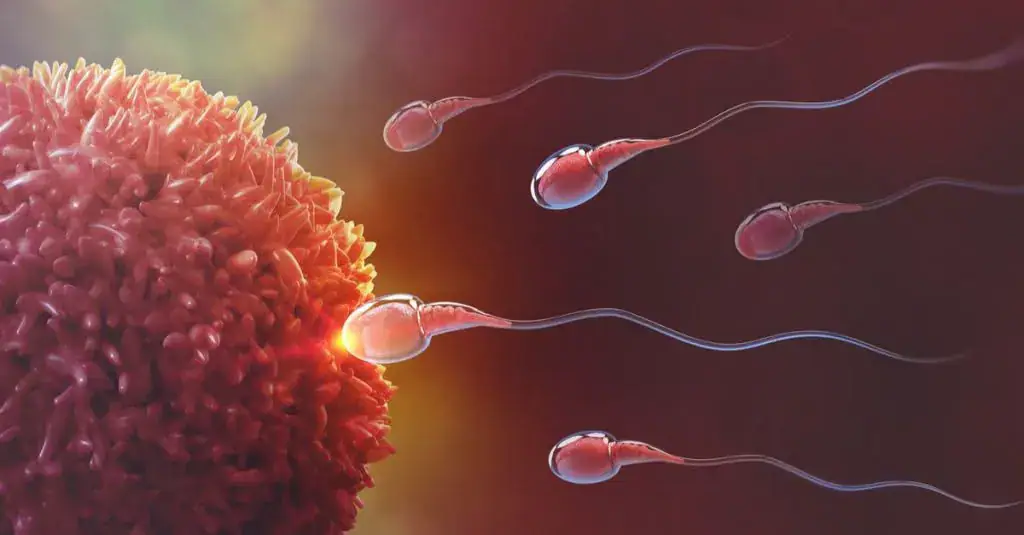
A recent study by researchers at the University of Stockholm and the University of Manchester has challenged the idea that the fastest sperm always fertilizes the egg. The study, published in the Proceedings of the Royal Society B, found that chemical signals from the egg's environment can influence which sperm it attracts. This discovery has shed new light on the mechanisms of human reproduction.
The researchers investigated the follicular fluid surrounding the egg, which contains molecules that attract sperm. They found that this fluid does not attract all sperm equally. In fact, the fluid from one woman's egg may attract sperm from a specific man more than others. This suggests that the egg is not a passive player in the fertilization process.
The study revealed that the sperm of a partner do not always have a preference in laboratory settings. The chemical signals from the egg can influence the chances of fertilization by favoring certain combinations of female and male reproductive cells. This phenomenon is known as "cryptic female choice." The findings have added a new dimension to the understanding of fertilization.
The research was conducted by John L. Fitzpatrick and his collaborators, who published their findings on June 10, 2020. The study's results have implications for fertility research and assisted reproduction techniques, such as in vitro fertilization (IVF). A better understanding of the interactions between gametes could lead to improved fertility treatments.
While the study demonstrates selective chemical attraction in laboratory settings, it does not prove that the egg always chooses the genetically most compatible sperm. The researchers also found no significant link between this chemical preference and pregnancy or birth rates after IVF. However, the study contributes to a deeper understanding of human reproduction complexity.
The discovery that fertilization depends not only on sperm speed but also on subtle molecular interactions between reproductive cells opens up new avenues for research. Further studies are needed to explore the mechanisms underlying these interactions and their impact on fertility. The findings have sparked interest in the scientific community and may lead to new insights into human reproduction.
The study's authors remain cautious about their findings, emphasizing that more research is needed to fully understand the implications of their discovery. Nevertheless, the study has provided a new perspective on the fertilization process, highlighting the active role of the egg in selecting sperm. This knowledge could ultimately lead to improved fertility treatments and a better understanding of human reproduction.
Key points
- Chemical signals from eggs influence sperm selection
- The egg is not a passive player in fertilization
- The study's findings have implications for fertility research and assisted reproduction techniques
Reporting sources
- <img fetchpriority="high" decoding="async" width="534" height="462" class="entry-thumb" src="https://cdn2.webmanagercenter.com/di/wp-content/uploads/2026/11/ovule-534x462.jpg" alt="" title="Fécondation humaine : une découverte scientifique révèle que l’ovule choisit son spermatozoïde"/> · directinfo.webmanagercenter.com