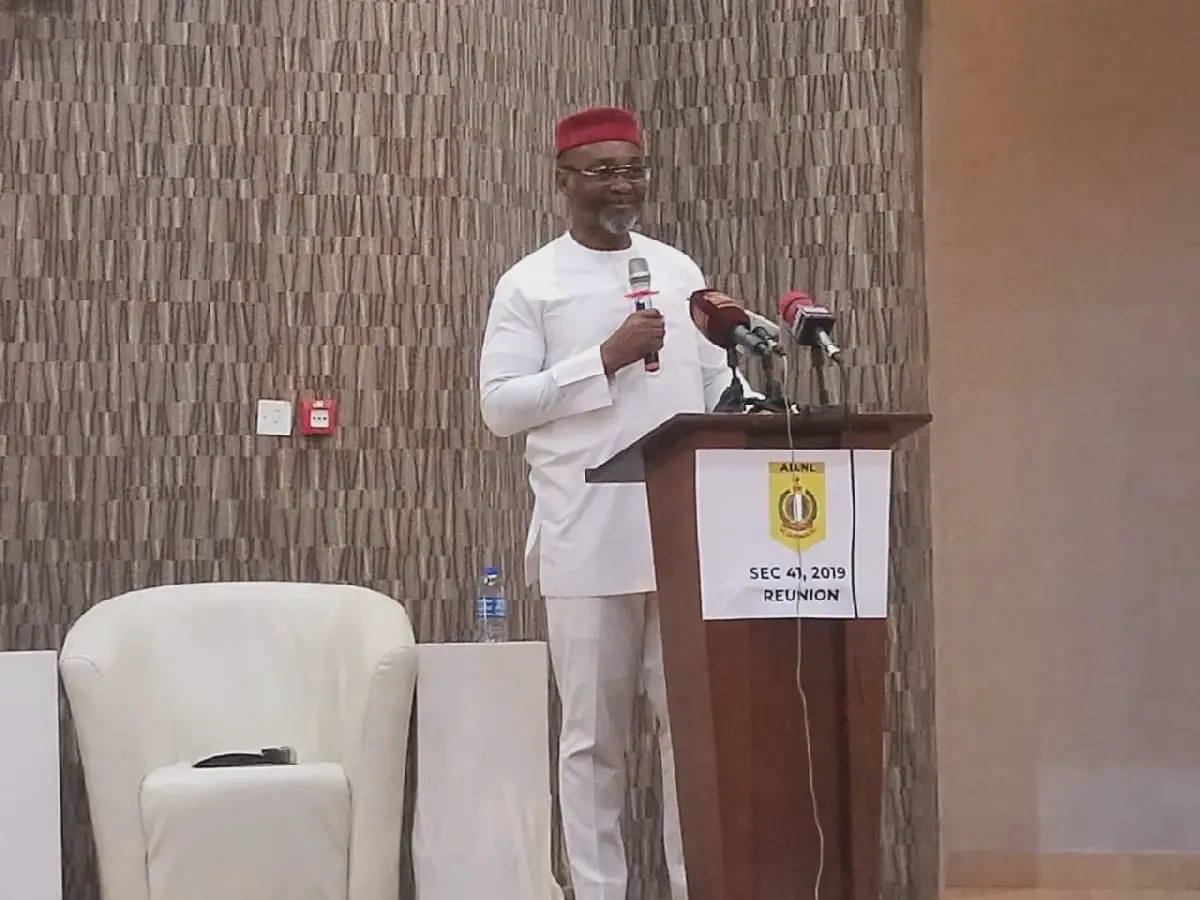
Nigeria has been urged to strengthen early warning mechanisms to identify and address the underlying causes of conflicts before they escalate into national crises. This call was made by Chief Osita Chidoka, former Minister of Aviation and former Corps Marshal of the Federal Road Safety Corps. He delivered the keynote address at the reunion of Senior Executive Course 41 participants of the National Institute for Policy and Strategic Studies, NIPSS, in Abuja.
Chidoka emphasized that Nigeria must move beyond reacting to conflicts after they erupt and focus on understanding the early signs, patterns, and conditions that allow crises to develop. He explained that conflicts have incubation periods during which political tensions, grievances, and divisive narratives gradually build up before resulting in violence. This understanding is crucial in preventing national instability.
The former Minister of Aviation cited historical examples, including the 1994 Rwandan genocide and Nigeria’s political developments between 1962 and 1966, to stress the importance of identifying and addressing early warning signs through timely interventions. He challenged NIPSS to undertake deeper research into the historical patterns and underlying causes of conflicts in Nigeria, with a view to developing preventive strategies rather than merely responding to the consequences of crises.
The reunion of Senior Executive Course 41 participants also featured other notable speakers. Retired Major General Umar Wambai, the Monitor-General of SEC 41, said the reunion provided an opportunity for members to reflect on their contributions to national development, renew professional relationships, and strengthen collaboration towards addressing the country’s challenges.
Additionally, former Director-General of NIPSS, Retired Brigadier General Chukwuemeka Udaga, called for stronger mechanisms to ensure that policy recommendations generated by participants of the Institute’s Senior Executive Courses were adopted and implemented by government. He emphasized the need for sustained engagement with policymakers and stronger collaboration between NIPSS, its alumni association, and relevant government institutions.
The Emir of Nasarawa, His Royal Highness Alhaji Ibrahim Jibril, expressed concern over the pressure of population growth on infrastructure in the Federal Capital Territory, particularly the shortage of public healthcare facilities. He recalled that the Abuja Master Plan projected a population of three million, but the city’s daytime population had grown to about seven million, placing considerable pressure on existing infrastructure and public services.
The reunion provided a platform for members to exchange ideas and examine strategies for addressing Nigeria’s development challenges, including population growth, governance gaps, security threats, healthcare financing, and technological disruptions. The event highlighted the need for collaborative efforts to address these challenges and ensure sustainable development in Nigeria.
Key points
- Chief Osita Chidoka urges Nigeria to strengthen early warning mechanisms to prevent conflicts escalation.