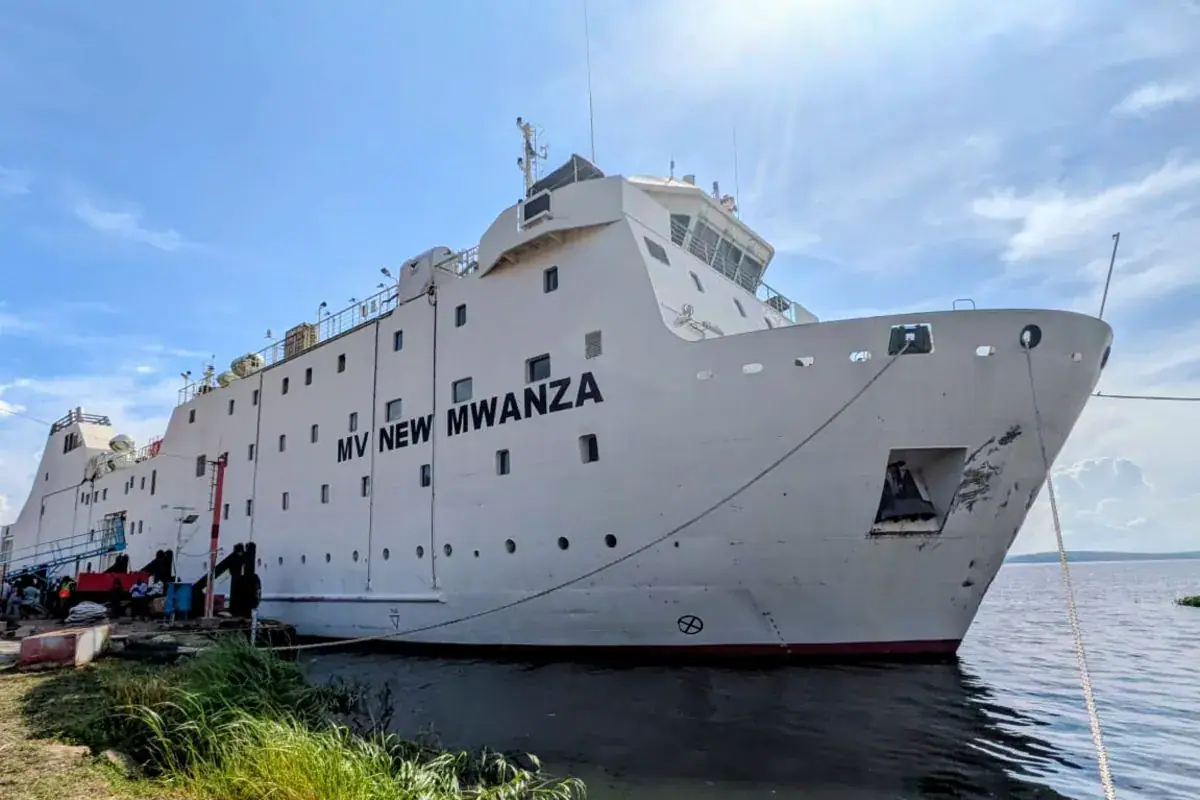
An official investigation into the MV New Mwanza accident on Lake Victoria has found that human error was the cause of the incident. According to Transport Minister Prof Makame Mbarawa, the investigation established that the accident was not caused by a technical failure in the vessel's main operating systems. The vessel, which was carrying transport sector stakeholders when the accident occurred on November 18, has been declared free of major structural damage and critical technical failures.
The investigation, which followed International Maritime Organisation (IMO) procedures, examined six key areas to establish both the cause of the incident and the vessel's condition. These areas included navigation and route planning, the use of navigation equipment, steering systems, engines and machinery, internal communication, crew competence, and the vessel's structural condition. The investigation assessed the planned route, vessel speed, direction, water depth, and the presence of rocks or other obstacles along the route.
The captain of the MV New Mwanza has been suspended from operating the vessel due to human error linked to his experience, competence, and understanding of modern navigation systems. The Government has directed the Tanzania Shipping Company (TASHICO) to suspend the captain and ensure that only suitably qualified and competent personnel are assigned to operate the vessel. The captain, who holds a Class A qualification, will be required to undertake additional training during his suspension and submit a certificate of completion as one of the conditions for lifting the suspension.
The Tanzania Shipping Agencies Corporation (Tasac) will oversee the repairs, inspections, and operational tests of the vessel, as well as verify that the vessel's crew has the necessary skills and training. Tasac director general Mr Mohamed Salum said the authority would assess the competence of other crew members, including sailors and engine-room personnel, before the vessel is cleared to resume operations. The vessel's insurance company experts have already visited the site to assess the damage, and the repair costs will be established after the assessment.
The investigation found that the vessel had not sustained major damage affecting its structural integrity, manoeuvrability, or main operating systems. The vessel's bow was designed with a watertight collision bulkhead, a protective structure intended to prevent water from spreading into other compartments following a collision. However, the damaged front section must be repaired before the vessel can return to passenger operations.
The Government has ordered specialised training for captains and other employees on modern navigation systems, improved communication between the captain's bridge and engine room, clearer allocation of crew responsibilities, and stronger emergency preparedness procedures. The measures are intended to address the human and operational weaknesses identified during the investigation while ensuring that the vessel meets safety requirements before carrying passengers again.
The vessel will only return to service after Tasac is satisfied in three areas: the structural integrity, manoeuvrability, and overall safety of the vessel; the performance of its operating systems; and the competence, experience, and preparedness of the captain and other crew members. TASHICO has been directed to undertake the repairs under close Tasac supervision, after which technical tests will be conducted to establish whether the vessel meets the required safety standards.
Key points
- The investigation found that human error linked to the captain's experience and competence caused the MV New Mwanza to strike Bismarck Rock on Lake Victoria.
- The captain has been suspended and will be required to undertake additional training during his suspension.
- The vessel will only return to service after Tasac is satisfied with its structural integrity, manoeuvrability, and overall safety, as well as the competence of its crew.
Reporting sources
- Human error caused MV New Mwanza accident, probe finds · The Citizen