Huawei recently hosted an international media roundtable, featuring Richard Yu, Executive Director and Chairman of the Investment Review Board. Yu shared insights into Huawei's consumer business and HarmonyOS ecosystem, emphasizing the company's vision to deliver a seamless AI life experience across five key scenarios: Smart Travel, HarmonyOS Office, Smart Home, Fitness & Health, and Entertainment. This vision is expected to drive Huawei's consumer business over the next decade. With a focus on innovation, Huawei has invested heavily in research and development.
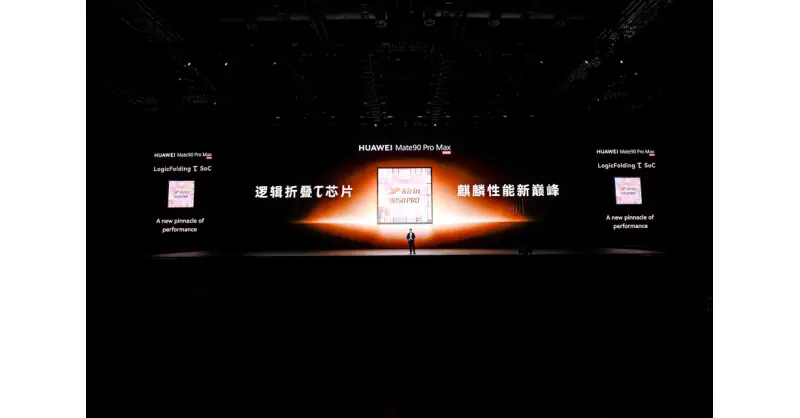
Huawei's investment in research and development has been substantial, with over CNY1.8 trillion spent between 2007 and 2025. This investment has resulted in robust core capabilities, extensive intellectual property, and a vast patent portfolio. The company's focus on core technologies in the ICT domain and basic research has led to significant breakthroughs in technological innovation. One notable example is the recently launched Mate 90 series smartphones, which feature the latest Kirin 9050 Pro chip, offering a 31% performance increase compared to the previous generation.
The Kirin 9050 Pro chip is a testament to Huawei's innovative capabilities, with a LogicFolding technology that vertically stacks logic layers and restructures circuit layouts. This technology, unveiled in May, has enabled the Mate 90 series to run a 30B MoE on-device AI model. Huawei's advancements in the semiconductor domain have been significant, despite limited access to advanced semiconductor processes. The company's focus on AI processing power and energy efficiency has resulted in improved overall system-level performance.
Huawei's AI capabilities are a key aspect of its consumer business, with the Ascend compute foundation providing a strong foundation for large models like openPangu and AI capabilities for intelligent driving. The company's HarmonyOS Celia, similar to Google's Gemini, is another example of its AI-driven innovations. Huawei is also leveraging AI to improve the operation and maintenance of communications network equipment, combining AI computing power with domestic open-source large models to increase productivity and convenience.
Huawei's product portfolio is diverse, ranging from smartphones and PCs to tablets, wearables, and smart home solutions. The company's HarmonyOS ecosystem, developed since 2019, now supports over 90 million devices, with expectations to reach 100 million by the end of the year. The ecosystem has attracted over 11 million registered developers and 23,000 app innovation partners, with over 450,000 apps and services available.
Globalization is a key aspect of Huawei's strategy, with the company collaborating with partners from the US, Europe, Japan, South Korea, and Taiwan. Despite challenges since 2019, Huawei has designed its own operating system and developed basic tools and software, establishing a domestic supply chain. The company has also started manufacturing chips domestically, reducing its dependence on US technologies.
Huawei's market share has been impacted, but the company is working to return to the overseas market. Wearables and TWS earphones are examples of innovative products that have reached No. 1 in many countries. The company's tablet and PC business, although affected, is now performing strongly with HarmonyOS-based products. Huawei's goal is to bring HarmonyOS to the global market in the future, increasing its global presence.
Key points
- Huawei's focus on innovation and technological advancements has enabled the company to maintain a competitive edge in the market.
- The company's HarmonyOS ecosystem has attracted over 11 million registered developers and 23,000 app innovation partners.
- Huawei's LogicFolding technology has enabled the Mate 90 series to run a 30B MoE on-device AI model, showcasing its AI processing power.