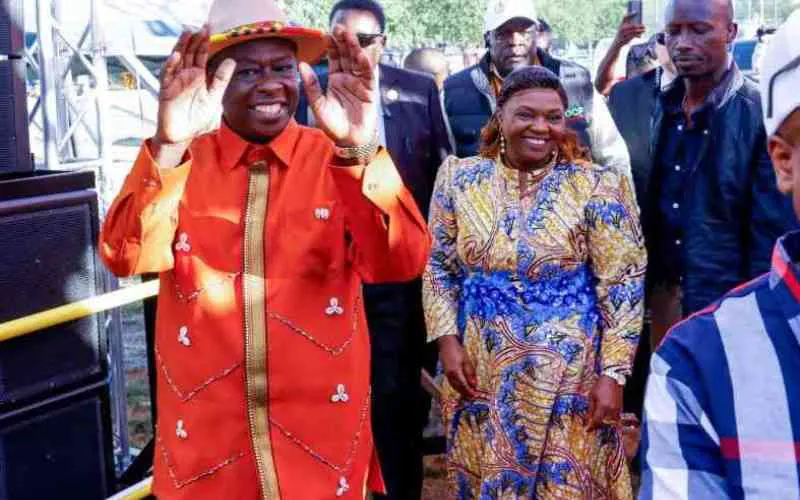
Deputy President Rigathi Gachagua's recent extended stay in the United States has sparked interest among political analysts, with some arguing that it is a deliberate move to boost his presidential ambitions. According to analyst Herman Manyora, Gachagua's trip has allowed him to shift the centre of political attention from Kenya to America, showcasing his ability to dominate political discussions even while abroad. Manyora notes that Gachagua is polishing his political image and internationalising his profile, presenting himself as a politician capable of engaging influential people beyond Kenya.
Manyora believes that Gachagua is creating a perception that he is ahead of some of his competitors in terms of political organisation, resources, networks, and public image. He notes that Gachagua's engagements in the US may not directly translate into electoral advantage, but the image he is building is unmistakable. The analyst draws parallels with past politicians, such as Raila Odinga and Mwai Kibaki, who successfully positioned themselves as frontrunners in opposition politics. Manyora argues that Gachagua is attempting to create a similar political distance between himself and other players.
The analyst also raises questions about the impact of Gachagua's absence on the Opposition conversation in Kenya. He observes that whenever Gachagua is away, there appears to be a reduction in the intensity of the Opposition conversation, highlighting Gachagua's growing influence. Manyora suggests that the Opposition field remains fluid, but a political equation is emerging around Gachagua and Edwin Sifuna. If these two become dominant players, they will need to calculate how to strengthen their positions while preventing the other from gaining the upper hand.
Manyora cautions that the longer the Opposition delays selecting its presidential flag-bearer, the greater the influence Gachagua can potentially exercise over the eventual choice. He notes that other politicians will not simply sit and wait, but will develop counter-strategies to disrupt Gachagua's strategy. The analyst believes that this is when the real 2027 game begins, with President William Ruto remaining an experienced political operator who should not be underestimated.
Manyora draws on historical lessons, citing Kenya's 2002 elections, where the Opposition wave was enormous, but Mwai Kibaki did not secure the overwhelming percentage expected. He argues that public sentiment must be converted into organisation, resources, messaging, and a candidate with sufficient time to build a national campaign. The analyst cautions that unveiling a candidate too late in the election year may not be enough to defeat an incumbent who has spent years building political structures.
Gachagua has argued that the Opposition should delay the selection of its presidential flag-bearer until next year. Manyora questions this strategy, citing concerns that it may allow Gachagua to exert too much influence over the eventual choice. He notes that politicians who believe they are being disadvantaged by the delay will begin looking for ways to disrupt the strategy.
The analyst concludes that presidential elections are won through preparation, organisation, and sustained campaigning. He emphasises that it is crucial for the Opposition to convert public sentiment into a viable campaign, rather than relying solely on dissatisfaction with the incumbent government. As the 2027 elections approach, Manyora's insights offer a nuanced understanding of the complex dynamics at play in Kenyan politics.
Key points
- Gachagua's US trip has allowed him to boost his international profile and create a perception of being ahead of his competitors in terms of political organisation and resources.