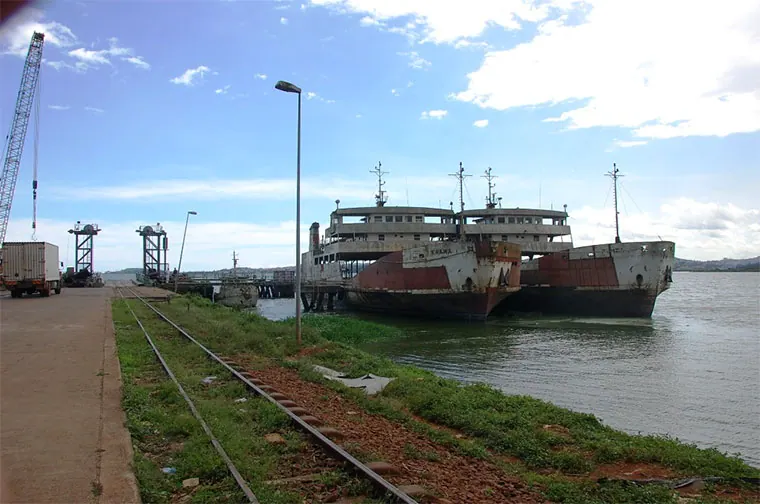
Uganda's railway system once extended to Lake Victoria, where railway tracks ran to the waters, allowing wagons to be loaded onto ferries and transported to Tanzania and Kenya. This marine railway system is now largely idle, with many assets lost or unaccounted for. The story of MV Kabalega, one of Uganda's major wagon ferries, exemplifies the decline. The vessel sank on May 8, 2005, and despite efforts to retrieve it, it remained listed as a multi-billion-shilling asset on Uganda Railways Corporation's (URC) books until 2021.
A Treasury Memorandum dated June 30, 2021, showed URC's non-current assets included Shs 5.76 billion attributed to MV Kabalega. However, auditors noted that the value could not be established since the ferry had been underwater and unretrieved. URC subsequently reduced the recorded value of submerged vessels to a token Shs 1,000 in 2021/22 while awaiting offers to retrieve them. This move highlights the challenges in accounting for assets that have been lost or damaged.
The decline of Uganda's marine railway system extends beyond the three major wagon ferries that operated on Lake Victoria. World Bank records show that URC owned other marine assets, including a dry dock, a service launch, a small passenger ferry, and a motorised lighter. In 1989, two motor vessels were used to provide passenger and cargo services to offshore islands near Jinja, but their current status is unknown.
The decision to build a new ferry system on Lake Victoria was made in 1978, following the breakup of the East African Railways and Harbours Corporation. A Belgian firm was contracted to provide floating dry dock facilities at Port Bell, which would assemble four wagon ferries. The project aimed to create a "seamless rail link around the lake," connecting Uganda's railway to Tanzania and Kenya.
By the early 1980s, Uganda had three major wagon ferries operating on Lake Victoria: MV Kaawa, MV Kabalega, and MV Pamba. Each ferry had a capacity of 22 bogie wagons and was acquired for Lake Victoria services. The ferries played a significant role in transporting international freight and serving communities around Jinja. In 1987, URC transported 284,000 tonnes of imports and exports using the ferries.
The physical infrastructure of the marine railway system, including Jinja Pier, remains visible. The pier, built in the 1960s, was connected to the railway station by a metre-gauge line and had a berth and rail linkspan for loading and unloading wagon ferries. Although the facility is now largely quiet, URC still lists Jinja Pier as part of its marine network.
The story of MV Kabalega and Uganda's marine railway system highlights the challenges of maintaining and accounting for public assets. Key points include:
Key points
- MV Kabalega, once valued at Shs 5.76 billion, was reduced to a token Shs 1,000 after sinking in 2005.
- The decline of Uganda's marine railway system has resulted in significant losses and unaccounted assets.
- URC still lists Jinja Pier as part of its marine network, despite its current quiet state.