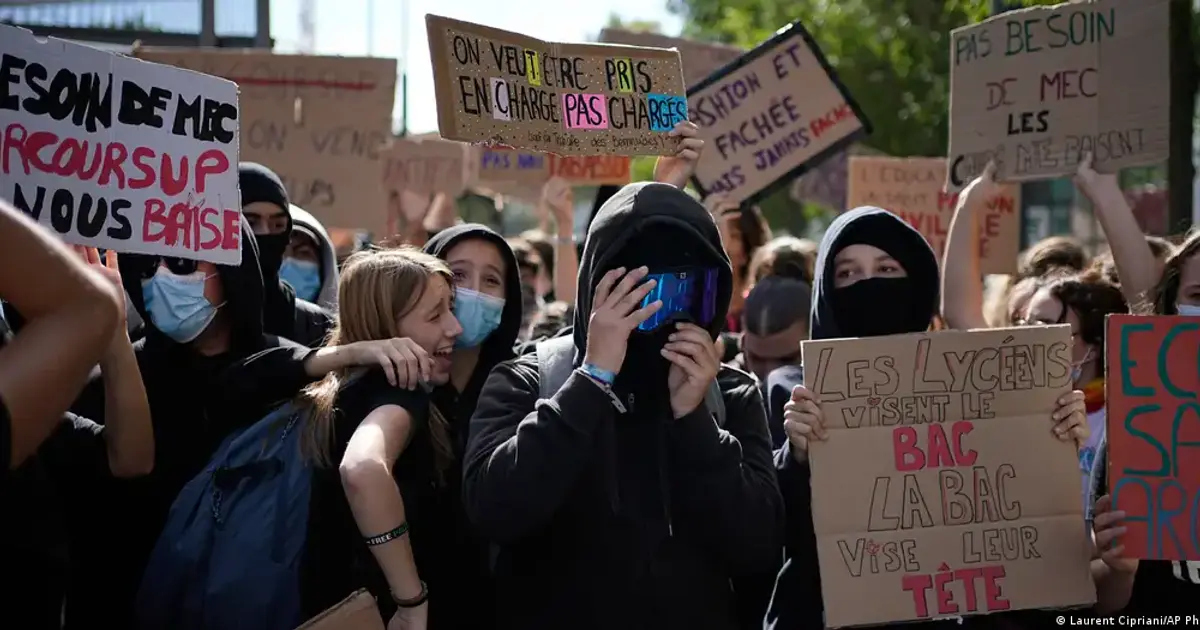
Thousands of high school students across France have taken to the streets to protest what they describe as worsening conditions in the country's education system. The demonstrations, which began in the Paris region in mid-September, have spread to schools across France. Students are complaining about teacher shortages, overcrowded classrooms, deteriorating school buildings, and overloaded timetables. The protests have resulted in hundreds of schools being closed or disrupted.
The protests began at a high school in Créteil, southeast of Paris, where students and teachers raised concerns about inadequate staffing and poor conditions. The movement has since expanded to other cities, including Lille, Lyon, Marseille, Nantes, and Bordeaux. According to France's Education Ministry, more than 1,000 high schools were affected by strikes or protests on October 1, including 222 blockades. This represents about one in four high schools in the country.
Students say one of their biggest problems is the shortage of teachers, which has left some classes without regular instruction. At Lycée Le Corbusier in Aubervilliers, north of Paris, students and parents said several subjects, including mathematics, humanities, English, and physical education, had been affected by teacher shortages. A 17-year-old student, Maisa, who hopes to become an English teacher, sat her French examination the previous year without having a French teacher.
Students have also complained about classes becoming too large, with some classrooms reportedly accommodating as many as 40 students. Others have pointed to ageing or poorly maintained school buildings. At schools in poorer communities around Paris, protesters say they face worse conditions and fewer resources than students in wealthier areas. This has resulted in concerns about unequal access to quality education.
Long school days have also become a major grievance for French high school students. Students can begin classes around 8 am and remain in school until late afternoon. Some protesters have complained that their schedules can stretch to around 6 pm, leaving them with little time for rest. Students are calling for better-equipped schools, enough teachers, less overcrowding, and timetables that give them time to rest.
The protests have not been entirely peaceful, with some demonstrations escalating into clashes with police, fires, and damage to property. Authorities have responded with tear gas and other crowd-control measures. By October 2, France's Education Ministry said at least 400 of the country's roughly 3,700 high schools had been closed, while 560 reported protests or disruptions. The government has condemned violence and vandalism while acknowledging that some of the students' concerns are legitimate.
The French government has faced criticism for its handling of the protests, with some accusing political activists of exploiting the student movement and contributing to violence. However, the government has also faced support from some teachers and parents, who have joined students at demonstrations. The demonstrations have now become a wider political challenge for the French government, with further protests planned and trade unions calling for workers to join nationwide demonstrations.
Key points
- Over 1,000 high schools affected by strikes or protests on October 1.
- Students protesting poor education conditions, including teacher shortages and overcrowded classrooms.
- Protests have resulted in hundreds of schools being closed or disrupted.