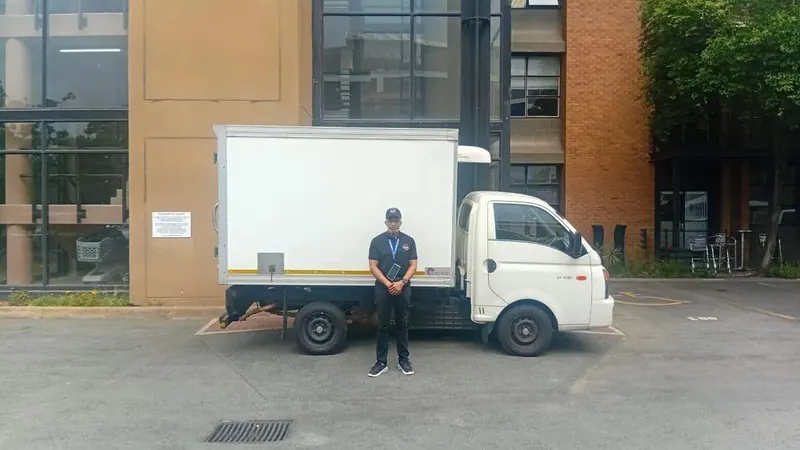
Hot Mess Food Club, a proudly South African food and logistics company, has launched its operations in Pretoria, aiming to improve access to affordable groceries while creating employment pathways for students, graduates, and unemployed youth. The organisation's model is designed to give students affordable access to food and convenience while involving them directly in different roles across the organisation. With its corporate office based in Sandton, Johannesburg, Hot Mess Food Club supplies groceries and prepared meals to students, workers, and underserved communities.
According to Statistics South Africa, the youth unemployment rate for people aged 15 to 34 was 47.4% in the second quarter of 2026, compared to the official unemployment rate of 33.6%. The 2025 General Household Survey also found that 22% of households considered their access to food inadequate or severely inadequate, 4.2 percentage points higher than in 2019. Hot Mess Food Club's initiative aims to address these challenges through a commercially sustainable platform.
At the Pretoria launch, 60 Tshwane University of Technology students were involved in the initiative, with all 60 recruited students employed on a part-time basis. They marketed the products to other students, graduates, and youth, as well as in the communities where they study. The students could earn between R1,500 and R3,000 a month on a part-time basis, which can help with expenses such as tuition and upkeep.
Hot Mess Food Club's student offering includes discounted groceries, free delivery, competitions, and food sponsorships. The organisation achieves this through bulk procurement, online ordering with free delivery, and distribution at campuses and workplaces. The company's Chief Executive Officer, Andile Shongwe, describes the initiative as "a club of organisations" working across food manufacturing, procurement, retail, hospitality, technology, and logistics in South Africa's digital atmosphere.
Shongwe notes that the company has a fleet management division, which serves as the operational backbone of its food and retail ecosystem. The fleet management division advances the organisation's broader social objectives by creating opportunities for young drivers, riders, logistics graduates, and independent contractors. Participants are recruited, screened, trained, and supported before being deployed across the company's growing delivery network.
Shongwe's growing interest in food systems has been rooted in his academic background as a STEM professional and microbiologist. He has used his studies to help craft the vision for the organisation and possesses extensive experience in the hospitality sector, having worked with major international groups. Food safety and public health are close to his heart, and he maintains uncompromising standards regarding food quality, hygiene, and presentation.
Hot Mess Food Club is intended to address interconnected challenges such as food security, food safety, public health, and unemployment through integrated solutions. The organisation's holistic approach combines commercial efficiency with social impact by moving products, connecting markets, supporting local enterprises, and creating sustainable pathways into employment and entrepreneurship.
Key points
- Hot Mess Food Club aims to address food insecurity and youth unemployment through a commercially sustainable platform.
- The organisation provides employment pathways for students, graduates, and unemployed youth while supplying groceries and prepared meals to underserved communities.
- Hot Mess Food Club's model combines commercial efficiency with social impact, creating sustainable pathways into employment and entrepreneurship.