Every farming season in Nigeria brings both joy and heartbreak for farmers. Despite working hard to plant, weed, and harvest crops like tomatoes, peppers, okra, and green leafy vegetables, many farmers struggle with post-harvest spoilage. Fresh vegetables rot quickly due to the lack of cold storage facilities and irregular electricity, resulting in significant financial losses. According to the Food and Agriculture Organisation (FAO), developing nations in Sub-Saharan Africa lose between 40 and 50 percent of their harvested fruits and vegetables before they reach the final consumer.
Traditional open-air sun drying is a common practice in Nigeria, but it has several drawbacks. Spreading produce on bare ground, tarpaulins, or road shoulders exposes it to dust, soot, and exhaust fumes from passing vehicles. Roaming animals like goats, chickens, and rodents can also contaminate the produce, causing food poisoning. Sudden rain showers can ruin the drying process, creating a damp atmosphere where mould and fungi multiply rapidly. Direct sunlight can also bleach the natural colors of leaves, peppers, and tomatoes, destroying essential nutrients like Vitamin A and Vitamin C.
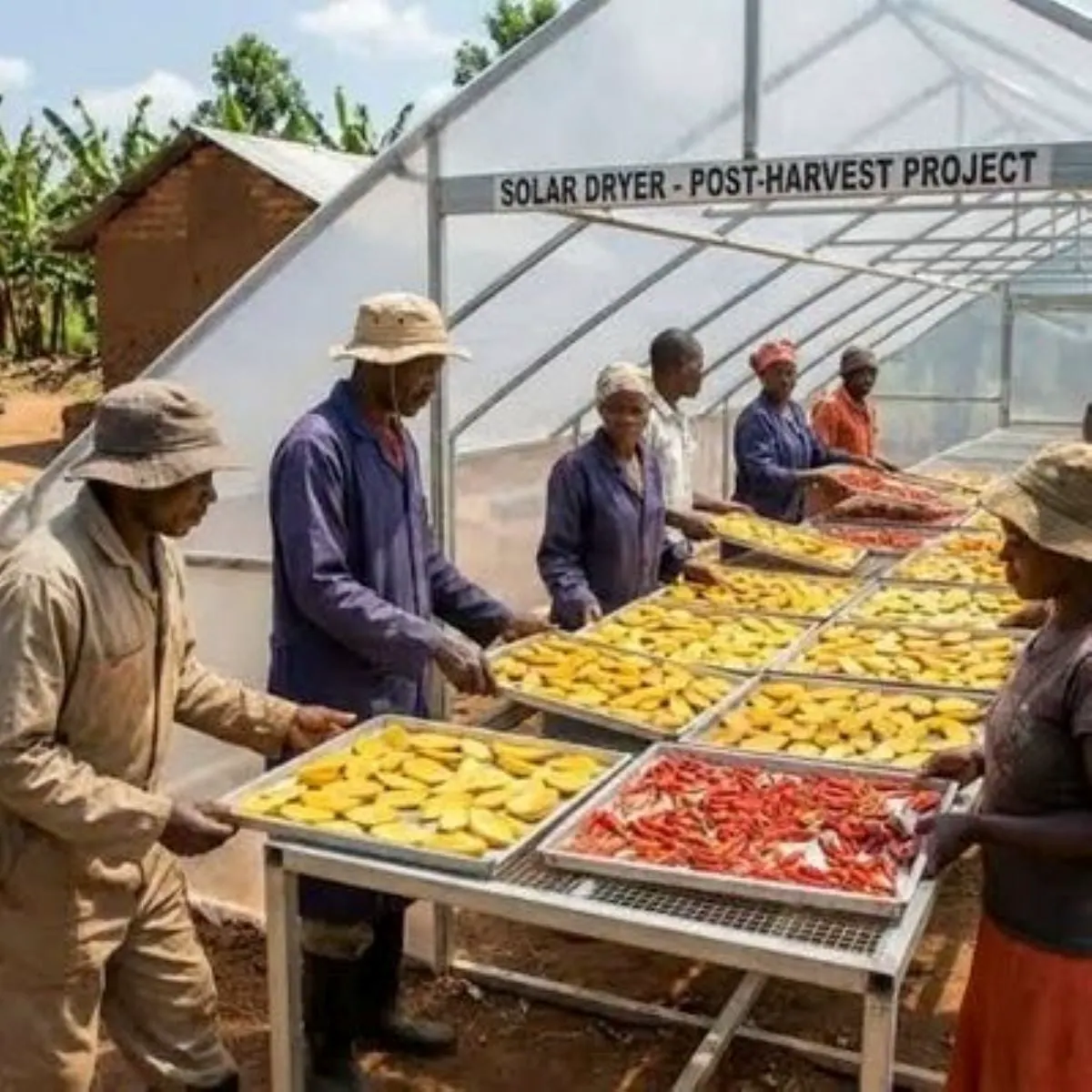
Solar drying offers a more effective and hygienic solution to post-harvest spoilage. A solar dryer is a clean, enclosed structure that collects the sun's natural heat to remove moisture from vegetables in a protected environment. The dryer works like an oven powered entirely by nature, using sunlight to heat a dark absorber surface, which traps the heat and raises the internal temperature. Cool, fresh air enters through lower vents, gets heated up inside the chamber, and moves across the trays of sliced vegetables, drying the crop evenly without burning it.
Building a simple solar dryer requires readily available materials and does not need complicated machinery or heavy industrial parts. A local carpenter or welder can assemble the unit using seasoned hardwood planks or lightweight galvanized metal pipes. The structure must stand raised on sturdy legs to keep crawling insects, lizards, and dirt away from the produce. The outer enclosure requires transparent UV-treated plastic sheeting or tempered glass to trap heat inside the box while shielding crops from rain, strong winds, and airborne dust.
Proper preparation of fresh vegetables is crucial for successful solar drying. Farmers must sort through the harvest carefully, selecting firm, fresh, and fully mature vegetables, and discarding any pieces that show signs of rot, bruising, or insect infestation. The selected produce must be washed thoroughly in clean, running water to dislodge soil, sand, and surface dirt. A gentle rinse in water mixed with a mild solution of food-grade salt or vinegar helps neutralize surface bacteria. Vegetables must be sliced into uniform shapes and thicknesses to ensure even drying.
Managing the drying process and packaging is also essential. Once the trays are loaded into the solar dryer, the unit must be monitored throughout the day, and the access doors must be kept tightly closed to maintain a stable internal temperature. Depending on the vegetable type and sunshine intensity, solar drying typically takes between one and three days. Test for dryness by allowing a sample slice to cool completely in the shade; vegetables are ready when they feel crisp, leathery, and snap easily without leaving any damp residue on fingers.
After cooling, the dried produce must be packaged immediately into airtight polythene pouches, clean glass jars, or heat-sealed bags. The packages must be stored in a cool, dry, and dark cupboard, away from direct floor contact and damp walls. By adopting solar drying, Nigerian farmers can transform rural farming into a profitable business, reducing post-harvest losses and increasing their income.
Key points
- Solar drying can help Nigerian farmers reduce post-harvest losses by 40-50%.
- A simple solar dryer can be built using readily available materials and does not require complicated machinery or heavy industrial parts.
- Proper preparation and management of the drying process are crucial for successful solar drying.