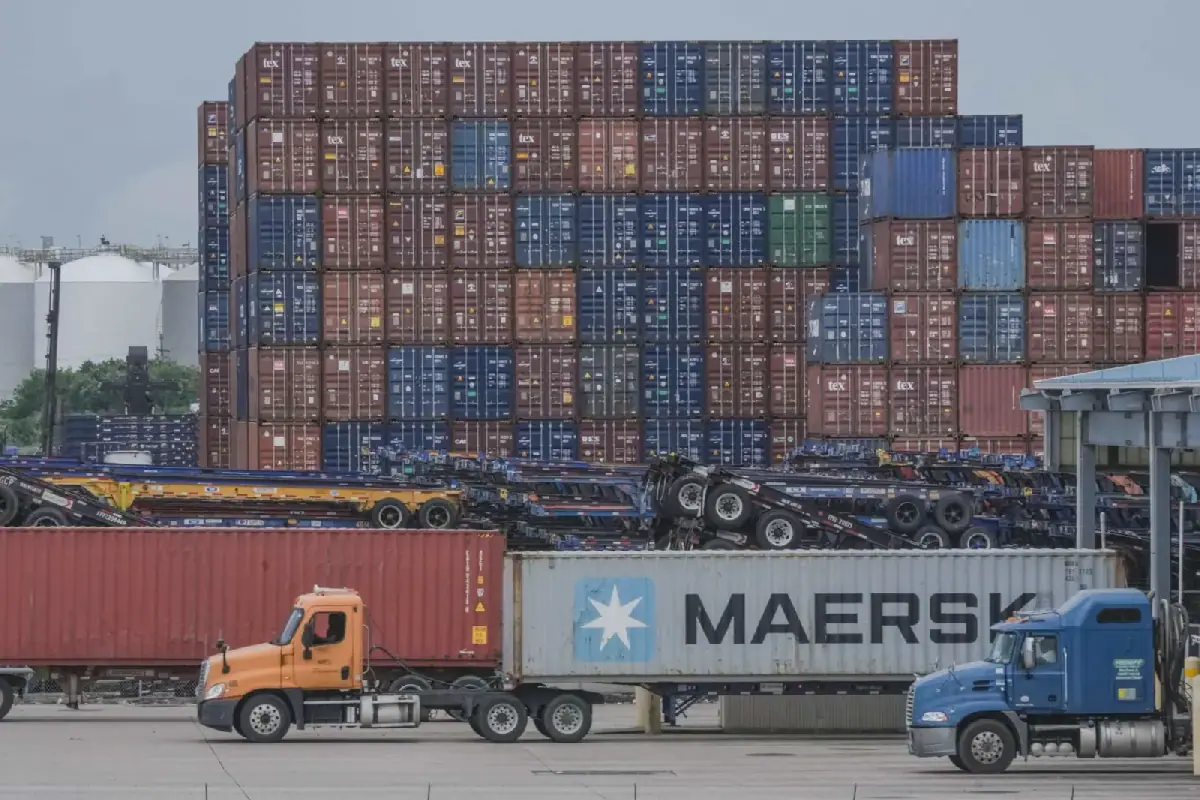
On October 30, workers at over 100 sites worldwide, including ports in the United States, participated in an international strike to restrict the trade of arms and stop the shipment of munitions intended for use in Palestine. This action was part of a long history of labor-class intervention in the material transport of arms, ammunition, and military equipment through coordinated direct action. Three years into the Israeli genocide, international actions highlight the urgent need to stop the flow of artillery to Gaza.
The Palestinian General Federation of Trade Unions has repeatedly called for an immediate cessation of the arms trade with Israel and for measures against companies complicit in the implementation of Israel's brutal and illegal siege. In response, popular campaigns for an arms embargo have mobilized in US port cities, including New York, Oakland, and Houston, alongside dockworkers, transport teams, and unions. In New York, the "Break the Chain" campaign aims to prevent explosives and F-35 bomber components from reaching Gaza via JFK Airport.
In Oakland, the People's Arms Embargo brought hundreds of people together to protest FedEx's complicity in shipping arms to Israel. A report by the Palestinian Youth Movement last year revealed that at least 280 military cargo shipments, including parts for one of the deadliest fighter jets, reached Gaza via Oakland Airport in 2025. Now, the Houston arms embargo campaign is calling on Texans to join their week of action to confront logistical officials complicit in violence and destruction at the 2026 International Maritime Conference in Houston.
In Houston, organizers of the arms embargo campaign held a training session at a local café, focusing on the city's port, a key transportation hub for the global arms supply chain. Participants created handmade banners with slogans such as "A future without genocide, a port for the people." The fifth annual Maritime Conference, taking place from November 2-5, presents a unique opportunity to directly confront logistics leaders responsible for supplying arms to the Israeli military.
Roshni Ahmed, a member of the awareness working group, stated that demands for an arms embargo are not new, with many people feeling a deep sense of hopelessness and grief over the past three years as the genocide unfolded. In May 2024, the Palestinian Youth Movement launched the #MaskOffMaersk campaign, with Houston playing a crucial role through various ongoing organizing strategies. Ahmed emphasized that arms embargo campaigns give people a concrete way to end the genocide by removing the very weapons used to kill Palestinians.
The movement against the militarized complex in Houston focuses on Lockheed Martin's massive aircraft production plant near Fort Worth, where F-35 fighter jets are assembled from components transported on Maersk container ships before being sent directly to Nevatim Airbase and used to bomb the besieged Palestinian population. According to Ahmed, the Port of Houston handled 85% of all Israeli F-35 fighter jet parts shipments from 2020 to 2025, highlighting how logistics companies like Maersk facilitate US and Israeli wars.
Dr. Jake Alimahomed-Wilson, a sociology professor at California State University, noted that logistics companies like Maersk are integral to the arms pipeline supporting Israel's genocidal attack in Gaza and its brutal military occupation of the West Bank. With over 2 million Palestinians intentionally starved in Gaza, the blockade on essential humanitarian aid cannot be understood independently of the commercial networks perpetuating these war crimes. Organizers hope to use the week of action to emphasize that Houstonians are invested in using the city's infrastructure to improve their communities rather than continuing to facilitate genocide.
Key points
- The Houston arms embargo campaign aims to stop arms shipments to Israel by targeting the city's port, a key transportation hub for the global arms supply chain.