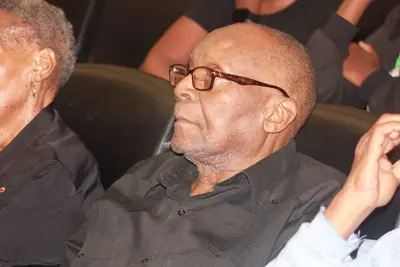
Bra Mike Sello Matsobane's story serves as a testament to the struggles of those who dedicate their lives to serving their communities. His selfless commitment to bringing about change and upliftment has not been adequately recognised, reflecting a broader societal issue where good deeds often go unrewarded. This phenomenon is encapsulated in the saying, "No good deed goes unpunished, all evil done gets rewarded." Matsobane's humility and reticence, even in the face of his remarkable contributions, underscore the need to shine light on the stories of patriotic heroes like him.
Matsobane's illustrious struggle credentials are matched by few, with his involvement in the National Liberation Struggle as a practitioner of ideas in action. He was imprisoned twice on Robben Island, first from 1963 to 1967 and again from 1976 to 1987. His role in the PAC Underground, setting up front organisations, mobilising and recruiting young people, was instrumental in the fight against colonialism and imperialism. Working under the leadership of Zeph Mothopeng and Robert Mangaliso Sobukwe, Matsobane demonstrated remarkable bravery in the face of a police state that employed brute force to suppress dissent.
The context in which Matsobane and his contemporaries operated was marked by extreme repression. The apartheid authorities exercised total control, suppressing information and isolating opponents through house arrests, banning, and restrictions on movement and expression. Dissenting writers and public intellectuals were often forced into exile. Despite these challenges, Matsobane and others like him continued to work towards their goals, driven by a commitment to justice and equality. Their efforts were crucial in laying the groundwork for future generations.
The legacy of Matsobane and similar community leaders highlights the importance of recognising and honouring those who have made significant contributions to their communities. Jawaharlal Nehru's experience, with multiple imprisonments and persecution during India's struggle for freedom, underscores the sacrifices made by leaders who prioritise national liberation over personal comfort. Similarly, Matsobane's sacrifices have not been adequately acknowledged, reflecting a broader societal failure to reward good deeds.
The African philosophy of "Letlhaku le lentsha le beiwa ka le legologolo" (A new branch is placed next to an old one) offers a perspective on the intergenerational nature of rewards for doing good. This philosophy acknowledges that recognition and rewards for patriotic heroes like Matsobane may not be immediate but are essential for preserving their legacies and inspiring future generations. By honouring Matsobane's contributions, we can help ensure that his story and that of others like him continue to inspire and motivate.
In reflecting on Matsobane's life and contributions, it becomes clear that his story is a powerful reminder of the importance of community service and the need to recognise those who have dedicated their lives to the betterment of society. As efforts are made to shine light on his story and that of others like him, it is essential to acknowledge the broader societal implications of their sacrifices and contributions. By doing so, we can work towards creating a more just and equitable society that values and rewards selfless service.
Key points
- Bra Mike Sello Matsobane's lifelong sacrifice and contributions to his community in the West Rand have gone largely unrecognised, highlighting the need to honour and preserve the legacies of patriotic heroes.