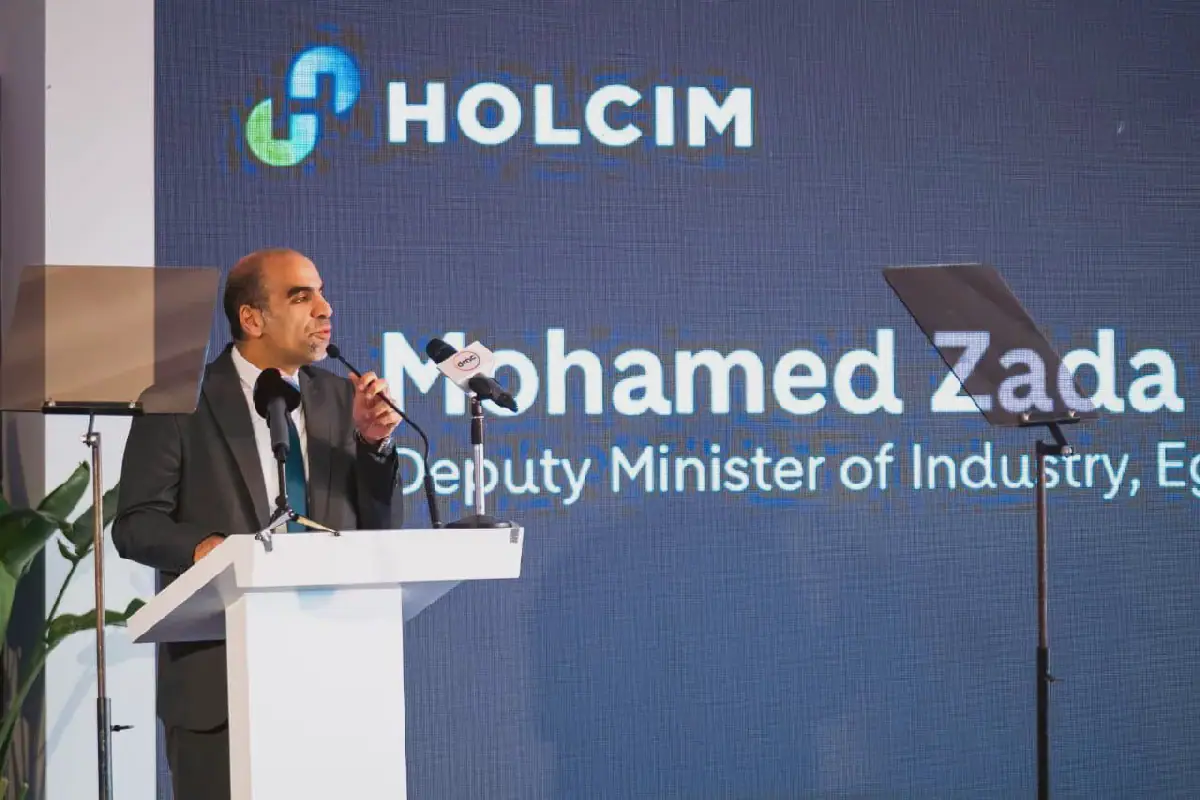
Egyptian Minister of Industry Khaled Hashem has highlighted the significance of the building materials sector, particularly cement manufacturing, in supporting infrastructure, housing, urban expansion and major national projects. The minister's remarks were made during a ceremony marking the restart of the fifth production line at Holcim Egypt's cement plant in Ain Sokhna. The ceremony was attended by representatives of the Swiss Embassy in Egypt, public- and private-sector partners, and Holcim's global and local executives.
The restarted production line is expected to create 560 direct and indirect jobs, according to Minister Hashem. He added that Egypt's cement industry has a strong industrial base comprising 19 multinational companies, reflecting the country's attractiveness as a destination for industrial investment. Egypt ranks eighth globally and first in Africa among cement producers, with its strategic geographical location, port network, logistics infrastructure, skilled workforce and access to regional and international markets providing competitive advantages for long-term industrial investment.
Minister Hashem also highlighted the importance of Holcim's presence in Egypt, noting that the group operates one of the world's largest cement plants in the country. This underscores the Egyptian market's significance within Holcim's global investment portfolio. Addressing industrial competitiveness, Hashem said energy availability and costs are among the main factors determining production costs and the competitiveness of finished products in domestic and international markets.
The Minister of Industry stressed that sustainable industrial growth requires not only expanding production capacity but also ensuring reliable energy supplies at competitive prices and improving energy efficiency. He added that the Ministry of Industry strongly encourages greater reliance on alternative fuels, particularly refuse-derived fuel (RDF). Holcim's environmental and resource-efficiency efforts through its Geocycle platform, which focuses on the use of alternative fuels, were also highlighted.
Egypt already has advanced industrial expertise in the field of alternative fuels, according to Minister Hashem. He expressed the ministry's interest in attracting further investment in waste treatment, recycling and the conversion of waste into alternative energy sources. These initiatives contribute to the development of a circular economy, more efficient resource utilisation and the achievement of environmental targets.
Minister Hashem also highlighted Egypt's industrial capacity to serve regional and international markets. He stressed the need for an integrated approach built around three priorities: maximising the utilisation of existing production capacity, increasing exports and foreign currency earnings, and ensuring sufficient supplies to meet domestic demand while avoiding unjustified price pressures. The ministry aims to establish a balanced industrial environment that ensures sustainable production and meets local market needs while enabling export growth and improving the competitiveness of Egyptian products in foreign markets.
The restart of the fifth production line at Holcim Egypt's cement plant in Ain Sokhna marks an important milestone for the company and reflects broader efforts across the country's industrial sector to expand production capacity, reactivate industrial assets and maximise their utilisation. The investment of over EGP 1.3bn in the production line is a significant development for the Egyptian cement industry, which is a key pillar of the national economy.
Key points
- The restarted production line is expected to create 560 direct and indirect jobs.
- Egypt ranks eighth globally and first in Africa among cement producers.
- The Ministry of Industry encourages greater reliance on alternative fuels, particularly refuse-derived fuel (RDF).