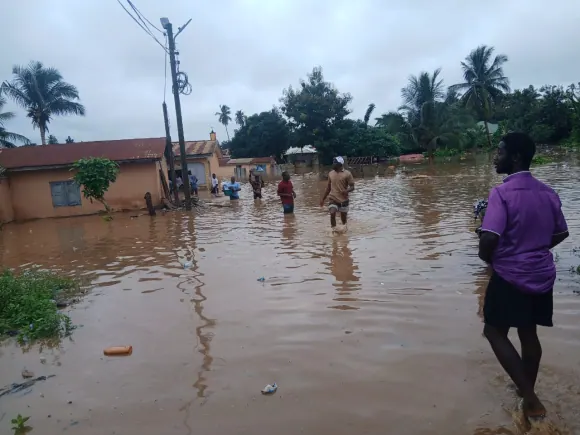
A devastating flood has struck 10 communities in the Hohoe Municipality of Ghana, leaving 5,140 residents displaced and 412 houses affected. The flooding incident, which occurred on September 28, has prompted a swift response from security agencies and emergency response teams. They have been working to evacuate residents from high-risk areas and relocate displaced persons. The affected communities include Bla, Galikorpe, Zongo Nima, Martvin Down, Segbedenu, Water Ways Down, Kpoeta, Atabu, Kledzo, and Panic Site.
The National Disaster Management Organisation (NADMO) has released preliminary data on the extent of the damage. According to NADMO, the flooding has had a significant impact on the lives of residents in the affected areas. The organisation has been working closely with the government and other stakeholders to provide relief to those affected. This includes the provision of essential household supplies such as blankets, rice, tinned fish, and cooking oil.
This recent flooding incident is not an isolated case, as Ghana has been battling severe flooding in recent years, particularly in the capital city of Accra. Heavy rains on June 28 and 29 caused widespread flooding in parts of Accra, leaving commuters stranded and traffic flow at a standstill. Affected areas included parts of the N1 Highway, Apenkwa, Tesano, and other surrounding communities.
The country's flooding challenges are often attributed to poor hygiene practices and poor drainage infrastructure. NADMO has identified a lack of drainage in some communities, filth, and engineering defects as contributing factors to the flooding. The government has been working to address these issues, with President John Dramani Mahama reaffirming his commitment to tackling Ghana's persistent flooding challenges.
President Mahama has ordered the demolition of illegally constructed buildings blocking waterways, which he believes are exacerbating the flooding problem. The government has also announced plans to implement a comprehensive national flood control programme, which is expected to cost approximately $6 billion. The programme aims to address both natural and human-induced factors contributing to flooding.
The Minister for Works, Housing and Water Resources, Hon. Kenneth Gilbert Adjei, has highlighted the need for a multi-faceted approach to addressing flooding in Ghana. He has announced that the ministry is working with private sector partners to implement green and nature-based solutions, including wetland protection, afforestation, and rainwater harvesting. Pilot projects are being initiated in selected river catchments to serve as models for future interventions.
Members of Parliament have also been calling for action to address the flooding challenges in Ghana. Hon. Eric Nana Agyemang-Prempeh, MP for Ahafo Ano North, has urged the government to release funds to enable the dredging of flood-prone areas. Hon. James Agalga, MP for Builsa North, has also called for the Ministry of Finance to expedite the release of funds to NADMO to support its response efforts.
Key points
- 5,140 residents displaced in Hohoe Municipality due to flooding
- Ghana government to implement $6 billion national flood control programme
- Flooding in Ghana attributed to poor hygiene practices, poor drainage infrastructure, and human activities