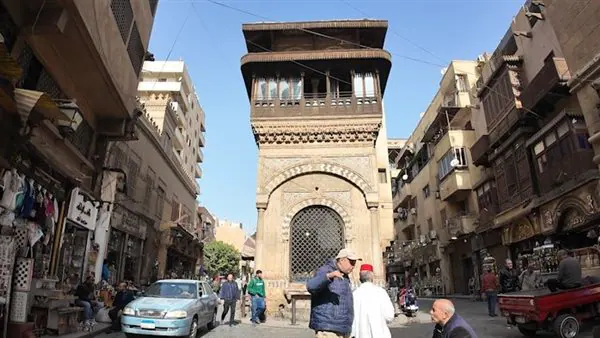
In the heart of historic Cairo, a unique 18th-century building stands out, combining the functions of a water fountain, school, and decorative architecture. The building, known as the Sabil and Kuttab of Abd al-Rahman Katkhuda, was constructed in 1744 by Prince Abd al-Rahman Katkhuda. It has become a distinctive landmark in the area around Al-Azhar Street. The building's design reflects the richness of Islamic architecture in Cairo, blending different materials and styles.
The Sabil and Kuttab of Abd al-Rahman Katkhuda features three stone facades, each with a window for distributing drinking water to passersby. The windows are adorned with intricate copper latticework and marble elements. The building's design balances functionality with decorative details, showcasing stone arches and marble columns that frame the windows. The main entrance, located on Al-Tambakshiya Street, is marked by a recessed archway with a foundation plaque bearing poetic verses and a date.
Inside the building, the walls of the main room are decorated with colorful glazed tiles, known as qashani, featuring blue, green, and vegetal motifs. The floor is made of polished marble, arranged in intricate geometric patterns. This blend of materials and styles reflects the cultural influences of the time, including Ottoman elements. The interior design creates a striking contrast between the cool stone and the vibrant ceramic decorations.
A hidden aspect of the building is the cistern located beneath the main room, which stores water for the fountain. This underground structure is a crucial part of the building's function, demonstrating the practical considerations behind its design. While the building's exterior and interior appear ornate and decorative, they conceal a functional system for providing drinking water to the community.
Above the fountain, a school, or kuttab, was built to educate children. The school features a wooden structure with mashrabiya windows that allow for ventilation and light. The interior includes marble columns and colorful wooden ceilings, showcasing attention to detail in the building's design. The school's architecture is characterized by a balance of functionality and aesthetics.
The Sabil and Kuttab of Abd al-Rahman Katkhuda exemplifies the blending of architectural styles, combining Mamluk and Ottoman influences. The building's design brings together different materials and decorative elements, reflecting the cultural and artistic trends of 18th-century Cairo. Its unique architecture and historical significance make it a notable landmark in the city's historic center.
The building's significance extends beyond its aesthetic appeal, as it demonstrates the importance of providing essential services, such as drinking water and education, to the community. The Sabil and Kuttab of Abd al-Rahman Katkhuda serves as a testament to the ingenuity and craftsmanship of Islamic architects and builders, who successfully integrated functionality with artistic expression.
Key points
- The building was constructed in 1744 by Prince Abd al-Rahman Katkhuda.
- The Sabil and Kuttab features a unique blend of Mamluk and Ottoman architectural styles.
- The building combines the functions of a water fountain, school, and decorative architecture.