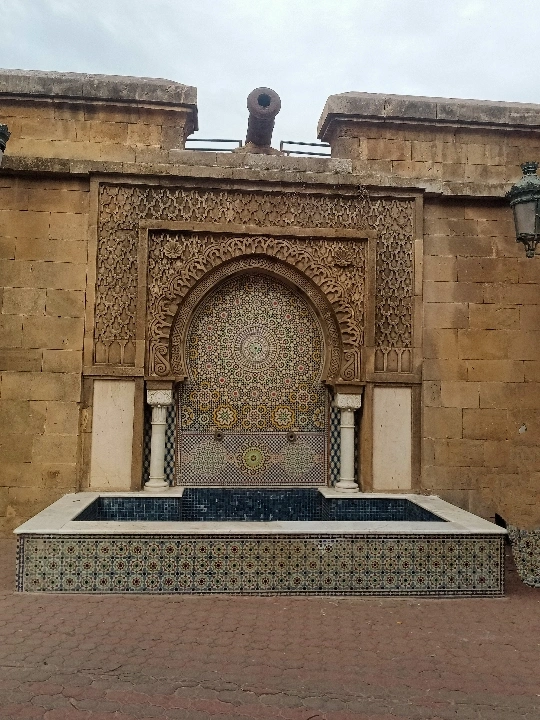
In the historic Habous Quarter of Casablanca, a beautiful sqweya, located near the Royal Palace, has been a testament to Moroccan craftsmanship for centuries. The structure features carved stone, a horseshoe arch adorned with a series of decorative brackets, and stunning zellij tile work. This remarkable fountain is a reflection of the rich cultural heritage of Morocco, which continues to thrive in this iconic neighborhood.
The Habous Quarter is renowned for its well-preserved architecture, vibrant cultural scene, and historic significance. The area is home to numerous shops selling traditional Moroccan attire, including djellabas, takchilas, and caftans. Visitors can also find exquisite examples of traditional crafts, such as metalwork, woodcarvings, and zellij tile art. The quarter's unique blend of history, culture, and craftsmanship makes it a popular destination for tourists and locals alike.
The sqweya is an exemplary model of Moroccan craftsmanship, showcasing the country's rich artistic heritage. The fountain's intricate stone carvings, ornate arch, and vibrant zellij tile work demonstrate the exceptional skill and attention to detail of Moroccan artisans. As a cultural landmark, the sqweya plays a significant role in preserving Morocco's history and traditions, allowing future generations to appreciate the country's rich cultural legacy.
The Habous Quarter is often referred to as an "open-air museum" due to its numerous cultural and historical attractions. The area is home to several historic buildings, including the Royal Palace, which serves as the official residence of the King of Morocco. Visitors to the quarter can explore its narrow streets, take in the sights and sounds of traditional Moroccan life, and experience the warm hospitality of the local community.
In addition to its cultural significance, the Habous Quarter is also an important commercial center, with many shops, cafes, and restaurants. The area offers a wide range of traditional Moroccan products, including handicrafts, clothing, and souvenirs. Visitors can also sample local cuisine, such as tagines, couscous, and pastilla, at one of the many restaurants and cafes in the quarter.
The Moroccan government has taken steps to preserve the Habous Quarter's cultural heritage, including the restoration of historic buildings and the promotion of traditional crafts. Efforts to protect the area's unique character and cultural significance have helped to maintain its popularity among tourists and locals alike. As a result, the Habous Quarter remains a vibrant and thriving cultural hub, showcasing the best of Moroccan history, architecture, and craftsmanship.
The sqweya in the Habous Quarter is a must-see destination for anyone interested in Moroccan culture and history. This beautiful fountain, with its intricate stone carvings and stunning zellij tile work, is a testament to the country's rich artistic heritage. As a cultural landmark, the sqweya plays a significant role in preserving Morocco's history and traditions, allowing future generations to appreciate the country's rich cultural legacy.
Key points
- The sqweya in Habous Quarter, Casablanca, is a remarkable example of Moroccan craftsmanship and cultural heritage.
- The Habous Quarter is a historic neighborhood that showcases Morocco's rich cultural legacy, with its well-preserved architecture, vibrant cultural scene, and traditional crafts.
- The Moroccan government has taken steps to preserve the Habous Quarter's cultural heritage, including the restoration of historic buildings and the promotion of traditional crafts.