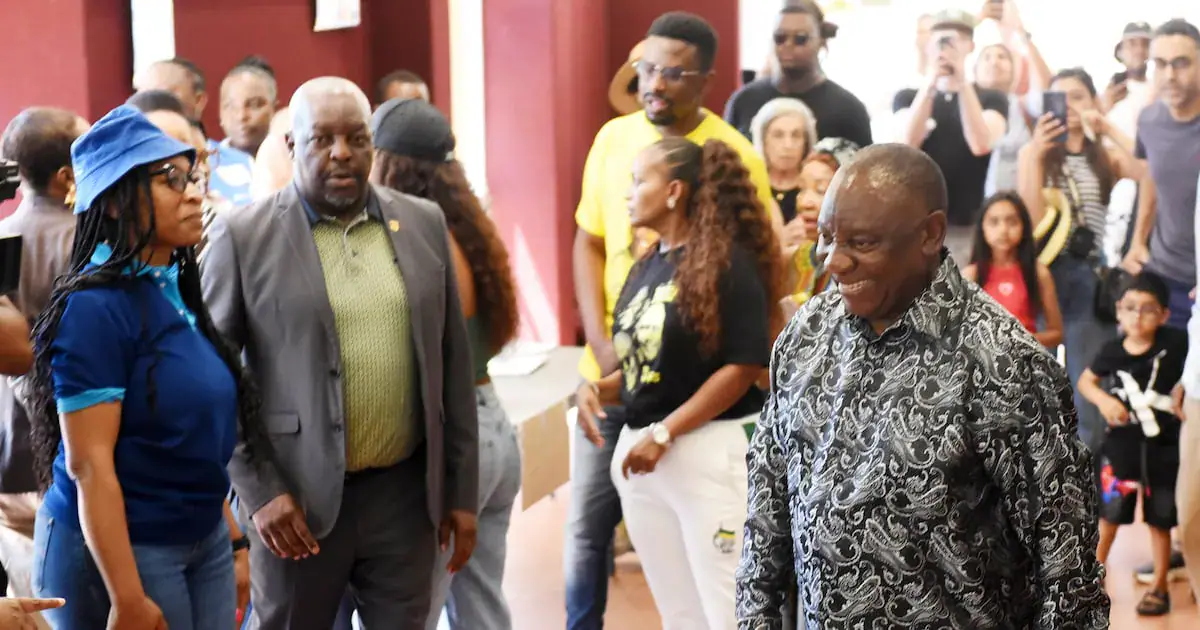
More than 40% of South Africa's registered voters had cast their ballots by 5pm on Wednesday, with three hours of voting remaining. The Electoral Commission of South Africa reported that around 12 million people had voted by that point, up from 3.5 million at 10am. Gauteng recorded the highest number of votes at about 3 million, followed by KwaZulu-Natal at 2.5 million and the Western Cape at 1.5 million.
Voting was largely orderly in major centres, with long queues forming outside some polling stations and no immediate reports of widespread disruptions. The Electoral Commission said the process was progressing well, apart from a few isolated incidents. IEC CEO Sy Mamabolo stated that adequate arrangements had been made to ensure the availability of generators and alternative lighting facilities at voting stations in areas that had experienced electricity outages.
The municipal elections will determine the composition of 257 municipal councils responsible for providing essential services, including water, electricity, and roads. The outcome will be consequential for residents of towns and cities that have endured deteriorating infrastructure and persistent failures in basic service delivery. The elections may also influence coalition arrangements at national level, as parties assess their relative strength ahead of future negotiations.
Opinion polls indicate that President Cyril Ramaphosa's ANC will lose ground to the DA, its main rival, and former president Jacob Zuma's uMkhonto weSizwe Party. The ANC faces particular pressure in KwaZulu-Natal, where the MK Party has emerged as a formidable challenger. The commission arranged generators and alternative lighting at stations in areas affected by power outages to ensure counting can proceed.
A handful of stations in the Eastern Cape and KwaZulu-Natal, as well as one in Mpumalanga, opened late due to local protests and adverse weather conditions. All were operating by 9am, according to the commission. The IEC also recorded an instance of theft of unused, unmarked ballot papers and ballot validation stamps in ward two in eThekwini in the early hours of the morning.
Defend Our Democracy, an independent election-monitoring group, deployed nearly 2,500 observers to over 1,500 voting stations. By midday, it had received reports from more than 500 stations across 64 municipalities, most of them in Gauteng. Waiting times reached two hours or longer in some communities, while voters at other stations completed the process in less than 15 minutes.
The IEC has up to seven days to declare the final results. Ballots will be counted at the polling stations where they were cast, in the presence of party agents and accredited observers. The outcome will determine whether fragile coalition arrangements in major municipalities, including Johannesburg, survive or give way to new governing partnerships.
Key points
- Over 40% of registered South African voters cast ballots by 5pm on Wednesday.
- The municipal elections may influence coalition arrangements at national level.
- The outcome will be consequential for residents of towns and cities that have endured deteriorating infrastructure and persistent failures in basic service delivery.