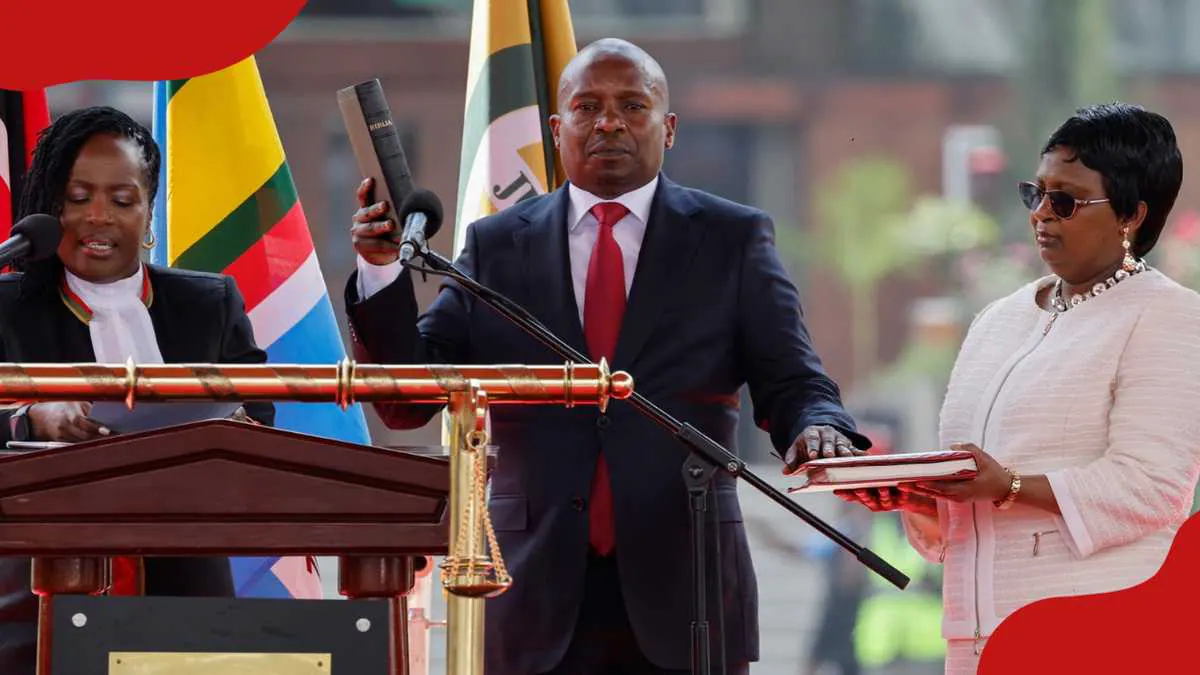
The High Court of Kenya has made a ruling that a petition filed by activist Joseph Enock Aura challenging the appointment of Kithure Kindiki as Deputy President must be heard in open court. This decision was made by a three-judge bench led by Justice Eric Ogolla, who allowed Aura's application for an open court hearing. The court found that the application was largely unopposed by the other parties involved in the matter.
Aura had filed a Certificate of Urgency seeking to halt the virtual hearing of his Amended Petition, arguing that online proceedings would infringe on his constitutional right to a fair and public hearing. His lawyer, Harrison Kinyanjui, contended that a previous direction issued on May 7, 2026, had established that the amended petition would be heard in open court. This direction had never been varied, vacated, or appealed against, according to Kinyanjui.
The court has scheduled the hearing of the amended petition for November 4 and 5, 2026, in Courtroom 418. Parties that have yet to file their submissions or wish to supplement existing ones have been given seven days to do so. If not, the hearing will proceed as scheduled. Justice Ogolla expressed concern over repeated late filings, noting that this pattern had occurred almost every time a proceeding was scheduled in the matter.
At the heart of the petition, Aura challenges Kindiki's appointment as Deputy President, arguing that he had not resigned or been formally removed from his position as Cabinet Secretary for Interior and National Coordination before assuming the role. Aura claims that no gazettement of Kindiki's departure from the Cabinet was published, in violation of Article 137(2)(b) of the Constitution.
Aura also contests the impeachment of former Deputy President Rigathi Gachagua, arguing that four constituencies had no sitting MPs at the time of the vote. This, according to Aura, means that the constitutional threshold requiring a full House for such a vote was never met. The petition raises significant questions about the legitimacy of Kindiki's appointment and the impeachment process.
The court's decision to hear the petition in open court is significant, as it will allow for a public hearing and scrutiny of the evidence presented. Aura's evidence includes online material and video recordings that require multimedia and video-playing facilities in open court. This, he argues, makes a virtual session inadequate for a proper assessment of the evidence.
The hearing of the petition is set to take place on November 4 and 5, 2026, and will be a crucial test of the constitutional processes surrounding the appointment and impeachment of high-ranking officials. The court's decision to allow the petition to be heard in open court ensures that the proceedings will be transparent and subject to public scrutiny.
Key points
- The High Court has ruled that a petition challenging Kithure Kindiki's appointment as Deputy President must be heard in open court.
- The petition, filed by activist Joseph Enock Aura, argues that Kindiki's appointment was illegitimate due to a lack of formal resignation or removal from his previous Cabinet position.
- The court's decision ensures that the proceedings will be transparent and subject to public scrutiny, with the hearing set to take place on November 4 and 5, 2026.