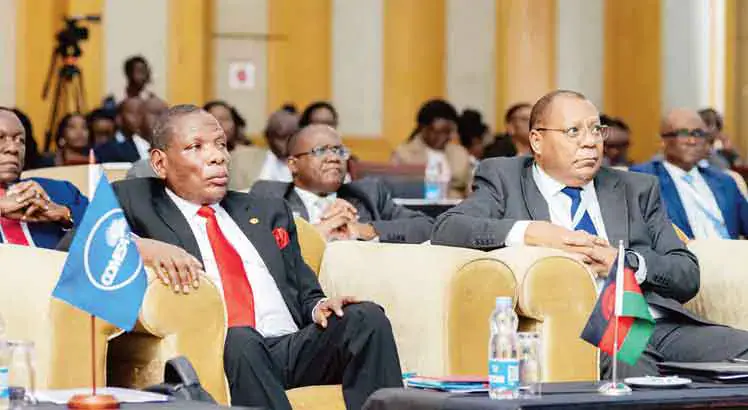
Malawi's Finance Minister Joseph Mwanamvekha has expressed concerns that high transaction costs and recurring economic instability are limiting trade in the 21-member COMESA trade bloc. Speaking at the COMESA Central Bank Governors' Symposium in Lilongwe, Mwanamvekha said that intra-regional exports account for only 7% of the bloc's total merchandise exports. In 2025, intra-regional exports reached $14.7 billion against $212 billion in exports to the rest of the world.
Mwanamvekha identified expensive cross-border payments, settlement delays, and incompatible financial systems as major constraints to regional trade, particularly among small businesses. He cited the COMESA Regional Payment and Settlement System and Digital Retail Payment Platform as initiatives aimed at reducing transaction costs. These initiatives, he said, are crucial for facilitating faster and more affordable cross-border payments in local currencies.
Reserve Bank of Malawi Governor George Partridge acknowledged persistent inefficiencies in regional payment arrangements. He noted that digital payment systems continue to face high costs, delays, and technological limitations, emphasizing the need to modernize financial infrastructure. Partridge, who chairs the COMESA Committee of Central Bank Governors, highlighted opportunities presented by artificial intelligence and emerging payment technologies.
COMESA Assistant Secretary General Dev Haman echoed concerns about high transaction costs and cumbersome border procedures eroding the earnings of small-scale traders. He cited the burden of border charges on women operating small businesses, arguing that reducing such costs can improve profitability and encourage greater participation in regional trade.
Mwanamvekha warned that macroeconomic instability is undermining the region's integration ambitions. Many member states have fallen short of stage one targets under the COMESA macroeconomic convergence framework. He identified persistent fiscal deficits, high public debt-servicing costs, inflationary pressures, and vulnerability to external shocks as major challenges confronting regional economies.
To address these challenges, Mwanamvekha stressed the importance of sound fiscal management, building fiscal buffers, strengthening risk management, improving public investment efficiency, and diversifying export markets and import sources. He emphasized the need for coordination between fiscal and monetary authorities to restore economic stability and create conditions for investment.
The concerns are particularly relevant to Malawi, where foreign exchange shortages, substantial public debt, and constrained fiscal space continue to undermine investment and export competitiveness. The continued foreign exchange shortages have resulted in rolling fuel shortages and drug stock-outs in public hospitals.
Key points
- High transaction costs and economic instability limit trade in the COMESA bloc.
- Expensive cross-border payments and settlement delays hinder regional trade.
- Sound fiscal management and coordination between fiscal and monetary authorities are crucial to restore economic stability.
Reporting sources
- High costs frustrate COMESA trade goals · The Nation