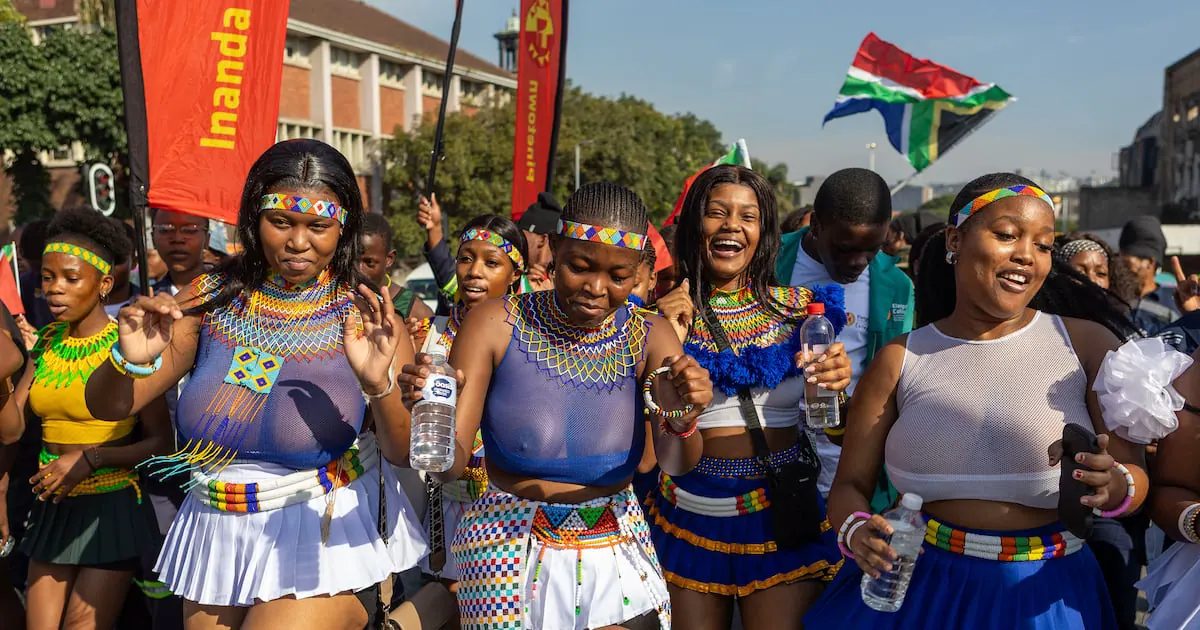
Every September, South Africa comes together to observe Heritage Month, a time to celebrate the country's diverse cultural heritage. People wear traditional clothes, eat culturally significant food, revisit familiar stories, and listen to music that connects them to their roots. This celebration aims to foster a sense of identity and cohesion among South Africans. However, it often overshadows a critical imperative: heritage is not a static asset, but a dynamic social and economic infrastructure that requires institutional frameworks to ensure its preservation for future generations.
The creative economy in South Africa contributes significantly to the country's GDP and employment. According to the country's cultural and creative industries mapping work, the creative economy contributed about R161 billion to the country's GDP, equivalent to just under 3% of GDP, while accounting for approximately 6% of total employment, around 1 million jobs. These numbers highlight the importance of culture in economic development, creating work for musicians, producers, composers, technicians, designers, administrators, educators, venues, broadcasters, publicists, transport providers, and countless others who form part of the wider cultural value chain.
The Mzansi National Philharmonic Orchestra was established to build an orchestra that reflects South Africa's talent and diversity, making orchestral music accessible to wider audiences, and using music to build relationships and create opportunities. Today, the orchestra comprises up to 110 highly talented South African musicians from provincial orchestras, universities, and the freelance sector. This orchestra is a prime example of how cultural institutions can be used to promote diversity and inclusivity in the arts.
The importance of music and performing arts in preserving heritage cannot be overstated. South Africa has never had a singular musical identity, with its sound being the product of many histories meeting one another. The country's musical traditions include indigenous musical traditions, choral music, jazz, gospel, mbaqanga, maskandi, kwaito, hip-hop, and contemporary popular music, alongside Western classical traditions that have been reshaped by generations of South African musicians.
For heritage to survive, it must be interpreted, performed, taught, questioned, and given to young people to make their own. This is where access and development become inseparable from heritage preservation. The Mzansi National Philharmonic Orchestra's chief executive and artistic director, Bongani Tembe, emphasizes that development programs, cadetships, fellowships, youth orchestras, music education, and mentorship are not peripheral initiatives but part of the infrastructure of cultural preservation.
Heritage Month should not be an annual exercise in nostalgia but a moment to ask whether cultural institutions are being built to carry South Africa's story into the future. This involves commissioning South African composers, performing music that speaks to the country's many histories, taking exceptional musicians into communities where audiences may never have encountered a symphony orchestra, and creating pathways for young people to move from talent to professional careers.
Ultimately, the real measure of success will be whether a child growing up in a township, village, or small town can see a future for themselves in the arts. Can they encounter orchestral music without believing it belongs to somebody else's world? Can a talented young violinist imagine performing on an international stage without first having to leave South Africa to discover that possibility? The task goes beyond protecting what was inherited; it is to ensure that future generations inherit something richer.
Key points
- Heritage preservation requires dynamic cultural institutions and infrastructure.
- The creative economy significantly contributes to South Africa's GDP and employment.
- Access and development are crucial for the preservation of heritage.