South Sudan's capital, Juba, witnessed a significant increase in military presence on Tuesday, as President Salva Kiir prepared to dissolve the government and form a new transitional administration. The move is part of the country's preparations for its first-ever election, scheduled for December 22. Despite concerns over the lack of voter registration, unified rival armies, and a constitution, the government has pushed forward with the election plans. Analysts have warned that recent changes to the National Elections Act grant Kiir total control over the transition.
The changes to the National Elections Act, made on Monday, allow Kiir to remain in power while removing all vice-presidents appointed under the 2018 peace deal during the election period. The amendments also permit the vote to proceed without a constitution or census. These changes have raised concerns among analysts, who argue that they give Kiir unfettered control over the transition. "Kiir will be the only person in power, without vice-presidents, without the executive, without the parliament," said Michael Wani, a lawyer and former member of the constitution drafting committee.
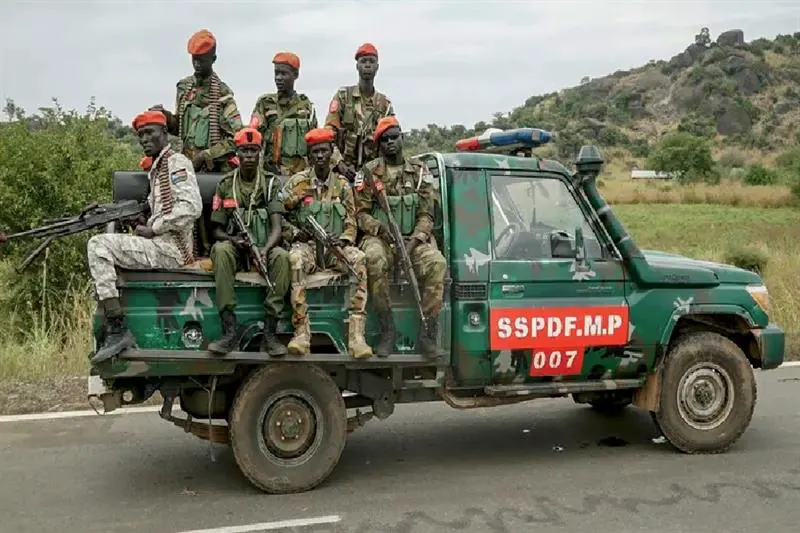
The Internal Security Bureau issued a directive ordering all forces to be in uniform and on high alert for three days, starting from September 22. An AFP journalist reported seeing many soldiers along the roads in Juba, a departure from the usual security situation. Vendors and civil servants have reported being told to close their shops and offices, with some being informed that the military had taken over.
The formation of the new transitional government comes amid high tensions between rival political groups. Opposition leader Riek Machar is currently jailed on treason charges, and international observers fear that the election could lead to full-blown conflict. Despite achieving independence in 2011, South Sudan has struggled with instability, including a five-year civil war that left the country one of the poorest and most corrupt in the world.
The 2018 peace agreement set out several preconditions for the election, including voter registration, unification of rival armies, and the establishment of a constitution. However, the government has failed to implement almost any of these conditions. Elections have been postponed twice, and it remains unclear whether the country is ready for a vote. Independent analyst Machot Amuom noted that the new law gives the president full powers, allowing him to decide even not to go for elections for another year or two.
The increased military presence in Juba has contributed to an atmosphere of uncertainty. A vendor, who asked for anonymity, told AFP that they had closed their shop due to the unusual security situation. A civil servant also reported being told to go home, without being informed of the reason. The situation has raised concerns among international observers, who fear that the election could exacerbate existing tensions.
The country's first-ever election is scheduled for December 22, and President Kiir's office confirmed that he would dissolve the government at midnight on Tuesday, in line with the agreed elections timetable. The formation of a new transitional government is expected to oversee the vote. However, concerns over the legitimacy and credibility of the election process persist, given the lack of preparation and the changes to the National Elections Act.
Key points
- Analysts warn that changes to the National Elections Act grant President Kiir total control over the transition.
- The election is scheduled for December 22, despite concerns over voter registration, unified rival armies, and a constitution.
- The country has struggled with instability, including a five-year civil war that left it one of the poorest and most corrupt in the world.