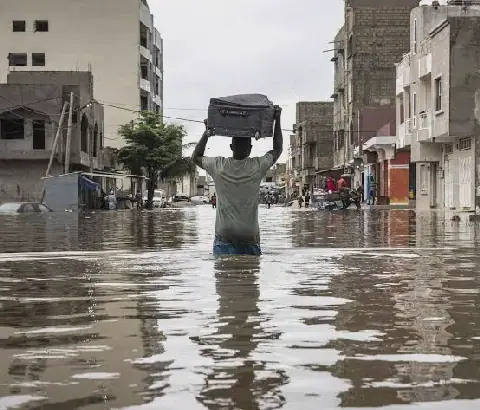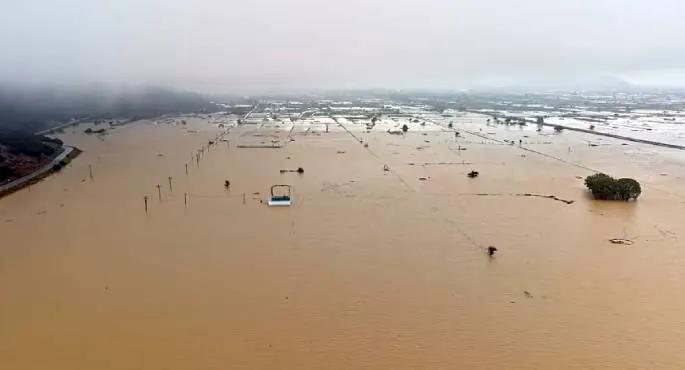
Heavy rainfall and thunderstorms have caused widespread flooding and damage on the Greek island of Crete. The floods and landslides have affected several regions, including Chania, Rethymno, Heraklion, and Lasithi. According to local authorities, an 80-year-old farmer was found dead in the Karines area of Rethymno. Eight people working in the Samaria National Park were trapped in the gorge.
The floods were caused by five consecutive days of heavy rain and thunderstorms on the island. The National Observatory in Athens reported that the Metiogr station in Ziloskalou recorded 91 mm of rainfall, equivalent to 91 liters of water per square meter. In the Lasithi plateau, rainfall exceeded 440 mm over two days and 470 mm over four days, compared to an annual average of 700-900 mm.
The floods have caused significant damage to roads, agricultural areas, and property. Several villages and areas have been affected, including coastal regions and tourist resorts. The Greek Fire Department reported receiving 485 calls related to the floods since October 1, and 96 operations were carried out to pump out floodwater. A total of 101 people were transferred to safe areas.
The Greek authorities have activated the European Union's Copernicus emergency management service to assess the damage and plan recovery efforts. The service uses satellite images to map the affected areas and evaluate the damage. A government committee, including the Ministers of Infrastructure and Transport, and Climate Crisis and Civil Protection, will visit Crete to assess the situation and plan relief efforts.
The floods have also affected the island's water reserves. The Apotheliis dam, located east of Heraklion, saw its water reserves increase from 9.26 million cubic meters on September 30 to over 12.7 million cubic meters. The dam has received significant inflows from the Lasithi region.
The Greek authorities are working to assess the damage and plan recovery efforts. The situation remains challenging, with several areas still affected or isolated. The government has promised to provide support to those affected by the floods.
The floods on Crete have highlighted the need for effective disaster management and mitigation measures. The Greek government has faced criticism for its handling of previous natural disasters, and the response to the floods will be closely watched. The authorities have urged residents and tourists to exercise caution and follow evacuation instructions.
Key points
- The floods on Crete have caused significant damage and disruption, with several regions affected and one person killed.
- The Greek authorities have activated the EU's Copernicus emergency management service to assess the damage and plan recovery efforts.
- The situation remains challenging, with several areas still affected or isolated, and the government has promised to provide support to those affected.