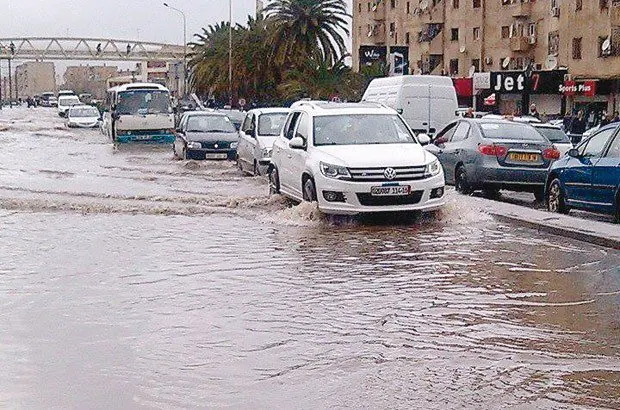
Heavy rainfall in the wilaya of Béjaïa, Algeria, has caused significant flooding and road closures. Over the past 24 hours, rainfall accumulations reached 40 mm, leading to the inundation of several neighborhoods, including the city center. The downpour resulted in the closure of several roads, including the route connecting Aamriw to the Maghrébine Unity Stadium, which was completely submerged by torrents.
The flooding also affected various neighborhoods in the city, including Remla, La Gare, and Cité Tobbal. Residents expressed frustration and disappointment at the scenes of desolation, with many areas covered in mud and debris carried by the torrents. Citizens are calling on the authorities to take action to prevent similar incidents in the future, particularly during the winter months.
The inadequate drainage system in Béjaïa has been highlighted as a major contributor to the flooding. Residents claim that the city's stormwater drainage network is clogged, rendering it ineffective in evacuating rainwater. A local resident stated that the authorities' urban planning efforts are inadequate, citing the blocked storm drains as a significant issue.
The direction of hydraulics reported that a team from the Office National de l'Assainissement (ONA) worked through the night to clear blocked storm drains and culverts. Despite a strike, the team ensured continuity of service, working to alleviate the flooding. However, a responsible authority noted that the high rainfall accumulation over a short period exacerbated the situation.
The authorities have attributed part of the problem to residents' behavior, citing the disposal of waste and construction materials in public areas as contributing factors to the flooding. Residents have been urged to take responsibility for protecting their neighborhoods against flooding. The issue has sparked a wider conversation about urban planning and waste management in Béjaïa.
In response to the flooding, residents are demanding that the authorities take concrete actions to mitigate the effects of future rainfall events. This includes the clearing of storm drains, culverts, and bridges to ensure proper drainage of rainwater. The recent event has underscored the need for a comprehensive approach to addressing the city's infrastructure challenges.
As the city begins to recover from the flooding, residents and authorities alike are emphasizing the importance of collaboration to prevent similar incidents in the future. With the right measures in place, it is hoped that Béjaïa can reduce the risk of flooding and ensure a safer, more resilient community for its residents.
Key points
- Inadequate drainage system and waste management contribute to flooding in Béjaïa.
- Residents call for authorities to take action to prevent future flooding incidents.
- Collaboration between residents and authorities is crucial to mitigating the effects of future rainfall events.