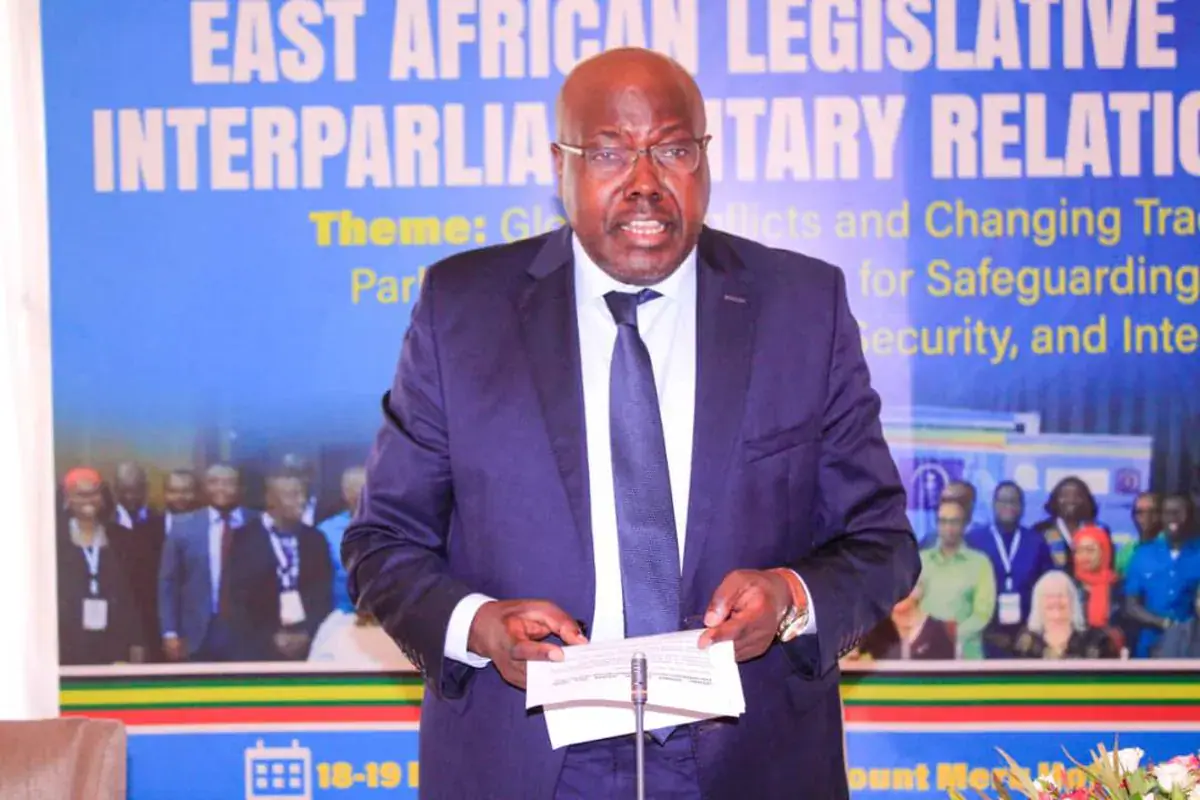
Global conflicts, including tensions in the Middle East and the Russia-Ukraine war, are threatening East Africa's economy by disrupting trade, energy supplies, agricultural inputs, and transport networks. The East African Legislative Assembly (EALA) and the African European Parliamentary Initiative (AEPI) have urged member states to strengthen regional trade, maintain peace and security, and reduce dependence on external markets. This call to action was made during a seminar for EALA legislators in Arusha, Tanzania, on November 18, 2026.
EALA Speaker Joseph Ntakirutimana emphasized that international conflicts and disruptions to global supply chains require East African countries to take collective action to protect their economies. He noted that although East Africa is geographically distant from some conflict zones, the region continues to feel their effects through rising commodity prices, food and energy security challenges, and higher transport costs. Ntakirutimana urged legislators to enact laws and oversee policy implementation to protect the Community's economy.
AEPI President Brendan Howlin stated that changes in the global trading system have exposed Africa to significant economic risks, making it necessary for countries to reduce their dependence on external supply chains and increase trade among themselves. He cited the Middle East conflict involving the United States, Israel, and Iran, which has affected the global economy, with Africa facing challenges related to fuel supplies, agricultural inputs, food security, and economic growth.
The reliance of sub-Saharan African countries on the Middle East for fertiliser requirements has left them vulnerable to supply disruptions in the region. About 80 percent of fertiliser requirements are sourced from the Middle East. Rising oil prices have also placed further pressure on East African economies, with crude oil prices increasing from approximately $58 per barrel at the end of 2025 to around $100 in recent months.
AEPI President Brendan Howlin urged African countries to strengthen intra-African trade, add value to locally produced goods, and reduce reliance on external markets to build economies capable of withstanding global shocks. Tanzanian EALA MP Cosato Chumi contributed to the discussion, stating that regional integration aims to expand trade, investment, and economic development opportunities, not just bring citizens and member states together.
Chumi emphasized that trade among member states could lower operational and transport costs, noting that the East African Community (EAC) has a market of more than 360 million people with considerable economic potential. However, he noted that the region cannot fully realize these opportunities without peace and stability, citing conflict-affected areas in eastern Democratic Republic of Congo, Somalia, and South Sudan.
EALA legislators and members of national parliaments have a responsibility to ensure governments establish systems that prevent conflicts, strengthen security, and create a favourable environment for trade and investment. Cooperation between regional and national legislators is essential to ensuring the EAC market becomes a driver of economic development and delivers benefits to citizens across all member states.
Key points
- East African leaders call for stronger regional trade and reduced dependence on external markets amid global conflicts.
- Global conflicts disrupt East Africa's economy through trade, energy, and transport network disruptions.
- African countries urged to strengthen intra-African trade and add value to locally produced goods.