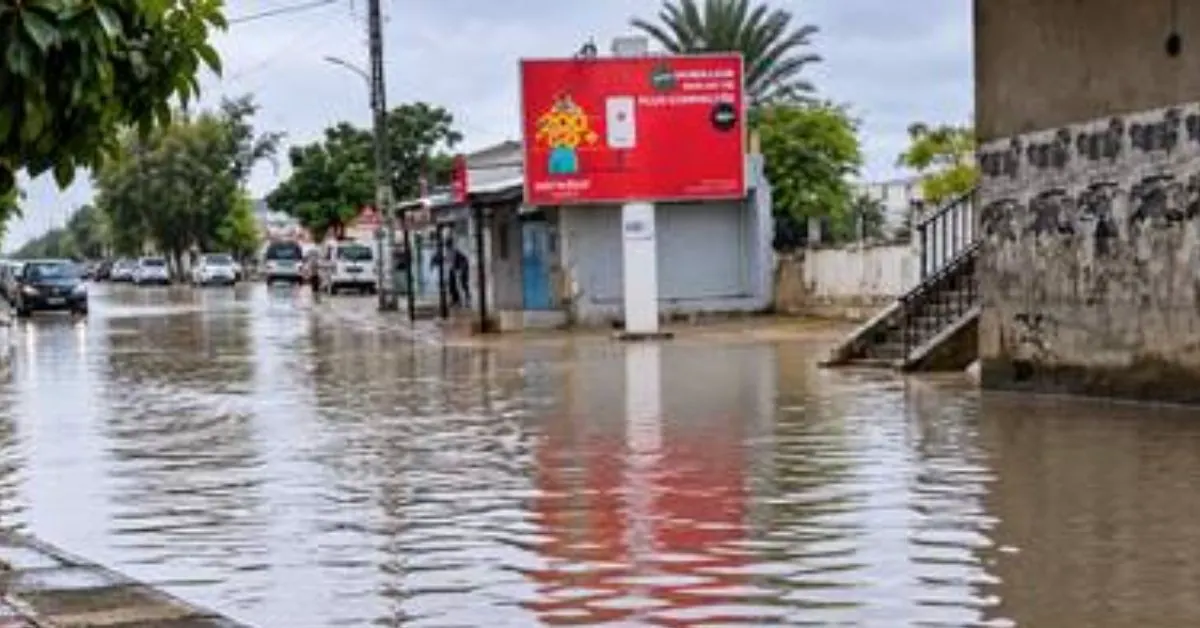
Heavy rainfall hit Tunisia's Bajah governorate on Friday, causing significant damage to infrastructure in several areas, including the towns of Tebarsa, Tibar, and the city of Bajah. The rainfall, which reached 30mm in Tebarsa and Tibar, and 12mm in Bajah, resulted in the accumulation of water on roads, necessitating interventions from the civil protection and disaster response teams.
The interventions, which were carried out by the civil protection units and members of the disaster response teams, aimed to clear trees, pump out water, and facilitate traffic flow. In Tebarsa, the teams worked to clear water from the regional road number 75, which connects Tebarsa to Tibar, and restore traffic flow. Similar interventions were carried out on the road linking Djebba to Tibar, and several other roads were cleared of debris and water.
The damage caused by the rainfall was not limited to roads, as several homes and institutions were also affected. In the Ibn Khaldun neighborhood, water was pumped out of a citizen's home, while in one of the health institutions, water was cleared from the premises. The civil protection teams also conducted inspections in several areas, including the Wadi Al-Basim, Ain Al-Shams, Bir Al-Hafr, and Al-Taher Al-Haddad neighborhoods.
In addition to the interventions carried out by the civil protection teams, the damage caused by the rainfall was also assessed. In the city of Bajah, several roads, including those under construction, were damaged, while the main street, Habib Bourguiba Street, also suffered damage. The rainfall also caused damage to infrastructure in other areas of the governorate, with the Wadi Al-Zarqaa region recording 9mm of rainfall.
According to reports, the rainfall was widespread across the Bajah governorate, with different areas recording varying amounts of rainfall. The highest amounts were recorded in Tebarsa and Tibar, which received 30mm of rainfall, while Bajah city received 12mm, and Wadi Al-Zarqaa received 9mm. The interventions by the civil protection teams and disaster response teams helped to mitigate the impact of the rainfall.
The damage caused by the rainfall highlights the need for continued investment in infrastructure and disaster response measures in the region. The interventions carried out by the civil protection teams and disaster response teams demonstrate the importance of preparedness and rapid response in minimizing the impact of natural disasters. Further assessments are expected to be carried out to determine the full extent of the damage.
The Tunisian authorities are expected to continue monitoring the situation and providing support to affected areas. The interventions carried out in response to the rainfall demonstrate the government's commitment to protecting its citizens and infrastructure from the impact of natural disasters. The efforts of the civil protection teams and disaster response teams have helped to minimize the disruption caused by the rainfall.
Key points
- The rainfall caused significant damage to infrastructure in several areas of the Bajah governorate.
- The civil protection teams and disaster response teams carried out interventions to clear trees, pump out water, and facilitate traffic flow.
- The damage caused by the rainfall highlights the need for continued investment in infrastructure and disaster response measures in the region.