The Volta Region of Ghana is grappling with significant waste management challenges. Poor road access, inadequate engineered landfill facilities, limited waste collection, and low recycling levels are hindering efforts to manage the region's growing waste burden effectively. The region generates approximately 268,000 tonnes of solid waste annually, which translates to about 995 metric tonnes per day.
Despite the substantial waste generation, only about 60 percent of the waste is collected, while a mere 2 percent is recycled. The Ho Integrated Recycling and Compost Plant (IRECOP) currently collects around 65 percent of the waste, falling short of its target of 85 percent. IRECOP plays a crucial role in waste management in the region, collecting, sorting, processing, and recycling waste, as well as converting organic waste into compost.
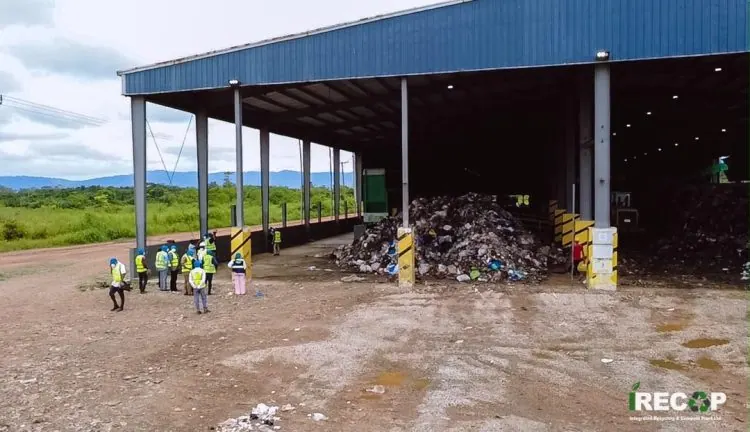
The challenges facing waste management in the Volta Region were recently highlighted during a visit by the Parliamentary Select Committee on Water and Sanitation to the Ho IRECOP facility at Akrofu-Agorve. The Committee, led by its Chairman, John Oti Bless, was briefed on the operations of the facility, including waste collection, sorting, processing, recycling, and compost production. IRECOP has a processing capacity of 600 metric tonnes and is designed to recover various materials, including plastics, metals, organic waste, and paper.
The region's waste stream is predominantly composed of organic material, with a growing proportion of plastics, presenting opportunities for composting and recycling. However, transporting waste to the processing facility remains a significant challenge. The poor condition of the access road to the facility is a major concern, as it could discourage waste operators from transporting refuse to the plant and potentially lead to illegal dumping.
According to Betty Brown Nyadu, Group Head of Government Relations at the Environment and Sanitation Processing Cluster of the Jospong Group of Companies, the poor road leading to the facility is a significant challenge. She appealed to the government to construct the access road to improve waste haulage and suggested the establishment of transfer stations at strategic locations closer to communities to facilitate waste collection and consolidation.
The Volta Region lacks adequate engineered landfill sites, resulting in a heavy reliance on centralized treatment options and community-level collection points. IRECOP believes that the prevailing disposal-based approach presents an opportunity to shift towards resource recovery through recycling and composting. This approach can create employment opportunities, support local economic activity, conserve resources, and reduce environmental degradation and pollution associated with poor waste disposal.
IRECOP and other stakeholders emphasize the importance of public education and awareness in improving waste management in the Volta Region. Encouraging proper waste separation, recycling, and disposal practices is critical to addressing the region's waste management challenges. The Parliamentary Select Committee on Water and Sanitation has assured the Jospong Group that it will capture the concerns raised and work towards addressing them.
Key points
- The Volta Region generates approximately 268,000 tonnes of solid waste annually, with only 60 percent being collected and 2 percent recycled.
- Poor road access and inadequate landfill facilities are significant challenges to effective waste management in the Volta Region.
- IRECOP has a processing capacity of 600 metric tonnes and aims to increase waste collection to 85 percent.